Turkish Artists
Whose Paths Crossed with Paris
Bedri Baykam
Yolu Paris’le
Kesişen Türk Sanatçılar
Bedri Baykam
Artistes Turcs Dont
la Route a Croisé Paris
Bedri Baykam
Turkish-French
Relations
The connections dating back to the 16th century with the historical dialogues of Suleiman the
Magnificent with François I formed the basis of artistic, cultural, diplomatic and commercial
relations with the West for the Ottoman Empire, the Republic of Turkey and especially Istanbul
in different periods.
Türk-Fransız
İlişkileri
Kanuni Sultan Süleyman’ın I. François ile olan tarihi diyaloglarıyla 16. yüzyıla uzanan
bağlantılar, değişik dönemlerde Osmanlı İmparatorluğu, Türkiye Cumhuriyeti ve özellikle İstanbul
için Batı ile sanatsal, kültürel, diplomatik ve ticari ilişkilerin temelini oluşturmuştur.
Relations
Turco-Françaises
Les liens avec cette ville, qui remontent au 16ême siècle et débutèrent avec les échanges entre
Soliman le Magnifique et François 1er, continueront tout au long de l'histoire de l'Empire
Ottoman pour se poursuivre avec l'avènement de la République Turque, en se concentrant tout
particulièrement à Istanbul, où furent jetées les bases des relations artistiques, culturelles,
diplomatiques et commerciales entre la France et la Turquie.
Paris, The Welcoming
Port…
The historical dialogues between Süleyman the Magnificent and François I, dating back to the
16th century, laid the foundation for artistic, cultural, diplomatic, and commercial relations
between the Ottoman Empire, the Republic of Türkiye, and especially Istanbul with the West.
These dialogues carry a profound historical significance that reverberates through different
periods of time.
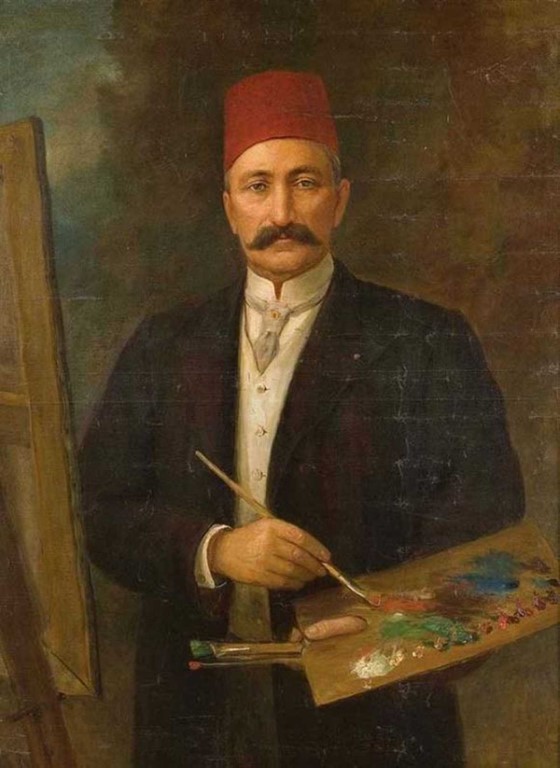
Osman Hamdi Bey, one of the most influential intellectuals and artists of the Ottoman Empire,
also made history as the first Turkish archaeologist. "Alexander Sarcophagus" is among the most
valuable discoveries of Osman Hamdi Bey, who laid the foundations of modern archeology in the
Ottoman Empire. In Paris, he had his art education from Jean-Léon Gérôme and Boulanger, in
addition to studying law. Alongside Şeker Ahmet Pasha and Süleyman Seyyid, who came to Paris at
that time, they established the first generation of Turkish painters. Osman Hamdi Bey, who
returned to Istanbul after 12 years, founded the Sanayi-i Nefise School (Later labeled Mimar
Sinan Academy of Fine Arts in İstanbul) in 1882, following his duties at various levels of the
state. They designed the school building together with the French architect Alexandre Vallaury
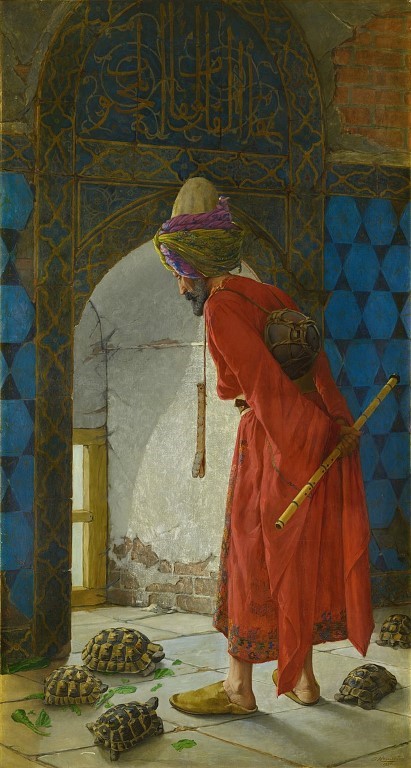
from Istanbul. The Tortoise Trainer (1906), one of Osman Hamdi Bey's most famous paintings, is
exhibited at Pera Museum as part of the Orientalist Painting Collection.
Halil Şerif Pasha, one of the Ottoman statesmen and diplomats who had received a French
education, lived in Paris at different times and began collecting paintings from the European
cities where he was assigned. After St. After his ambassadorship in St. Petersburg, he settled
in Paris at the age of 33. His intense interest in art made him one of the most important
collectors in Paris during the 19th century. His collection included major works by the most
significant artists of the period, such as Delacroix, Ingres, and Courbet. “Sleep” and “The
Origin of the World”, which are among the most important works of Courbet and French painting,
were painted at the request of Halil Pasha. Halil Şerif Pasha, who decided to return to Istanbul
at the age of 37, had to leave most of the collection behind. Today, Courbet’s “Sleep” is
exhibited at the Musée du Petit Palais and “The Origin of the World” at the Musée d’Orsay. “The
Massacre of the Bishops of Liège” and “Algerian Women” by Eugène Delacroix are displayed at the
Louvre Museum. We must remember that one of Ingres’ most famous works (now also at the Louvre),
“The Turkish Bath,” was equally in the hands of the legendary collector.
Halil Şerif Pasha was among the names that supported the ‘Young Turks’. Western historians of
the period defined the constitutionalist and pro-westernization oppositional young and
intellectual generation that emerged at the end of the Ottoman Empire as "Young Turks" (Jeunes
Turcs). The Young Turks, who were close to the ideas of the French bourgeoisie, held their first
congress on February 4, 1902, at the house of Institut de France member Germain Antonin
Lefévre-Pontalis in Paris, with 47 delegates.In the early 20th century, the political Ottoman
rebellious group ‘Young Turks’ transformation of the French capital into a temple was a
harbinger of the marks that Turkish intellectuals would leave in this dazzling city.
İbrahim Şinasi, the first poet and playwright who internalized Western civilization by
maintaining communication between Paris and Istanbul with his scientific and humanist
perspective, worked with Namık Kemal in the newspaper he founded after returning to Istanbul.
The book titled “Vatan Yahut Silistre” by Namık Kemal, one of the innovative poets who lived in
Paris for a while, made a great impact in its time and had a mission to unite the people. With
the backdrop provided by this infrastructure, Paris has always become an inviting port for
Turkish artists since the last quarter of the 19th century.
Davetkar Liman
Paris
Osmanlı İmparatorluğu Dönemi’nin en önemli aydın ve sanatçılarından olan Osman Hamdi Bey, aynı
zamanda ilk Türk arkeolog olarak da tarihe geçti. Osmanlı’da modern arkeoloji biliminin
temellerinin atılmasını sağlayan Osman Hamdi Bey’in en değerli keşifleri arasında “İskender
Lahdi” bulunuyor. Paris’te hukuk eğitimi görürken Jean-Léon Gérôme ve Boulanger’den sanat
eğitimi alan Osman Hamdi Bey, aynı dönemlerde Paris’e gelen Şeker Ahmet Paşa ve Süleyman
Seyyid’le beraber Türk resim sanatının ilk kuşağını oluşturdu. 12 yılın ardından İstanbul’a
dönen Osman Hamdi Bey, devletin çeşitli kademelerinde yüksek görevler üstlendikten sonra, 1882
yılında Sanayi-i Nefise Mektebi’ni kurdu. Okul binasını İstanbullu Fransız mimar Alexandre
Vallaury ile birlikte tasarladılar. Osman Hamdi Bey’in en ünlü resimleri arasında bulunan
Kaplumbağa Terbiyecisi (1906) Oryantalist Resim Koleksiyonu kapsamında Pera Müzesi’nde
sergilenmektedir.
Osmanlı devlet adamı ve diplomatlarından Halil Şerif Paşa (Khalil Sherif Pasha), Fransız eğitimi
aldı ve hayatının değişik dönemlerinde Paris’te bulundu. St. Petersburg’daki büyükelçilik
görevinin ardından, 33 yaşında Paris’e yerleşti. Gençlik yıllarından itibaren görev aldığı
Avrupa şehirlerinden resimler toplamaya başladı. Sanata duyduğu yoğun ilgi onu önemli bir
koleksiyoner haline getirdi ve 19. yüzyılda Paris’in en önemli koleksiyonerleri arasında yer
aldı. Koleksiyonunda Delacroix, Ingres, Courbet gibi dönemin en önemli sanatçılarının eserleri
vardı. Courbet’nin ve Fransız resminin en önemli yapıtları arasında yer alan Uyku ve Dünyanın
Kökeni yapıtları Halil Paşa’nın isteği üzerine resmedildi. 37 yaşında İstanbul’a dönme kararı
alan Halil Şerif Paşa, koleksiyonun büyük bir kısmını geride bırakmak zorunda kaldı. Bugün Uyku,
Musée du Petit Palais’de, Dünyanın Kökeni ise Musée d’Orsay’de bulunmaktadır. Ayrıca
koleksiyonunda yer alan Eugéne Delacroix’ya ait Liège Başpiskoposunun Katli ve Cezayirli
Kadınlar, Louvre Müzesi’nde sergilenmektedir. Bunun dışında Ingres’in en meşhur işlerinden “Türk
Hamamı”da, efsanevi koleksiyonerin elindeki başyapıtlar arasındaydı. (Şimdi o eser de
Louvre’da.)
Halil Şerif Paşa Jön Türkler’e de destek veren isimler arasındaydı. Dönemin Batılı tarihçileri,
Osmanlı İmparatorluğu’nun sonlarında ortaya çıkan meşrutiyetçi ve batılılaşma yanlısı muhalif
genç ve aydın kuşağı “Jön Türkler” (Jeunes Turcs) olarak tanımladı. Fransız burjuvazisinin
fikirlerine yakın duran Jön Türkler, ilk kongrelerini 4 Şubat 1902 yılında, 47 delege ile
Institut de France üyesi Germain Antonin Lefévre-Pontalis'in Paris’teki evinde yaptı. Jön
Türkler, özellikle hazırladıkları yayınlarla 13 ülkede farklı dillerde görüşlerini yaydılar.
1889-1908 yılları arasında çıkardıkları gazete ve dergilerle fikir hayatına yeni bir yön vermeyi
başardılar.
Bilimsel ve hümanist bakış açısıyla Paris-İstanbul arasında iletişimi sürdürerek Batı uygarlığını
içselleştiren ilk şair ve oyun yazarı İbrahim Şinasi, İstanbul’a döndükten sonra kurduğu
gazetede Namık Kemal ile birlikte çalıştı. Bir dönem kendisi de Paris’te yaşayan, yenilikçi
şairlerden Namık Kemal’in Vatan Yahut Silistre başlıklı kitabı, döneminde oldukça ses getirmiş,
halkı birleştirici bir misyonu olmuştu. Paris, bu altyapının sağladığı zeminle, 19. yüzyılın son
çeyreğinden itibaren Türk sanatçılar açısından hep davetkar bir liman haline dönüştü.
Paris, le Port
Accueillant
Parmi les intellectuels et artistes les plus importants de la période ottomane, Osman Hamdi Bey
est également passé à l'histoire en tant que premier archéologue turc. Parmi les découvertes les
plus précieuses d'Osman Hamdi Bey, qui a jeté les bases de la science moderne de l'archéologie
en Turquie, figure le Sarcophage d'Alexandre. Alors qu'il poursuivait des études de droit à
Paris, Osman Hamdi Bey a également suivi une formation artistique sous la direction de Jean-Léon
Gérôme et Boulanger. En compagnie de Şeker Ahmet Paşa et Süleyman Seyyid, qui se trouvaient
également à Paris à la même époque, il a constitué la première génération de l'art de la
peinture turque. Après 12 ans, Osman Hamdi Bey est retourné à Istanbul et, après avoir occupé
divers postes de haut rang au sein de l'État, il a fondé en 1882 l'École des Beaux-Arts
(Sanayi-i Nefise Mektebi). Il a conçu le bâtiment de l'école en collaboration avec l'architecte
stambouliote d'origine française Alexandre Vallaury. Parmi les œuvres les plus célèbres d'Osman
Hamdi Bey figure « Le Dresseur de Tortues » (1906), exposé au Musée Pera dans le cadre de la
Collection de Peintures Orientalistes.
L'homme d'État et diplomate ottoman Halil Şerif Paşa (Khalil Sherif Pasha) a reçu une éducation
française et a passé différentes périodes de sa vie à Paris. Après avoir été ambassadeur à
Saint-Pétersbourg, il s'installe à Paris à l'âge de 33 ans. Depuis sa jeunesse, il
collectionnait des tableaux des villes européennes où il séjournait. Son intérêt intense pour
l'art l'a rendu un collectionneur important et il est devenu l'un des collectionneurs les plus
influents de Paris au XIXe siècle. Sa collection comprenait des œuvres d'artistes majeurs tels
que Delacroix, Ingres et Courbet. Parmi les œuvres les plus importantes de Courbet et de la
peinture française figurent « Le Sommeil » et « L'Origine du Monde », qui ont été commandées par
Halil Paşa. Halil Şerif Paşa, qui a décidé de retourner à Istanbul à l'âge de 37 ans, a dû
laisser une grande partie de sa collection derrière lui. Aujourd'hui, « Le Sommeil » se trouve
au musée du Petit Palais, tandis que « L'Origine du Monde » est exposé au Musée d'Orsay. Par
ailleurs, « Le Massacre de l'archevêque de Liège » et « Femmes d'Alger » de Delacroix, qui
faisaient partie de sa collection, sont aujourd'hui exposées au Musée du Louvre. De plus, « Le
Bain turc », l'une des œuvres les plus célèbres d'Ingres, faisait également partie des
chefs-d'œuvre détenus par ce légendaire collectionneur (aujourd'hui exposé au Louvre).
Halil Şerif Paşa était également un soutien des Jeunes Turcs. Les historiens occidentaux de
l'époque ont qualifié de « Jeunes Turcs » (Jeunes Turcs) la jeune génération d'intellectuels et
de partisans de la modernisation et du constitutionnalisme, qui a émergé à la fin de l'Empire
ottoman. Proches des idées de la bourgeoisie française, les Jeunes Turcs ont tenu leur premier
congrès le 4 février 1902, avec 47 délégués, au domicile parisien de Germain Antonin
Lefévre-Pontalis, membre de l'Institut de France. Les Jeunes Turcs ont diffusé leurs idées dans
13 pays différents, à travers les publications qu'ils ont produites, et ont réussi à donner une
nouvelle direction à la vie intellectuelle avec les journaux et magazines qu'ils ont publiés
entre 1889 et 1908.
Le premier poète et dramaturge turc à avoir intégré la civilisation occidentale avec une approche
scientifique et humaniste, İbrahim Şinasi, a collaboré avec Namık Kemal dans le journal qu'il a
fondé à son retour à Istanbul. Namık Kemal, un poète novateur qui a également vécu un certain
temps à Paris, a eu un impact considérable à l'époque avec son livre « Vatan Yahut Silistre »,
qui a joué un rôle unificateur au sein du peuple. Avec l'influence de cette infrastructure,
Paris est devenu un port accueillant pour les artistes turcs à partir du dernier quart du XIXe
siècle.
Intellectual
foundations of the New Republic
The fact that the Young Turks turned the capital of France into a second home from the beginning
of the 20th century was a harbinger of the permanent traces that Turkish intellectuals would
leave in this sparkling city.
Mustafa Kemal was inspired by writers such as Diderot, Jean-Jacques Rousseau, and Voltaire for
the republican Türkiye model that was budding in his mind. His engagement with French
Enlightenment writers, his in-depth studies of them, and the presence of these writers in his
library are the most significant traces of this relationship. Therefore, apart from opera,
theater, and cinema, it was not possible for him to remain indifferent to the world of fine arts
centered in Paris.
The dispatch of many artists to France in the Republic's early years can also be considered a
natural result of the umbilical cord established by Mustafa Kemal between the newly founded
Republic of Türkiye and France.
Yeni Cumhuriyet’in
fikri temelleri
20. yüzyılın başlarından itibaren Jön Türkler’in, Fransa’nın başkentini bir mabet haline
getirmesi, Türk aydınlarının bu ışıltılı kentte bırakacakları daimî izlerin habercisiydi.
Aslında buna eklenecek en önemli diğer bilgi, Mustafa Kemal’in kafasında filizlenen cumhuriyetçi
Türkiye modeli için sürekli olarak Fransız aydınlanmacı yazarları ele alması, onları
derinlemesine etüt etmesi ve kütüphanesinin onlarla dolu olmasıydı: Büyük önder Diderot,
Jean-Jacques Rousseau, Voltaire gibi yazarlardan besleniyordu ve özgürlük üzerine kurulu Türkiye
Cumhuriyeti modeli onların felsefi temelinde yeşeriyordu. Dolayısıyla opera, tiyatro ve
sinemanın dışında, merkezi Paris olan güzel sanatlar dünyasına ilgisiz kalması söz konusu
değildi.
Cumhuriyetin ilk döneminde birçok sanatçıyı Fransa’ya yollamaya devam etmesi, eskiden gelen bir
ilişki ve sosyal kontratın devamı olduğu kadar, Mustafa Kemal’in yeni rejimiyle Fransa arasında
kurduğu göbek bağının da doğal sonucu sayılabilir.
Les Fondements
Intellectuels de la Nouvelle République
Au début du XXe siècle, la transformation de la capitale française en un sanctuaire par les
Jeunes Turcs annonçait les traces permanentes que les intellectuels turcs laisseraient dans
cette ville éclatante. En fait, l'information la plus importante à ajouter est que, pour le
modèle républicain turc qui germait dans l'esprit de Mustafa Kemal, il se tournait
continuellement vers les écrivains des Lumières françaises, les étudiant en profondeur et
remplissant sa bibliothèque de leurs œuvres. Le grand leader était nourri par des écrivains tels
que Diderot, Jean-Jacques Rousseau et Voltaire, et le modèle républicain turc fondé sur la
liberté s'épanouissait sur leurs bases philosophiques. Par conséquent, il était impensable de
rester indifférent au monde des beaux-arts centré à Paris, en dehors de l'opéra, du théâtre et
du cinéma.
La poursuite de l'envoi de nombreux artistes en France au début de la République peut être
considérée comme une continuation d'une relation et d'un contrat social établis de longue date,
ainsi que le résultat naturel du lien ombilical que Mustafa Kemal avait tissé entre son nouveau
régime et la France.
Istanbul-Paris
Connection
Over the generations, artists have built bridges between Paris and Istanbul until today.
Considering the length of the period, although it is challenging to present a selection among
these artists, names such as Osman Hamdi Bey, Şeker Ahmet Paşa, Fahrelnissa Zeid, Aliye Berger,
Fikret Mualla, Hale Asaf, Hakkı Anlı, Abidin Dino, Cihat Burak, Selim Turan, Adnan Varınca,
Şükriye Dikmen, Avni Arbaş, Nejad Melih Devrim, Mübin Orhon, Tiraje Dikmen, Adnan Çoker, Kuzgun
Acar, Albert Bitran, Erdal Alantar, Ömer Kaleşi, Yüksel Aslan, Ali Teoman Germaner, Alev
Ebüzziya Siesbye, Mehmet Güleryüz, Nil Yalter, Sarkis Zabunyan, Komet, Ali Atmaca, Fatma Tülin,
Memet Nazım, Selçuk Demirel, Bedri Baykam and Onay Akbaş from the younger generation, have
proved a permanent presence in the art capital of France. Thus, within the École de Paris that
defined the art of the 20th century, a noteworthy “Turkish École de Paris” has also taken its
merited place.
İstanbul-Paris
Hattı
Günümüze kadar, kuşaklar boyu farklı sanatçılar ve edebiyatçılar Paris ve İstanbul arasında köprü
kurdular. Bu kadar uzun bir süreci ele aldığımızda, bu sanatçılar arasından bir seçki sunmak son
derece zor olsa da özellikle Osman Hamdi Bey, Şeker Ahmet Paşa, Fahrelnissa Zeid, Aliye Berger,
Fikret Mualla, Hale Asaf, Hakkı Anlı, Abidin Dino, Cihat Burak, Selim Turan, Adnan Varınca,
Şükriye Dikmen, Avni Arbaş, Nejad Melih Devrim, Mübin Orhon, Tiraje Dikmen, Adnan Çoker, Kuzgun
Acar, Albert Bitran, Erdal Alantar, Ömer Kaleşi, Yüksel Aslan, Ali Teoman Germaner, Alev
Ebüzziya Siesbye, Mehmet Güleryüz, Nil Yalter, Sarkis Zabunyan, Komet, Ali Atmaca, Fatma Tülin,
Memet Nazım, Selçuk Demirel, Bedri Baykam ve daha genç kuşaktan Onay Akbaş gibi Fransa’nın sanat
başkentinde kalıcı bir varlık gösterdiler. Böylece, 20. yüzyıla damga vuran Paris Ekolü (École
de Paris) sanatçıları arasında, ayrıca dikkat çeken bir de “Paris Türk Ekolü” yerini aldı.
Birçok yazar, şair, tiyatrocu ve müzisyen de ressamlarla aynı dönemlerde Paris’i mesken edindi.
St. Germain-des-Pres’de La Palette ve Le Bonaparte, Montparnasse’da ise La Closerie des Lilas,
Le Select ve La Coupole gibi Paris kafe ve restoranlarının müdavimi oldular. Türk kültür, sahne
ve edebiyat yaşamını Paris’te temsil edenler arasında Yahya Kemal Beyatlı’dan günümüze Nazım
Hikmet, Cemal Reşit Rey, İlhan Mimaroğlu, Tahsin Yücel, Demir Özlü, Tülay German, Ferit Edgü,
Suna Kan, Ayla Algan, Kenize Mourad, İdil Biret, Mehmet Ulusoy, Barış Manço, Verda Erman, Cahit
Berkay, Ferhan Şensoy, Mine Kırıkkanat, Nedim Gürsel, Enis Batur, Kudsi Erguner, Cüneyt Ayral,
Faruk Sade, Hüseyin Sermet, Kerem Topuz, Ali Akay isimler öne çıkıyor. Oluşan disiplinlerarası
sanat ortamları, tarihe ve bizlere hem düşünsel hem sanatsal hem de arşivsel olarak çok zengin
bir geçmiş bıraktı.
Köklü ve sağlam bir tarihe sahip olan Türk-Fransız ilişkileri, İstanbul-Paris hattı üstünden uzun
yıllara bir diyalogla gelişmeye devam etmektedir.
Ligne
Istanbul-Paris
Jusqu'à aujourd'hui, des générations d'artistes et de littérateurs ont établi des ponts entre
Paris et Istanbul. Lorsqu'on considère une période aussi longue, il est extrêmement difficile de
présenter une sélection parmi ces artistes, mais en particulier Osman Hamdi Bey, Şeker Ahmet
Paşa, Fahrelnissa Zeid, Aliye Berger, Fikret Mualla, Hale Asaf, Hakkı Anlı, Abidin Dino, Cihat
Burak, Selim Turan, Adnan Varınca, Şükriye Dikmen, Avni Arbaş, Nejad Melih Devrim, Mübin Orhon,
Tiraje Dikmen, Adnan Çoker, Kuzgun Acar, Albert Bitran, Erdal Alantar, Ömer Kaleşi, Yüksel
Aslan, Ali Teoman Germaner, Alev Ebüzziya Siesbye, Mehmet Güleryüz, Nil Yalter, Sarkis Zabunyan,
Komet, Ali Atmaca, Fatma Tülin, Memet Nazım, Selçuk Demirel, Bedri Baykam et de la génération
plus jeune, Onay Akbaş, ont tous laissé une empreinte durable dans la capitale artistique de la
France. Ainsi, parmi les artistes de l'École de Paris, qui ont marqué le XXe siècle, une « École
Turque de Paris » s'est également distinguée.
En dehors des peintres, un grand nombre d’écrivains, de poètes, d’hommes de théâtre et de
musiciens s’installèrent à Paris à des dates plus ou moins rapprochées, et fréquentèrent
régulièrement les mêmes cafés et restaurants qui étaient devenus leurs points de rendez-vous et
de rencontre, notamment La Palette, Chez Fraysse et Le Bonaparte à St Germain des Prés ; La
Closerie des Lilas, Le Select, La Coupole ou Le Gymnase à Montparnasse. Parmi ceux qui ont
représenté la vie culturelle, théâtrale et littéraire turque à Paris, on peut citer entre autres
Yahya Kemal Beyatlı, Nazım Hikmet, Cemal Reşit Rey, İlhan Mimaroğlu, Tahsin Yücel, Demir Özlü,
Tülay German, Ferit Edgü, Suna Kan, Ayla Algan, Kenize Mourad, İdil Biret, Mehmet Ulusoy, Barış
Manço, Verda Erman, Cahit Berkay, Ferhan Şensoy, Mine Kırıkkanat, Nedim Gürsel, Enis Batur,
Kudsi Erguner, Cüneyt Ayral, Faruk Sade, Hüseyin Sermet, Kerem Topuz, Ali Akay. Ces
environnements artistiques interdisciplinaires ont laissé un riche héritage à la fois
intellectuel, artistique et archivistique.
Les relations turco-françaises, fondées sur une histoire solide et profonde, continuent de se
développer à travers un dialogue prolongé sur l'axe Istanbul-Paris.
Artist Biographies
S1-A Biographies
Yahya Kemal Beyatlı
(Skopje, 1884 – İstanbul, 1958)
Poet, thinker, writer, politician, and diplomat.
He is one of the greatest representatives of Turkish poetry in the Republican period. His
poems served as a bridge between Divan Literature and modern poetry. He is considered
one of the Four Aruzists in the history of Turkish literature. Although he was
recognized as one of the leading figures of Turkish literature in his lifetime, he never
published a book.
In the newly established Republic of Türkiye, he held political and administrative
positions such as deputy and bureaucrat.
His mother was Nakiye Hanım, the niece of the famous divan poet Leskofçalı Galip; his
father was İbrahim Naci Bey, a former bailiff and the mayor of the time.
He started his primary education in 1889 at Yeni Mektep, a part of the Sultan Murat
Complex in Skopje. Later, he attended Mektebi Edeb, also in Skopje. In 1892, he entered
Üsküp Idadisi (Skopje High School).
In 1897, he moved to Thessaloniki with his family. The death of his mother, whom he loved
and influenced very much, from tuberculosis affected him very much. Upon his father's
remarriage, he left his family and returned to Skopje, but soon came back to
Thessaloniki. He wrote poems under the pseudonym Esrar.
He was sent to Istanbul in 1902 to continue his secondary education. He started to write
poems under the pseudonym Agâh Kemal in the magazines Servet-i Fünuncu Irtika and
Malumat.
Under the influence of the French novels he read and his interest in the Young Turks, he
escaped from Istanbul under the oppression of Abdülhamid II and went to Paris in
1903.
In Paris, he met Young Turks such as Ahmet Rıza, Sami Paşazade Sezai, Mustafa Fazıl
Pasha, Prince Sabahattin, Abdullah Cevdet, Abdülhak Şinasi Hisar.
In 1904, he enrolled in the political science department at Sorbonne University. He was
influenced by the historian Albert Sorel, who taught at the school.
Throughout his school life, he was interested in theater as well as his studies. He did
research on history in libraries. He analyzed the books of French poets. As a result of
his studies in history, he came to the conclusion that the Battle of Malazgirt in 1071
should be considered the beginning of Turkish history. When his research and social
activities prevented him from allocating time for his studies and being successful in
exams, he switched his department to the Faculty of Literature, but he could not
graduate from this department either. In the nine years he spent in Paris, his view of
history, poetry, and personality developed.
It is thought that the following sentence of Mallarmé, whom he met during his years in
France, was influential in Yahya Kemal's finding the language of poetry he was looking
for: “The doorman of the Louvre Palace speaks the best French.” After thinking about
this sentence for a long time, Yahya Kemal grasps the language he will use in his poems;
he realizes that the doorman of the Louvre Palace is not an educated intellectual, nor
is he an illiterate; in this case, the middle class, that is, “the people”, can speak
the best French, and he pays attention to the speech of the middle class. Under the
influence of these thoughts, the poet turned to writing poems in plain Turkish
twenty-five to thirty years before the language reform.
One of the most prominent aspects of Yahya Kemal's poetic language is his “synthesism”.
During his nine years in Paris, he synthesized the influences of the poets he read
(Mallarmé, Paul Verlaine, Paul Valery, Charles Baudelaire, Gerard de Nerval, Victor
Hugo, Malherbe, Leconte de Lisle, Rimbaud, Jose Maria de Heredia, Jean Moreas, Theophile
Gautier, De Banville, Lamartine, Henry de Regnier, Edgar Poe, Maeterlinck, Verhaeren)
into a new poetic structure. Some of his poems are considered classical, some romantic,
some symbolist, and many parnassian. He did not imitate French poetry, but he reached
new interpretations by kneading what he learned from there with his own understanding of
poetry. One of the interpretations that resulted from this synthesism is the
understanding of “White Language”, which is the view that poetry should be written with
words that are natural and sincere in meaning, and that care should be taken not to be
contrived.
In 1913, he returned to Istanbul. He taught history and literature at Darüşşafaka
Idadisi. For a while, he taught the history of civilization at Medresetü'l-Vaizin. He
met personalities such as Ziya Gökalp, Tevfik Fikret, and Yakup Kadri. In 1916, with the
recommendation of Ziya Gökalp, he entered Darülfünun (İstanbul University) as a
professor of the history of civilization. In the following years, he also taught the
history of Western literature and the history of Turkish literature. Ahmet Hamdi
Tanpınar, who remained his close friend until the end of his life, became his student at
Darülfünun.
Yahya Kemal, who continued his literary activities, wrote articles in newspapers and
magazines on the Turkish language and Turkish history. In the newspaper Peyam, under the
pen name Süleyman Nadi, he wrote articles under the title “Reviewing Under the Pines”.
He published his poems, which he had been writing since 1910, for the first time in 1918
in the magazine Yeni Mecmua. He was among the leading figures of Turkish literature.
After his death, at the meeting of the Istanbul Fetih Cemiyeti (Istanbul Conquest
Society) on November 7, 1959, it was decided to establish a Yahya Kemal Institute with
the proposal of Nihad Sami Banarlı, and his works were published.
Verda Erman
(Istanbul, 1944 – Paris, 2014)
Pianist.
Pianist Verda Erman has been a source of pride for Türkiye as an internationally
recognized musician. Known for her extraordinary talent and artistry, Erman won many
prestigious awards and performed on many important stages throughout her career. Verda
Erman showed her interest in music at an early age. She studied at the Istanbul
Municipal Conservatory, where she studied with Ferdi Statzer. Erman, who was recognized
as a great talent at a young age, had the opportunity to study abroad by winning a state
scholarship after completing her conservatory education.
in 1962, she went to Paris to continue her education. Her studies in Paris marked an
important turning point in her musical career. She studied at the Paris National
Conservatory (Conservatoire National Supérieur de Musique de Paris) with world-renowned
pianist and pedagogue Pierre Sancan. Under Sancan's guidance, Erman further developed
her musical talents and perfected her technical skills.
During her years in Paris, Verda Erman participated in many international piano
competitions and achieved significant success. in 1963, she achieved a great success by
winning the top prize in the Marguerite Long-Jacques Thibaud International Piano
Competition. This success helped her gain international recognition and her career take
off.
After her years in Paris, Verda Erman performed in many important concert halls around
the world. She gave concerts at prestigious venues such as the Royal Festival Hall in
London, Carnegie Hall in New York and the Théâtre des Champs-Élysées in Paris. In
addition to her solo performances, Erman also performed with many famous orchestras. She
worked with world-renowned orchestras such as the Berlin Philharmonic Orchestra, the
London Symphony Orchestra and the Paris Orchestra.
Verda Erman also participated in many international music festivals where she gave
unforgettable performances. She performed at events such as Istanbul Music Festival,
Montpellier Festival and Warsaw Chopin Festival. Her performances at these festivals
were highly acclaimed by critics and audiences.
Verda Erman won many prestigious awards and honors throughout her career. In 1971, she
received the title of State Artist of the Republic of Türkiye. She was also awarded the
Chevalier de l'Ordre des Arts et des Lettres (Knight of Arts and Letters) by the French
government. These awards are an indication of the international recognition of her art
and contribution to music. Throughout her life, Verda Erman pursued her passion and
talent for music with great devotion. She inspired her students and made important
contributions to music education.
Tülay German
(Istanbul, 1935)
Singer, writer.
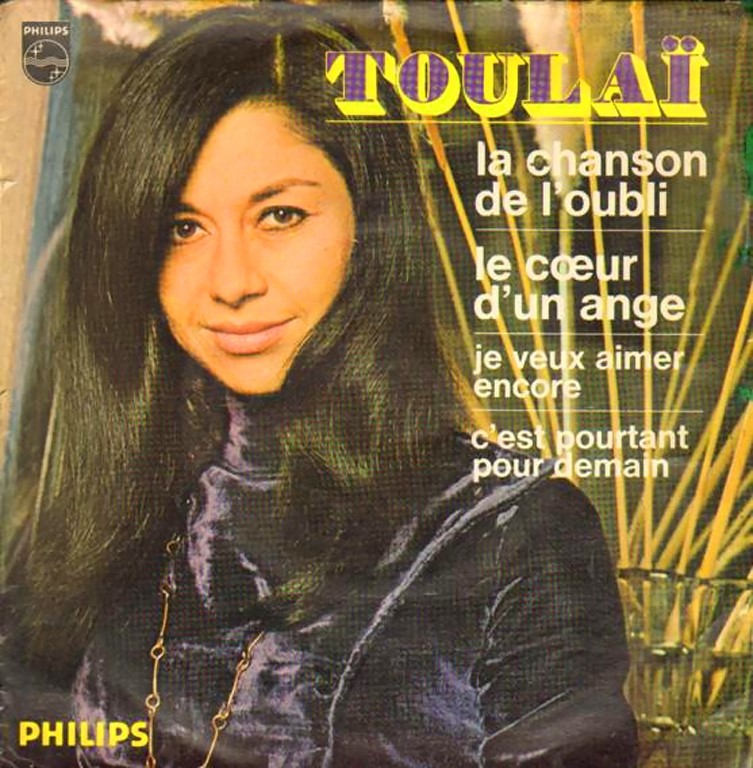
She started singing at the age of four and took piano lessons from Ferdi Statzer. In the
same period, she sang Schubert's "Serenade" and "Linden Tree" in Ayşe Abla's programs
for children on Saturday evenings at Ankara Radio.
Unbeknownst to her family, German took the stage at the Süreyya casino in Ankara. Between
1960 and 1962, she made a name for herself as a jazz singer.
When Charles Mingus, one of the legendary artists of the jazz world, listened to German's
Tract album, he asked her to perform the song he had written on the death of Duke
Ellington. Duke Ellington's Sound of Love could not be published, first because of a car
accident German had and then because of the death of Mingus. The artist also worked with
François Rabbath, one of Europe's most famous virtuosos, and was featured on Zülfü
Livaneli's album Günlerimiz (Our Days), singing Yiğidim Aslanım and the song that had
the same name as the album, and contributed to this album with Rabbath, Cahit Berkay,
Erol Erdinç and Engin Yörükoğlu.
In early 1966, she went to Paris to make records. She made ten records in French. She
made radio and television programs, gave concerts, participated in various festivals,
television and radio programs in France, Belgium, Germany, Poland, Tunisia, Morocco,
Holland and Brazil. She gave concerts in the most important concert halls of France with
names such as Charles Aznavour, Lèo Ferre and Moody Blues.
The album she recorded in Turkish in France received the Charles Cros Academy 1981 Record
Grand Prize.
Tahsin Yücel
(Elbistan, 1933 - Istanbul, 2016)
Author.
Tahsin Yücel, who lost his father and sister at an early age, completed his primary
education at Elbistan Gazi Pasha Primary School, and afterwards won the Galatasaray High
School in the free boarding exams and came to Istanbul in 1945. There, he became a
student of Esat Mahmut Karakurt and met Orhan Şaik Gökyay and Ahmet Kutsi Tecer. He
published Galatasaray magazine with names such as Yiğit Okur and Yıldırım Keskin.
He enrolled with the Department of French Language and Literature at Istanbul University.
After his graduation, Yücel continued his academic career at Istanbul University and
continued his studies in the field of semiotics in Paris, where he received a
scholarship from the French Government. After finishing his thesis in Paris, he returned
to Türkiye. He completed his doctorate study in 1965 with a thesis titled "L'Imaginaire
de Bernanos" (Bernanos' Universe of the Image). Between 1965 and 1967, after completing
his military service, he returned to his position at the university and continued his
studies in the field of semiotics. "L'Imaginaire de Bernanos", one of the first examples
of semiotics in Turkey, was published in 1969. In 1972, he received the title of
associate professor with his work titled "Figures et messages dans la Comédie humaine".
This work, which was published in France the same year, was published in Türkiye in 1997
in his own translation under the title "Faces and Messages in Humanity Laughter."[2]
Yücel was awarded the title of professor in 1978 for his work titled "Les Coordines
Narratives".
He retired from his position at Istanbul University in 2000 and concentrated on writing.
In 2003, Yücel won the "Yunus Nadi Novel Award" and the "Language Association Ömer Asım
Aksoy Novel Award", and his novel "Yalan" (2002) attracted great attention. In 2003, the
author was selected as the honored author of Tüyap Book Fair. His last novel Kumru Kumru
was published in 2005.
Tahsin Yücel began his work as a storyteller. The simple language he used, the
contemporary words he used, the consistency in his approach to Anatolian people and the
mastery of his narration attracted attention. He became one of the most dignified and
characterized authors of our literature.
in the 1970s, he turned to the inner world rather than the outer world in his approach to
writing.
His book ‘Neighbors’ was a critique of people's views on politics. Fethi Naci considered
one of his stories in this book a masterpiece.
Tahsin Yücel's novels The Last Five Days of the Prophet, Kitchen Dead End and The Rumor
of the Moustache criticize society in general, the individual and the people who make
the society up.
In addition to his literary reviews that made an impact in Türkiye and abroad, he has
dozens of important translations from world literature. Some of his stories have been
translated into Swedish and French.
Suna Kan
(Adana, 1936 - Ankara, 2023)
Turkish violin virtuoso
Suna Kan was born in Adana in 1936. She was only 5 years old when she started taking
violin lessons. She took her first violin lessons from his father Nuri Kan. Nuri Kan is
the viola player of the Presidential Symphony Orchestra.
Later on, Suna Kan trained with Hulusi Karsel and won the Ankara State Conservatory.
During her conservatory years, she studied contemporary music under the Austrian
educator Walter Gerhardt and İzzet Nezih Albayrak, Gilbert Back and Liko Amar. At the
age of nine, Suna Kan gave her first recital of Mozart's 5th Violin Concerto. With this
performance, Suna Kan became known as the 'Wonder Child' and was later sent to Europe
for her education. In 1948, Kan was sent to Paris with a full scholarship under the
'gifted children law' and studied under Gabriel Bouillon and graduated as the top
student of the conservatory. After graduating at the top of her school, Suna Kan started
to participate in international competitions. She won her first grand prize at the 1954
Geneva International Competition. Then, in 1955, she won first place in the Viotti
Competition. In 1957, she won the Long-Thibaud Competition 'Paris City Prize'. in 1957,
Kan returned to Türkiye, was appointed as a soloist of the Presidential Symphony
Orchestra. In 1960, she began to give concerts and recitals in many parts of Türkiye and
abroad together with Türkiye's first concert pianist Ferhunde Erkin. Kan played a role
in the establishment the Ankara Chamber Orchestra and was the concertmaster and soloist
between 1977 and 1986.
She was honored with the title of 'State Artist' in 1971 in recognition of her
contribution to Turkish art and outstanding services and including contemporary violin
literature and the works of Turkish composers in her programs.
Nedim Gürsel
(Gaziantep, 1951)
Author.
He graduated from Galatasaray High School. He began to write for literary magazines in
the late 1960s.
After the March 12 memorandum, he was put on trial for one of his articles. After this
incident, he moved to France. He studied Modern French Literature at Sorbonne
University. He completed his doctorate study in "comparative literature" on Louis Aragon
and Nâzım Hikmet, also at Sorbonne.
Parallel to his academic activities, he wrote for various media outlets, including Le
Monde, Cumhuriyet and Milliyet.
He is currently a research director at the French Center for Scientific Research (CNRS)
and teaches Turkish literature at INALCO (Higher School of Oriental Languages) in Paris
and at Sorbonne University. He is a member of the PEN Writers' Association, the Paris
Writers' House and the Mediterranean Academy.
Mine Kırıkkanat
(Ankara, 1951)
Journalist, author and columnist.
She graduated from Notre Dame de Sion French High School and Istanbul University Faculty
of Literature Department of Sociology. She began her journalism career as the Spanish
correspondent of Cumhuriyet newspaper and later became its representative in France.
In 1992, she transferred to Milliyet newspaper. In 1996, she became Milliyet's
correspondent in France and also worked as a columnist at Radical newspaper. Between
2005 and 2010, she wrote her columns at Vatan newspaper. The author, who later, in her
own words, 'returned home', has been writing for Cumhuriyet newspaper since the fall of
2010. She is among the French TV5 Monde channel's team of foreign journalists. The
author's literary works are in the genres of essays, research, short stories and novels,
and her works are Sinek Sarayı, Bir Gün Gece ve Destina (Literatür Yayınları, 2008), Bir
Nehir Roman.
Mehmet Ulusoy
(Izmir, 1942 - Paris, 2005) - Play director, stage and film actor.
With the encouragement of Ayberk Çölok, he started acting in the theater branch of
Galatasaray High School, where he continued his secondary education. Shortly after, he
started acting professionally at the Ulvi Uraz Theater. He became a student of Yıldız
Kenter at the Istanbul Municipal Conservatory. He later worked with Sermet Çağan and
Muhsin Ertuğrul.
He went to Europe in 1963. He became an apprentice first of Roger Planchon in Paris, and
then at the Berliner Ensemble in Berlin. He returned to France and studied at Sorbonne
University Theater Institute. in 1968, he founded the Movement Theater for Revolution in
Istanbul. For three years, he did street plays in villages, squares and striking
factories.
He moved to Paris in 1971. He assumed various roles in the plays directed Antoine Vitez
and Peter Brook. Together with players from around the world, he established Théatre de
Liberté (the Freedom Theater).
in 1972, in Gérard Philippe de Saint-Denis theater, he made his first production and
direction with the play titled Gelecekten Destanlar (Epics from the Future), which he
staged by compiling the works of writers such as Nâzım Hikmet and Aziz Nesin.
in 1974, he cemented his reputation by bringing his adaptation of Bertolt Brecht's
Caucasian Chalk Circle and The Selfish Calculations of Icy Waters from Karl Marx's Das
Kapital, which he adapted for stage with Yüksel Arslan, to the Avignon Festival.
Between 1990 and 1994, he taught in the Department of Theater of Paris National
Conservatory.
The last play he staged in France in 2000, Topor-Party, made nearly two hundred
performances and was the closing play of the Avignon Festival that year. The French
Association of Theater Critics selected this production as the best play of the
year.
Kudsi Ergüner
(Diyarbakır, 1952) - Musician, neyzen.
He started his musical career in 1969 by joining Istanbul Radio House. He researched the roots of Ottoman music and used it in his albums.
He settled in Paris in the seventies, founded the Mevlana Institute in the early eighties, and devoted himself to teaching classical Sufi thought.
In addition to his own albums, he collaborated with many musicians including Peter Gabriel, Jean Michel Jarre, Maurice Béjart, Peter Brook, William Orbit, George Aperghis, Didier Lockwood, Italian singer and composer Alice, and Michel Portal.
Kerem Topuz
(İstanbul, 1955) - Author
Kerem Topuz, the son of writer Hıfzı Topuz, was born in Istanbul in 1955. He graduated from Galatasaray High School in 1973. After graduation, he went to Paris where he studied law and political science. He worked as a journalist at Radio France Internationale, a French radio station, and as a presenter in the program “Mosaic” on the television channel FR3. Since 1996, he has been working as a simultaneous translator in the framework of official or private Turkish-French relations, including the European Union institutions.
Kenize Murad
(Paris, 1939) - Author.
Her father, Sajid Hussein Ali, graduated from Edinburgh University Law School and was a Muslim-Indian prince who fought for India's independence.
Kenize Murad's maternal grandmother, Hatice Sultan, was the daughter of the Ottoman sultan Murad V by marriage to Shayan Kadın Efendi.
Hatice Sultan and her children were among the 155 members of the Ottoman dynasty who were taken abroad when the caliphate was abolished by the law passed on March 3, 1924.
Refik Halid Karay's novel Nilgün, which was also made into a movie, was inspired by Kenize Murad's mother Selmâ Hanım Sultan.
Her mother Selma Hanım Sultan died before she could inform her father of her birth; Zeynal Agha, who was in her mother's service, became desperate and left the baby Kenîze in the garden of the Swiss consulate in Paris. Kenîze Hanım was raised by the consul general's wife. When the family that had raised her until the age of five was transferred to Venezuela, she was left in a Catholic high school; after the age of five, she was raised by a French family. Zeynel Agha came to the Swiss Consulate to see Kenize from time to time until 1942. Her father also found her when she was a student in high school, but the school refused to hand her to him.
Kenîze studied sociology and psychology at the Sorbonne. While studying at the university, she made a living selling clothes on the streets and distributing programs at operas at night. In Paris, she joined the National Library as an archive clerk.
Meanwhile, her father wrote a letter to Dürrüşehvar Sultan. Dürrüşehvar Sultan, the daughter of Abdülmecid Efendi, was considered an Indian princess because she had married the son of the Nizam of Hyderabad. He told her about his daughter and asked her to take care of his daughter. Dürrüşehvar Sultan also asked her former sister-in-law Nilüfer Hanım Sultan, who lived in Paris, to take care of his daughter. Thus, Nilüfer Hanım Sultan started to contact and meet with Kenîze Hanım and she became the first relative that Kenîze Hanım knew.
Kenîze Hanım was able to see her father for the first time when she traveled to India in 1961 when she was 21 years old. Her father, Hussein Sâjid, had lost his throne after the establishment of the Indian State; he had started to work as a lawyer in Luknov because his properties were completely confiscated. He remarried and had three children. Her family, whom she had just met, showed interest in Kenîze Hanım. But the young girl could not stay there for long and returned to Paris.
In 1965, she started working as a reporter. Her first job was as a reporter during the war between Pakistan and India. Although she was arrested there on charges of being an Indian spy, she was released on the instructions of Zulfikar Ali Bhutto, the Prime Minister of Pakistan at the time. In 1967, she moved to the Nouvelle Observateur, one of France's major magazines, where she worked as an archive clerk and then as a political analyst.
aa
At the age of 20, Kenize Murad's search for roots led her to Islam and she studied the texts of the great Sufis. In March 1971, Kenize Murad began publishing articles for the documents service. She lived for some time in Bangladesh, Ethiopia, and Lebanon for three months during the siege of Beirut in 1982 and spent more than a year as a war correspondent covering the Iranian revolution.
In 1965, Kenizé began working as a “freelance” journalist and later joined Le Nouvel Observateur, an important weekly political magazine, where she devoted herself entirely to journalism, specializing in Middle Eastern affairs. After a career as a journalist spanning nearly 15 years, she left her main profession to focus on her novels.
Published in 1987 in France, her first novel, “De la part de la princesse morte” (From the Palace to Exile), told the story of her mother who died in exile. This novel became a global bestseller and was published in more than thirty languages and 42 countries. In Türkiye, this novel was seen for the first time from the perspective of a member of the imperial family of the Ottoman Empire, and it achieved a certain success.
In 1998, after her first novel, she published a second novel, “Le Jardin de Badalpur” (The Garden of Badalpur), about the second generation of her family's story, focusing on the problems of identity between the West and the East, and in 2003 he published “Le parfum de notre terre, voix de Palestine et d'israel” (The Scent of Our Land - Voices of Palestine and Israel), a book of research articles and written descriptions of Palestinian and Israeli men, women and children, in which she tried to understand the tragic events of the two peoples.
In 2010, she published “Dans la ville d'or et d'argent” (Begüm), the true story of the Muslim Indian queen Hazrat Mahal, one of the key leaders of the first war against British rule in 1857 (the Sipahi Uprising). In 2017, her latest novel “Au pays des purs” (In the Land of Pure People) was published.
İlhan Mimaroğlu
(İstanbul, 1926) - Composer, music critic, radio programmer, writer.
He graduated from Galatasaray High School in 1945 and Ankara University Faculty of Law in 1949. He was a clarinet student of Hayrullah Duygu for a while in Ankara. During this period, he began writing music articles as well as radio programs. Mimaroğlu, who devoted himself entirely to music, went to New York in 1955 with a Rockefeller scholarship and attended Paul Henry Lang's musicology and Douglas Moore's composition classes at Columbia University. He became a repertoire specialist at The Record Hunter record label. He also became an art critic for the famous Voice of America radio. In order to broaden his musical horizons further, starting in 1963, he studied with Vladimir Ussachevsky at Columbia University, where he earned a master's degree in art in “electronic music”. Meanwhile, he studied composition with Edgar Varese and Stephan Wolpe. In 1964, he made a name for himself in experimental music circles with his compositions Intermezzo and Le tombeau d'Edgar Poe (Mallermé). In 1968, the Groupe de Recherches Musicales gave him the commission La Ruche, which would make his name.
During his stay in Paris, he was inspired by the atelier La Ruche, a commune for Cubist and Surrealist artists. At Atlantic Records, where he worked with the Ertegün brothers for more than thirty years, he produced important albums by master avant-garde musicians such as Freddie Hubbard, John Coltrane, and Charles Mingus, especially reflecting his own point of view. While at Atlantic Records, he created the Finnadar logo, releasing on vinyl both his own works and those of contemporary composers such as John Cage and Karlheinz Stockhausen. In 1968, at the invitation of French Radio, he continued his work at the Studio of the Center for Music Research. In 1969, Fellini's film Satyricon featured Mimaroğlu's compositions alongside the director's favorite composer Nino Rota. In 1971, he won the Guggenheim Prize. A member of ASCAP, the American Society of Composers, Authors and Publishers, he wrote music articles and essays in newspapers starting in the 1990s. He shared his extraordinary artistic thoughts with Turkish readers through articles he sent from New York to Cumhuriyet and Yeni Yüzyıl newspapers.
İdil Biret
(Ankara, 1941) - Pianist
İdil Biret, whose interest in music began at the age of two, started playing Bach's preludes at the age of four. She took her first lessons from Mithat Fenmen. In 1948, when she was only seven years old, İsmet İnönü, the second President of the Republic of Türkiye, submitted a proposal to the Grand National Assembly of Türkiye to meet the needs of Biret's education abroad. As a result of this proposal, a law specially enacted for İdil Biret is known as the “Wonder Children Law”. Within the framework of this law, Biret was sent with her family to the Paris Conservatory for her education, where she studied with Nadia Boulanger, one of the most important pedagogues of the 20th century. At the age of eight, she gave her first concert on Paris Radio. Biret took lessons from French pianist Alfred Cortot. At the age of 11, Biret played Mozart's Concerto for Two Pianos with Kempff at the Champs-Elysees Theater in Paris.
İdil Biret was fifteen years old when she graduated first in high piano, accompanying and chamber music at the Paris National Conservatory. From the age of sixteen, she began to appear on various world stages. Biret performed with famous conductors such as Atzmon, Copland, Kempe, Keilberth, and Kempe in concerts covering five continents. She gave concerts all over the world with the Boston Symphony, Orchestre National de France, Orchestre Suisse Romande, London Symphony, Leningrad Philharmonic, Leipzig Gewandhaus, Dresden Staatcapelle, Tokyo Philharmonic, Sydney Symphony and Presidential Symphony Orchestras.
İdil Biret has been a member of the selection committee of many international piano competitions such as Queen Elisabeth (Belgium), Van Cliburn (USA), Busoni (Italy), Liszt (Germany), and has been awarded the Lili-Boulanger (Boston), Harriet Cohen/Dinu Lipatti (London), the Polish government's Order of Cultural Merit and the French government's Chevalier de I'Ordre National de Merite. İdil Biret was honored with the title of State Artist by the Ministry of Culture in 1971.
She received the special jury prize in the “Chopin Records Grand Prize” competition. The CD she recorded in the same year, containing three sonatas by French composer Pierre Boulez, received the “Golden Diapozon” award in Paris and was named one of the best records of 1995 by the newspaper “Le Monde”. French writer Xardel's book “İdil Biret-Une pianiste Turque en France” (Idil Biret: A Turkish Pianist in France) about Biret's life and views was published in France in 2006.
aa
aa
Hüseyin Sermet
(1955, Istanbul)
Born in 1955 in Istanbul, his father was jazz musician Cüneyt Sermet and his mother was Nurseli Sermet.
He started taking piano lessons at a young age. He continued his primary education in Ankara, where they moved due to his father's duty. In 1965, he was accepted to the Ankara State Conservatory and became a student of Ferhunde Erkin. After being included under the Child Wonder Act, he became a student of Ahmed Adnan Saygun and Ulvi Cemal Erkin. In 1968, he was sent to France by the Turkish government to continue his education at the Paris Conservatory within the scope of the Wonder Children Law. He was one of the last beneficiaries of the law.
After completing his piano education at the Paris Conservatory, he stayed in France and with the support of his family, he continued his studies in higher chamber music, higher analysis, harmony, counterpoint and composition classes. He studied composition with Olivier Messiaen and piano with Thierry de Brunhoff and Nadia Boulanger. Later, he continued his studies with Maria Curcio in London.
In 1988, he was awarded an honorary doctorate degree by Boğaziçi University “for his outstanding achievements in representing Turkey in an art form of universal dimension”. In 1991, he was awarded the title of “state artist” by the Republic of Türkiye.
Gülsin Onay
(Istanbul, 1954) - Pianist
She was born in 1954 in Istanbul. Her mother was Turkish pianist Gülen Erim and her father was German violinist Joachim Reusch.
She started piano at the age of three and a half with her mother. She gave her first concert at the age of six at TRT Istanbul Radio. Within the scope of the Wonder Children Law, she was sent to France at the age of 12 after two years of special education in Ankara by Mithat Fenmen and Ahmed Adnan Saygun. She studied with Pierre Sancan, Monique Haas, Pierre Fiquet and Nadia Boulanger and graduated from the higher department of the Paris Conservatory at the age of 16 with the “Premier Prix du Piano” degree. After graduation, she continued her studies with Bernhard Ebert.
She began her musical life as a ''Wonder Child'' and continued her studies with the world's most important orchestras and conductors. She is recognized internationally as an exceptional Chopin performer. She is also recognized as the world's most powerful interpreter of composer Ahmed Adnan Saygun.
She holds the title of State Artist granted by the Turkish government. She is a soloist of the Presidential Symphony Orchestra and a regular performer at Bilkent University. She has also been a UNICEF Turkey Goodwill Ambassador since 2003.
Ferit Edgü
(Istanbul, 1936 - 2024)- Turkish short story writer, poet, novelist, essayist, publisher, art collector.
Born in 1936 in Istanbul, his mother was Fatma Nevber Hanım and his father was Mehmet Nuri Edgü. He started writing poetry after the death of his father in 1952. His first poem was published in Kaynak magazine in 1952. This was followed by poems published in Şairler Yaprağı and Mavi magazine. Due to his interest in visual arts, he interviewed painters who had exhibitions at Maya Art Gallery for Vatan newspaper. He was known for his stories in Yeni Ufuklar, Mavi, Vatan newspaper's Art Supplement, Pazar Postası, Dost magazines and for his essays and reviews in Ataç, Eylem, Yeni Dergi, Ant, Papirüs, Soyut, Hürriyet Gösteri, Milliyet Sanat magazines.
He started his higher education in the painting department of Istanbul State Academy of Fine Arts. During his senior year at the Academy, he went to Germany to study ceramic chemistry. After staying in Munich until the end of the year, he went to Paris, where he continued his university education. He studied ceramics for six years; he also attended courses in philosophy at Sorbonne and art history at Louvre. Edgü returned home in 1964. After his military service, he lived in Paris for another year and settled in Türkiye in 1968.
In 1976, he founded the Data Advertising Company and Ada Publications. In addition to literary books, he also published works on painting and painters, and art history books. He published limited edition and numbered books with high design and printing quality. In 1977, he started managing the Bedri Rahmi Art Gallery.
He produced texts in many fields of literature that were translated into many world languages.
He died on July 22, 2024 at the age of 88.
Ferhan Şensoy
(Samsun, 1951- Istanbul 2021)
Theater, cinema and television actor; novel, essay, diary, theater and script writer; founder of the theater troupe Ortaoyuncular.
Şensoy's first stories and poems were published in Yeni Ufuklar and Soyut magazines in 1969, and the sketches he wrote began to be performed in Devekuşu Kabare in 1970. In 1971, Şensoy had his first professional acting experience at Grup Oyuncuları and continued his theater education and studies in France and Canada between 1972 and 1975 with names such as Jerome Savary and Andre-Louis Perinetti, receiving the Best Foreign Writer award in 1975 for his play Ce Fou De Gogol in Montreal. He also acted in the musical Harem Qui Rit, which he directed, at the Theater De Quatre - Sous in Montreal. He returned to Turkey the same year.
In 1978, after the publication of his first book, Kazancı Yokuşu, Şensoy made his first film work with Temel Gürsu's film, Kızını Dövmeyen Dizini Döver, and in the same year he founded the Anyamanya Kumpanya Theater with Mete İnselel and acted in and directed his own play, İdi Amin Avantadan Lavanta.
In 1989, Şensoy took over the Ortaoyuncuları Kavuğu, which had been passed down from Kel Hasan Efendi to the present day, from Münir Özkul, repaired the historic Ses Operetta and opened it under the name Ses 1885. Following the restoration of the stage, Ortaoyuncular moved from the Small Stage, where they had performed Soyut Padişah, to Ses 1885.
In 1990, he directed Yorgun Matador, a play based on the life and works of Pierre Henri Cami. In 1992, he acted in the Köhne Bizans Operası, written and directed by Fikret Kızılok with music by Fikret Kızılok, whose book İngilizce Bilmeden Hepinizi I Love You was published. While Ferhangi Şeyler was being performed in Sydney and Melbourne, the shows of Güle Güle Godot were continuing.
Ferhangi Şeyler is Ferhan Şensoy's solo play, which he has been performing continuously since 1987. In this play, Şensoy evaluates everyday events in his own humorous way. It has been performed in London, Magosa, Washington, New York, Montreal and Toronto, reaching its 2050th performance in 2016.
Faruk Sade
(Ankara, 1954 – Ankara, 2016) - Founder of Gallery Siyah Beyaz, Architect
Born in 1954, Faruk Sade graduated from Bahçelievler Experimental High School in 1971. After completing his studies at METU Faculty of Architecture, Sade worked with prominent Turkish architects Doruk Pamir, Behruz Çinici and Zafer Aldemir between 1979 and 1987. In 1983, he received an award in the architectural project competition organized for Aydın Government House. After his university education, he went to Paris to add new dimensions to his architectural education. In Paris, he lived in the same apartment with Mübin Orhon, Komet, Sinan Bıçakçıoğlu and Mehmet Nazım, and this time he spent here shed light on the later periods of his life. The Parisian environment influenced him, and with the suggestions of Münevver Andaç, Sade decided to build his life on art.
In 1984, he returned to Ankara and founded Siyah Beyaz in the family apartment in Kavaklıdere. Since post-1980 Turkey was just getting acquainted with contemporary art and in order to ensure the sustainability of the gallery, Sade opened Siyah Beyaz Bar next to the gallery. Serving as both an art gallery and a bar in the same space for 34 years, Siyah Beyaz has hosted more than 600 exhibitions so far.
Enis Batur
(Eskişehir, 1952) - Writer, poet, publisher.
His first article was published in 1970 and his first books in 1973. During his student years, he managed the cinema page of Ulus newspaper. He started his higher education at the Middle East Technical University, and completed it in Paris in 1976. After returning to Turkey, he published the magazines Yazı, Oluşum, Meb and Tan. He settled in Istanbul in 1983. He worked as the Head of the Publications Department of the Ministry of National Education (1979-1980), as the Director of Milliyet's cultural service and subsidiary publications (1983-1984), as the Editor-in-Chief of Milliyet Büyük Ansiklopedi (1986) and Dönemli Yayıncılık (1987-1988); he managed Yapı Kredi Publications between 1988 and 2004. He played a leading role in translating many classics and important foreign works into Turkish. He made Yapı Kredi Publications a pioneer in the sector.
He managed the United Nations Educational, Scientific and Cultural Organization's (UNESCO) “Our cultural heritage from Göreme to Istanbul” campaign (1984). He wrote weekly articles for Cumhuriyet, Milliyet, Dünya, Aydınlık newspapers, Yeni Gündem, P-Eki, Express, 2000'e Doğru magazines and monthly articles for Cumhuriyet Bilim-Teknik magazine. His articles were published in various journals such as Poesia, Il Ebbro Quaterno, Letters Internationales, Quarterly West, Tabaccaria, Podium, Kelk, Connaissance des Arts, Talismen, Didale.
Demir Özlü
(Istanbul, 1935 – Stockholm, 2021) - Story and Novel Writer
Demir Özlü was born on September 9, 1935 in Istanbul.
He studied at Istanbul Kabataş High School for Boys. His first poems were published in the magazine Dönüm, published by Kabataş High School students, and later in the magazine Türk Dili. In 1959, he graduated from Istanbul University Faculty of Law. After studying philosophy at Sorbonne University in Paris between 1961 and 1962, he returned to Turkey and worked as an assistant at Istanbul University's Chair of Legal Philosophy and Methodology for four years.
When he was dismissed due to his political activities, he started working as a lawyer. In 1969, he enlisted in the army as a “contraband” and was stripped of his reserve officer rights and completed his military service as a sergeant in Muş. After the military intervention in 1971, he was imprisoned for a while. In 1979, he settled in Stockholm, the capital of Sweden. He returned to Turkey in 1989. Since then he has lived in Stockholm and Istanbul. His stories, essays, criticism and translations were published in Mavi, A, Pazar Postası, Yeni Ufuklar, Soyut, Somut, Yeni Edebiyat, Gösteri and Adam Öykü magazines. After 1980, he focused on novels, narratives, memoirs and travel books.
Cüneyt Ayral
(Istanbul, 1954) - Writer, photographer, curator.
After completing his secondary and higher education in Ankara, he returned to Istanbul and worked as a journalist and copywriter. He worked as an industrialist for twenty years and played a key role in the development of the women's underwear industry in Turkey. In 1997, he moved to France and since then he has lived in various cities in France.
He was the founding Secretary General of AFSAD Ankara Photographic Artists Association. He published a newspaper for Istanbul for five years. His poems and short stories were published in various magazines and he wrote more than 25 books. He made and presented Istanbul, culture, art and food programs on Kanal6, TRT2 TV and Biz TV. He made many programs on TRT radios in the 70s.
Ayral, who is also a photographer, curated various exhibitions in Paris and Istanbul.
Currently living in Paris, Cüneyt Ayral continues to work on his poetry and novels, while his knowledge of Paris and France is archived at the Wayback Machine.
Cemal Reşit Rey
(Jerusalem, 1904 - Istanbul, 1985) - Composer, pianist, educator and conductor.
He belonged to an Ottoman family with close ties to the palace. His father was Ahmet Reşit Rey, who was the governor of Jerusalem when he was born, and his mother was Fethiye Hanım, the daughter of the famous Ottoman statesman Ahmet Fethi Pasha.
His musical talent emerged during his childhood in Jerusalem. He received his first music lessons from his mother and composed a waltz at the age of 8. Upon his father's appointment as the Minister of Internal Affairs in the Kamil Pasha Cabinet, the family moved to Istanbul when Cemal Reşit was 5 years old.
Cemal Reşit started practicing piano during his primary school years. While continuing his education at Galatasaray High School, the family was forced to move to Paris in 1913 after the fall of the Kamil Pasha government.
In France, especially French President Raymond Poincaré took care of the family. During the years they lived in Paris, the director of the conservatory and famous composer Gabriel Fauré listened to him and discovered his musical genius; he referred him to the pianist and pedagogue Marguerite Long. Marguerite Long took a close interest in Cemal Reşit's education without fee until he was 19.
1. When World War II started, Cemal Reşit left Paris with his family and settled in Geneva. He continued his education at the Geneva Conservatory, while also attending regular high school. He worked his way up to the master class of the Conservatory, but in 1919, when his father was appointed as the Minister of Internal Affairs, he came to Istanbul with his family. Cemal Reşit, who had been away from music education in Istanbul, was sent to Paris alone in 1920 to continue his piano education and started to study with Marguerite Long again.
He studied composition, instrumentation and orchestra with Raoul Laparra. He took music aesthetics lessons from Gabriel Faure and conducting lessons from conductor Henri Defosse. He attracted attention with his compositions during his school years. He graduated in 1921.
Between 1931 and 1950, he turned to counterpoint and was inspired by Turkish Classical Music. In order to accustom the public to polyphony, he composed many operettas and overtures between 1932 and 1942, the libretto of which was written by his brother Ekrem Reşit Rey. The plays, all of which were staged at Darülbedayi, attracted great interest.
The Rey Brothers' first operetta work was the operetta Üç Saat, written at the request of Muhsin Ertuğrul, the General Artistic Director of the City Theaters of the period, and Muhittin Üstündağ, the Governor of Istanbul. Lüküs Hayat, which they wrote to be staged on the tenth anniversary of the republic in response to public interest, is their most well-known operetta.
In 1933, he participated in a competition for the celebration of Türkiye's tenth anniversary. His composition for the lyrics written by Faruk Nafiz Çamlıbel and Behçet Kemal Çağlar was adopted as the Tenth Year Anthem.
In 1938, he was called to Ankara and worked as the Chief of the Western Music Department at Ankara Radio. He returned to Istanbul in 1940 and continued to work as a teacher, pianist and conductor.
In 1945, he pioneered the establishment of the Philharmonic Society in Istanbul. This society enabled world-renowned conductors and soloists to come to Türkiye and give concerts.
Between 1950 and 1955, he worked as the Chief of the Representation Department at Istanbul Radio. He also prepared and presented the program 'Wanderings in the Piano World'. He continued to conduct the Istanbul City Orchestra until his retirement in 1968.
At the end of the 1960s, he worked on a new play at the suggestion of Haldun Dormen. In 1971, he composed his last operetta, Bir İstanbul Masalı.
In 1981, he was awarded the title of state artist. From 1982 until his death, he taught composition at Mimar Sinan University State Conservatory. In 1985, Cemal Reşit Rey was brought to the Muhsin Ertuğrul Stage in Harbiye for the gala night due to the staging of the operetta Lüküs Hayat on the same stage at the Istanbul City Theater after 51 years, where he took the stage for the last time.
Cahit Berkay
(Isparta, 1946) - Musician.
He started playing mandolin in primary school. After starting his music career in 1962 in the band Siyah İnciler, he became a professional in Selçuk Alagöz's band in 1964. He was part of the first cadre that founded the Mongols. In the band he played acoustic electric guitar, stringed tambour, ıklığ, and bağlama.
He went to France together with Engün Yörükoğlu. The duo, who also did side jobs to make a living, continued to make music under the name 'Les Mogol' and released two records at the same time. Later in France, they crossed paths with Barış Manço. In 1971, they released the Danses et Rythmes de la Turquie album. This album, consisting mostly of Murat Ses compositions, received the "French Academie Charles Cros Grand Prix Du Disque" award in France. They learned that they had received the award through a report by Gökşin Sipahioğlu, the France correspondent of Hürriyet Newspaper, when they had come to Türkiye to tour with Barış Manço in order to reunite, earn money and return to Paris. After this award, the band split up from Manço and decided to pursue their own career.
Cahit Berkay released his first movie soundtrack album in 1997. This album was continued in 1999 and 2001. In 2002, he took part with the song "Dörde Özlem” in the compilation album "Asi Gitarın Asi Çocukları". In 2005, he released the soundtrack album for "Sinema Bir Mucizedir.” In 2007, he founded Grup Zan and released the album Toprak. In 2009, he released his latest album, the soundtrack to the movie “After the Rain”.
Barış Manço
(Istanbul, 1943 - Istanbul, 1999) - Turkish singer, composer, songwriter and TV program producer.
Hemet the stage for the first time in 1958 when he was a student at Galatasaray High School. After graduating from Galatasaray High School, he went to the Royal Academy of Fine Arts in Belgium to complete his higher education.
Manço, who went to Paris for the first time in 1964, took the stage before Salvatore Adamo and France Gall on January 12, 1965 at Olympia, the world-famous and oldest concert hall in Paris, the capital of France. There, he sang his songs in French and English. Manço's stage performance was also congratulated by Henri Salvador. In the same year, he gave a concert in Liege with a group called "Golden Rollers".
In 1971, they released the Danses et Rythmes de la Turquie album. This album, consisting mostly of Murat Ses compositions, received the "French Academie Charles Cros Grand Prix Du Disque" award in France. They learned that they had received the award through a report by Gökşin Sipahioğlu, the France correspondent of Hürriyet Newspaper, when they had come to Türkiye to tour with Cahit Berkay in order to earn money and return to Paris.
Together with his band 'Kurtalan Ekspres' he gave concerts in Türkiye and abroad in many countries. He won 12 gold and 1 platinum album thanks to more than 200 compositions. In addition, these compositions were translated into many languages such as Arabic, Japanese, Persian, English and French and sung by different artists.
Ayla Algan
(Istanbul, 1937 - Istanbul, 2024)
Stage and cinema artist.
Algan took piano, ballet and singing lessons in her childhood and after her secondary school education at Notre Dame de Sion, she completed her education at Versailles High School in France. Then, she went to the USA and studied theater at Actors Repertory Theater.
Upon Muhsin Ertuğrul's request, she returned to Türkiye in 1960 and started working at the Istanbul City Theater. In 1961, she made her debut on stage in Türkiye with the play "Tarla Kuşu". In the same year, she starred in the play "Hamlet". Algan drew attention with her performance in the movie "Ah Güzel İstanbul". In 1964, she taught at LCC, the first private conservatory founded by Beklan Algan and Mesut Üstünel.
In 1971, she performed at the legendary concert hall Olympia in Paris. She lived in Paris between 1972 and 1979. She won second place at the International Golden Orpheus Music Competition in Bulgaria in 1972 and first place at the Sopot Music Competition in Poland in 1977. In 1972, she was awarded the title of State Artist and the UNICEF Honorary Award.
In 1980, she did theater studies in Berlin. In 1984, she gave lectures at the theater school Bilsak. She is the founder and educator of LCC and Bilsak Theater Schools. Together with Süleyman Velioğlu, she did philosophical and practical studies on creative drama with painting and theater, art therapy with painting, and ontology. Starting from 1989, she provided trainings on "Corporate and Personal Development", "Communication", "Quality", "Motivation", "The Act of Creation" to employees and senior managers of many organizations.
Starting from 2010, she met with many students at Istanbul Drama Art Academy with "Creative and Contemporary Theater Techniques" and "Commercial Series Cinema Acting" courses.
Ayla Algan, who received many awards in her artistic life, starred in dozens of films such as "Seni Seviyorum Rosa", "Harem Suare", "O da Beni Seviyor" and various TV series such as "Biz Size Aşık Olduk", "Üzgünüm Leyla", "Aliye". Ayla Algan was awarded the Presidential Culture and Art Grand Prize in 2022. She introduced Yunus Emre's poems in German, French, English with poetry-singing inthe world.
Attilâ İlhan
Poet, novelist, thinker, essayist, journalist, screenwriter and critic. - (Izmir, 1925 - Istanbul, 2005)
One of the most important names in Turkish literature, İlhan was a versatile artist who wrote poetry, novels, essays and screenplays. He is known in the literary world for his unique style and impressive expression. After completing his primary education in İzmir, he continued his education at Karşıyaka Secondary School and İzmir Atatürk High School. During his high school years, he met Nazım Hikmet's poems and became interested in literature. In 1941, he was suspended from school for reading a poem by Nazım Hikmet and was briefly imprisoned.
In 1944, he entered Istanbul University Faculty of Law, but did not complete his studies and decided to go to Paris in 1949. Paris was the center of world intellectual and artistic movements at the time. İlhan worked as a freelance journalist and writer there. His writings allowed him to share his thoughts and observations with a wide audience. During his time in Paris, he closely followed the social and political developments in Türkiye and wrote his thoughts on these issues. The Paris years were a period in which İlhan increased his intellectual knowledge and developed his understanding of art. This period coincides with an important period in Turkish literature and thought. During his time in Paris, he was intensely interested in French literature, philosophy and art. During this period, he read the works of existentialist philosophers such as Jean-Paul Sartre and Albert Camus and was influenced by their thoughts. In addition, French poetry and literature had a distinct influence on İlhan's poetry and novels.
Attilâ İlhan began his literary life with poetry. His first poetry book "Duvar" was published in 1948. This work was full of poems dealing with social problems, combining lyricism and rebellion. With important poetry books such as "Sisler Bulvarı" (1954), "Yağmur Kaçağı” (1955) and "Ben Sana Mecburum" (1960), he established a solid place for himself in the world of literature.
İlhan, who also produced important works in the novel genre, attracted attention with novels such as "Sokaktaki Adam" (1953), "Zenciler Birbirine Benzemez" (1957), "Kurtlar Sofrası" (1963) and "Bıçağın Ucu" (1973). These novels strongly portray the loneliness of the individual in society, injustices and social problems.
Attilâ İlhan also wrote many screenplays and contributed to Turkish cinema. He wrote the scripts of series such as "Kartallar Yüksek Uçar" and "Sekiz Sütuna Manşet".
İlhan left a deep mark on Turkish society with his thoughts as well as his literary works. He is known for his commitment to Kemalism, his socialist worldview and his emphasis on national values. His works deeply question Turkey's modernization process, its relations with the West and its social dynamics.
Attila Ilhan was married several times throughout his life, but he did not have a long-term marriage. It is possible to see traces of his personal life in his poems and writings. The works and thoughts he left behind continue to be an important part of Turkish literature and the world of thought.
Ali Akay
(İstanbul, 1957) - Sociologist, art critic, academician and curator.
Ali Akay is an important name known for his academic and artistic works. With his deep knowledge and original perspective in the fields of philosophy, art and sociology, he has gained a respected place in intellectual and artistic circles in Türkiye. After completing his undergraduate education in the Sociology department at Istanbul University, he decided to go to Paris to continue his academic career. Paris, one of the world's renowned intellectual and artistic centers, played an important role in Akay's career. He settled in Paris in the early 1980s and continued his education there. He studied at prestigious institutions such as the École des Hautes Études en Sciences Sociales (EHESS) in Paris.
During these years, Akay had the opportunity to work with leading figures in the French intellectual tradition and attend their lectures. He also had the opportunity to meet and work with many artists and intellectuals in the rich cultural environment of Paris. The thoughts of important philosophers such as Gilles Deleuze, Félix Guattari and Michel Foucault left deep marks on Akay's academic studies and art criticism.
After returning to Istanbul, he started working as a faculty member at Mimar Sinan Fine Arts University and taught there for many years.
Ali Akay wrote many articles and books in the fields of sociology, philosophy and art theory. In his works, he addressed social and artistic phenomena and presented in-depth analyses and original interpretations. He also took an active role in the fields of art criticism and curation. He organized and curated many exhibitions and biennials in Türkiye and abroad.
His works and studies provide in-depth analyses in the fields of sociology, philosophy and art theory and provide readers with original perspectives. Ali Akay continues his academic studies and art criticism.
S1-B Biographies
Ali Atmaca
(Kahramanmaraş, 1947) - Painter
Ali Atmaca was born in 1947 in Kahramanmaraş Elbistan. He had an extraordinary interest in painting from an early age.
He attended workshops at the Istanbul Faculty of Fine Arts between 1971-72. He also studied anatomical painting at Cerrahpaşa Medical Faculty. In 1971, he opened his first exhibition at Istanbul Beyoğlu Cultural Center.
In 2005, he went to France to improve himself. Ali Atmaca lived in Paris for many years, where he became friends with Yaşar Kemal, Yılmaz Güney and Abidin Dino. In Paris, where he stayed for 18 years, he was influenced by masters such as Miro and Picasso and began to create his own style. After living in Rome for two years, he returned to Türkiye and settled in Istanbul.
Apart from Türkiye, his works are in important collections in many countries such as Canada, USA, Japan, Italy, and France and in museums such as Nice Museum of Modern Art, Picasso Museum, Antibes Museum.
Bedri Baykam
Ankara, 1957 - Painter
Baykam started painting at the age of two, and since the age of six, his works have been exhibited all over the world, including Bern, Geneva, New York, Washington, Paris, London, Rome, Munich, Stockholm, San Francisco, Berlin and Sydney.
Between 1975-80, he studied economics at the Sorbonne University in Paris and acting at L'Actorat. Between 1980-1983, he studied painting and cinema at the California College of Arts and Crafts (now known as CCA). Baykam, one of the pioneers of the New Expressionism Movement that started in the 80s, stayed in the U.S.A. until 1987. After returning to Istanbul, Baykam has held 148 solo exhibitions, half of which were international, and participated in countless group exhibitions.
His works have been exhibited at museums and institutes such as the Academie der Künste Berlin, Barcelona Picasso Museum, Roland-Garros museum, Pinacothèque de Paris, Stedelijk Schiedam, Museum der Moderne Salzburg, National Academy of Arts of Ukraine, Osthaus Museum Hagen, Künstlerhaus Bethanien Berlin, Bahrain National Museum, Kunstverein für die Rheinlande und Westfalen and at the biennials organized in Cairo, Venice, Istanbul and Buenos Aires, as well as at galleries such as Daniel Templon (Paris), Stephen Wirtz (San Francisco), Galeri Baraz (Istanbul), The Proposition (New York), Gallery Siyah Beyaz (Ankara), E. M. Donahue (New York), Galerie Kuchling (Berlin), Lavignes-Bastille (Paris), Galerie Pages (Geneva), Opera Gallery (London), Gloria Delson Contemporary Arts (Los Angeles).
He produced many short films and videos and worked as an actor. Baykam also became one of the graffiti artists who changed the face of New York in the 80s. The artist, who brought politics and eroticism to our contemporary art scene with his standardized large-scale works from the 80s onwards, started to produce his “4D” (four-dimensional) works, which have attracted great attention all over the world since 2007, as an extension of the series of digital and painterly transparent layers he has been working on for years. He has also curated many exhibitions.
Baykam, also one of the founders of the UNESCO-affiliated International Plastic Arts Association and currently the President of the Turkish National Committee of this organization, was also elected World President at the 18th General Assembly of World Art Associations of the International Association of Art (AIAP/IAA), an official partner of UNESCO, held in 2015.
In 2011, at the 17th World Art Unions General Assembly held in Guadalajara, Mexico, upon the unanimous acceptance of Baykam's proposal as UPSD President, April 15, Leonardo da Vinci's birthday, was declared World Art Day. In 2019, Baykam's proposal to UNESCO in his capacity as IAA World President was again accepted unanimously and World Art Day became one of the International UNESCO Days. Baykam, who served as the World President for seven and a half years, handed over the Presidency to South Korean Kwang Soo Lee at the 19th Extraordinary General Assembly of AIAP/IAA held in Istanbul in 2023. At the same general assembly, he was elected Honorary President of the International Association of Art.
Baykam, who has written for many publications such as Hürriyet Gösteri, Tempo, Siyah-Beyaz, Akşam, Aydınlık, Genç Sanat and OdaTv and is a former CHP Party Assembly Member, is the author of 32 books and two feature-length screenplays. There are 60 catalogs and 8 books published about him. Baykam still writes for Cumhuriyet Newspaper.
The artist, who is the founder of Piramid Sanat (2006) in Taksim, continues his works in Istanbul. Baykam, who is married to journalist-writer Sibel Baykam, has a son named Suphi Baykam (1999).
Fatma Tülin
Istanbul, 1950 - Painter
Fatma Tülin, full name Fatma Tülin Öztürk, started painting when she was a child. She started painting in Özer Kabaş's workshop in 1971. She continued her education in language and literature at Boğaziçi University. She opened her first personal exhibition at Melda Kaptana Art Gallery in 1975. She graduated in 1976 and went to England to study painting.
Since 1975, she has opened dozens of personal exhibitions and participated in more than 50 group exhibitions at home and abroad. Her works found a place in local and foreign collections. Fatma Tülin considers her art life as "a journey with different stops on a chosen main road, occasionally straying onto side roads."
Her essay book, Alice's Notebook, was published by Norgunk Publications in May 2011.
Komet
Çorum, 1941 – Istanbul, 2022 - Painter
Between 1960 and 1967, he worked in the Halil Dikmen and Zeki Faik İzer Workshops at the Istanbul State Academy of Fine Arts. He is known for his figurative works dominated by the expressionist approach. In 1971, he went to Paris with a state scholarship and studied at Vincence University, Department of Plastic Arts.
Komet's figures, located in an unreal and/or imaginary space, create the impression of individuals from a past world reflected in the present and symbols of human phenomenon. Towards the mid-1970s, he began to create works that showed continuity with the meaning and psychological atmosphere of his old paintings. However, since these years, the Turkish types of villagers and townspeople have been replaced by Western figures, and irregular crowded groups have been replaced by single figures and groups of two or three. The theme of death and pain, which previously had an introverted meaning, turned into a consciously living expression in these works.
In his paintings, where the main element is the figure and the event is constructed depending on this element, Komet emphasizes both the figure and the event with sharp lines and colors, as well as stains and colors that have a shocking effect. On the other hand, the environment in which the figure and the event are placed is much more romantic, and the artist has made the contrast even more obvious by using a transparent painting technique and soft colors. He increased the impact of the painting by deliberately using paint bleeds from time to time.
From 1973 to 1981, the artist made paintings dominated by Neo-Romantic, Neo-Expressionist and Post-Modernist expressions, and after this date, he achieved a completely independent expression. He opened a total of 60 exhibitions in Türkiye and abroad. His works are located in museums such as the Lausanne Canton Museum, Vienna Museum of Modern Arts, Copenhagen Museum of Graphic Arts, Paris Museum of Modern Art and Istanbul Modern.
Mehmet Nazım
Istanbul, 1951 – Limoges, 2018 - Painter
Mehmet Nazım was born in Istanbul in 1951. He lived in Paris for many years. Faruk Sade, the founder of Siyah Beyaz Gallery, encouraged him and exhibited his paintings. Mehmet Nazım passed away on October 15, 2018, in Limoges, France.
Onay Akbaş
Fatsa, 1964 - Painter
He graduated from Kastamonu Abdurrahman Paşa High School in 1979-80. He studied at Marmara University Atatürk Faculty of Education, Department of Painting and Crafts between 1984 and 1985. He worked as a professional painter in Istanbul from 1985 to 1987. He worked as a teacher at Izmir Maltepe Military High School in 1987-88. He established his own workshop in Paris in 1988 and has been working in France ever since.
Sarkis
Istanbul, 1938 - Conceptual artist, painter
He completed his education at the State Academy of Fine Arts and opened his first exhibition at the Istanbul Art Gallery in 1960. He later moved to Paris. The artist's works are exhibited in various exhibitions, including the Center Georges Pompidou, Paris; Guggenheim Museum, New York; Musée d'Art Moderne de la Ville de Paris; Kunst-und-Austellungshalle, Bonn; Museé du Louvre, Paris; Bode Museum, Berlin; Fondazione MAXXI, Rome and Kunsthalle Düsseldorf.
When Attitudes Become Form, Kunsthalle Bern (1969); documenta VI, documenta VII, Kassel (1977, 1982) and the Sydney, Shanghai, Sao Paulo, Moscow and Istanbul Biennials are among the important exhibitions Sarkis participated in. The artist's works are in numerous museums and private collections. Sarkis continues his life and work in Paris.
Selçuk Demirel
Artvin, 1954 - Illustrator
He published his first drawings in 1973 while he was a student at Ankara Atatürk High School. Later, while he was studying architecture at METU, he continued to publish his drawings in important magazines and newspapers of the period, especially Mimarlık Magazine. He settled in Paris in 1978. Selçuk Demirel, who continues his work from Paris; worked with Turkish publications such as Cumhuriyet, Yeni Yuzyil, Kitap-lik P, Milliyet, French publications such as Le Monde, Le Monde Diplomatique, Le Nouvel Observateur, as well as The Washington Post, The New York Times, The Wall Street Journal, The Boston Globe, Business Week, SellingPower, etc. from the USA.
His work ranges from book illustrations to magazine and book covers, pattern albums to children's books, from postcards to posters. He opened his first exhibition called Akla Kara 1 in 1974. After his first children's book, Karga Karga Gak Dedi, published in 1981, many children's books were published in Türkiye and countries such as Germany, France and Japan. Although Demirel has been living in Paris for years, he also visits Türkiye with his personal exhibitions.
S1-C Biographies
Albert Bitran
(Istanbul, 1931 - Paris, 2018) - Painter, sculptor
He built his identity as an artist in Paris, where he went to study architecture at the age of 17, and opened his first exhibition in Paris in 1951. In his artistic career, which began at a young age, his works were included in important exhibitions of the post-war Paris art scene, such as the Salon des Réalités Nouvelles and the Salon de Mai. Apart from Paris, he opened exhibitions in various art centers around the world such as Milan, Cologne, Brussels, Cuba, Stockholm, New York, London, Copenhagen, Tokyo, Istanbul and Lyon, and adopted an abstract form of expression rather than figurative expression.
His exhibitions include Exposition Albert Bitran, Galerie Bertrand Trocmez, Clermont-Ferrand (2019); Affinités en noir majeur, Galerie Convergences & Galerie Gratadou-Intuiti, Paris (2017) and Regard sur Albert Bitran, Elfebeen Mansion, Luxembourg (2016). Recent selected group exhibitions include Floating Islands, Istanbul Modern, Istanbul (2023) and Deux peintres, deux sculpteurs, Galerie Martel Greiner, Paris (2020). His works are exhibited in many art institutions in different countries, such as museums including the Stedelijk Museum, Amsterdam; Statens Museum for Kunst, Copenhagen; Istanbul Painting and Sculpture Museum, Istanbul; Istanbul Modern, Istanbul; Musée des beaux-arts, Lyon; Center Pompidou, Paris; the Cuban State Collection, Cuba National Art Gallery New Zealand, Wellington, as well as various private collections.
Alev Ebüzziya Siesbye
(Istanbul, 1938) - Ceramics
Alev Ebüzziya Siesbye worked on sculpting at the Istanbul State Academy of Fine Arts and ceramics at the Füreya Workshop between 1956-58. In the following years, she continued her work at the Eczacıbaşı Ceramics Factory in Istanbul and the Royal Danish Porcelain Factories in Copenhagen. Ebüzziya, who established her own workshop in Copenhagen in 1969, moved her workshop to Paris in 1987. Ebüzziya, who worked as a designer at the Rosenthal Porcelain Factory in Germany between 1975 and 1990, continued to work at the Royal Porcelain Factories in Copenhagen after 1984. The artist, who has been working with ceramics for more than forty years and who currently has three thousand works in various personal and corporate collections, draws attention especially in the Royal Collections in Denmark and England, the Imperial Palace of Japan and the Boymans van Beuningen Museum in Rotterdam, which has the most works of Ebüzziya.
Ali Teoman Germaner
(Istanbul, 1934 - Istanbul, 2018) - Sculptor, academic
In 1949, he entered the Istanbul State Academy of Fine Arts, Sculpture Department and became a student of Rudolf Belling, Zühtü Müridoğlu and Ali Hadi Bara. The artist, who held his first exhibition at Maya Art Gallery in 1952, went to Paris in 1960 with a scholarship from the French government. Between 1961 and 1965, he worked on sculpture with René Collamarini, one of the masters of Ecole des Beaux Art, and engraving with Stanley William Hayter. In 1965, he started working as an assistant at the Istanbul State Academy of Fine Arts, Department of Sculpture and became a professor at the same institution in 1976. Until his retirement in 2001, he worked as a workshop instructor and head of the sculpture department. He participated in the Paris, Sao Paulo and Alexandria Biennials and his works were exhibited in many countries, including France, Norway, Romania, Romania and the United States.
Ali Teoman Germaner's visual language full of fantastic figures, influenced by the art and mythology of civilizations such as Mesopotamia, Egypt and Central America, has a metaphorical narrative that examines current political and social events.
Erdal Alantar
(Istanbul, 1932 - Istanbul, 2014) - Artist
He studied between 1949 and 1956 at the Painting Department of the Istanbul Academy of Fine Arts Halil Dikmen and Cemal Tollu workshops. He met and married the artist Sevinç Alantar at the academy in 1954-55. In 1958, he went to Italy and entered the Florence Academy of Fine Arts. He studied frescoes in Florence and Rome. He moved to Paris in 1959. He participated in many international biennials and exhibitions, winning the second prize at the Ancona Biennale of Graphic Arts in 1968, the Val de Marne first prize in France in 1970, the La Ville de Bayeux prize in 1980 and the Best Composition award in 1993. He worked as a plastic arts teacher in France between 1972 and 1998. For 59 years, the artist participated in over 130 solo exhibitions, group exhibitions and biennials in Istanbul, Ankara, Izmir, Bodrum, as well as in France, Germany, Denmark, Romania, Canada, India and other countries.
Kuzgun Acar
(Istanbul, 1928 - Istanbul, 1976) - Sculptor
In 1949, he entered the sculpture department of the Istanbul Academy of Fine Arts and became a student of Rudolf Belling. He then moved to the studio of Ali Hadi Bara and Zühtü Müridoğlu and completed his education with them. Acar started freelancing after his graduation and organized his first solo exhibition the same year. He became a member of the Society of Turkish Sculptors. He took part in the "Savior Exhibition" opened in 1954 to prevent the closure of the Maya Art Gallery in the field of sculpture together with Şadi Çalık and Nusret Suman. On October 30th, he participated in the Young Painters and Sculptors Exhibition at the same gallery with Ali Teoman Germener. He exhibited a sculpture made of wire at the Venice Biennale. The biennial exhibition was later repeated in Lebanon. One of his works with nails was awarded the First Prize of the City of Paris at the International Biennial of Young Artists held in Paris in 1961. With this award, he won one of the two scholarships for artists. Kuzgun Acar went to France with a scholarship.
In 1962, he opened an exhibition at the Museum of Modern Arts in Paris, and one of his works and two of his drawings were purchased by the museum. After this success, he worked in a workshop allocated to him in the Boulogne Forest during November-December 1962. In Paris, he held an exhibition with the Italian artist Anselmo at the Gallery La Clouche. The exhibition stayed open for two years. In 1962, he won first prize with an iron sculpture at the 23rd State Painting and Sculpture Exhibition. Acar contributed to the formation of the exhibition titled "Contemporary Turkish Art" organized by the Foreign Affairs Culture Department in 1964-1965. He participated in the national sculpture exhibition at the Rodin Museum and was also recognized in European art circles. The "Birds" sculpture in the Istanbul Manifaturacılar Bazaar and the bronze relief "Türkiye" sculpture on the facade of the General Directorate of the Retirement Fund in Ankara Kızılay Square are important works of the artist. The artist, who was also interested in cinema, took part in the "Cinema Witness" ensemble in 1966.
Mehmet Güleryüz
(Istanbul, 1938) - Artist
He entered the Istanbul State Academy of Fine Arts Painting Department in 1958 and graduated in 1966 with first place. He held his first solo exhibition of mainly patterns in 1963. Between 1970 and 1975, he went to Paris with a state scholarship and specialized in Painting and Lithography. In 1971, in Paris, he exhibited his first sculptures in two performances at the Pont des Arts. He had solo exhibitions at Galerie Thérèse Roussel (Perpignan) in 1971, Galerie Luszpinski (Paris) in 1972, Galerie Thérèse Roussel (Perpignan), Galerie Philippe Demay (Paris) and Galerie Graffiti (Rouen) in 1974. Between 1975 and 1980, he taught at the Painting Department of Istanbul State Academy of Fine Arts. He resigned from this position in 1980 and settled in New York between 1980 and 1984. He had solo exhibitions at Galerie Thérèse Roussel (Perpignan) in 1980 and Schlesinger Boissante Gallery (New York) in 1982. In 1984, at Galerie 2016 (Brussels), he exhibited sculptures and engravings he had made during the year. In 1985, he returned to Istanbul. In 1987, he had another solo exhibition at Galerie 2016 (Brussels). From 1985 to 2000, he taught art at BİLSAK in the workshop bearing his name.
In 1986, he started publishing the art magazine Kalın. Organized by Galeri Nev in 1988, he opened his 25th Year Retrospective exhibition in Istanbul, accompanied by a book with a text by Nan Freman. Between 1989 and 1992, he was the Founding President of the International Plastic Arts Association. Between 1990 and 1995, he made a series of interviews for Votre Beauté Magazine under the title Güleryüzlü Sohbetler (Conversations with a Smiling Face). In 1992, he lectured as a guest lecturer at Bilkent University. In 2000, he was re-elected as the President of the International Plastic Arts Association of Turkey, in 2001 as the President of Eastern Europe, in 2002 as the 2nd President of the merged IAA Europe and as a member of the IAA World Board of Directors. In 2003, he realized the 40th Anniversary of Patterns retrospective at Yapı Kredi Kazım Taşkent Gallery. He taught at Yıldız Technical University United Arts Program from 2003 to 2005; at Bilgi University Design Culture and Management Certificate Program from 1999 to 2007; and at Mehmet Güleryüz Workshop from 2000 to 2011. In 2007, he organized a retrospective sculpture exhibition titled Oradan Oraya at Yapı Kredi Kazım Taşkent Gallery. In 2008, he organized the exhibition Fifty Years of Art accompanied by Nan Freeman's second book at Ankara Galeri Nev. On January 15, 2009, he realized the 50th Anniversary of Retrospective exhibition prepared by İşbank at Kibele Art Gallery, accompanied by a book written by Wendy Shaw. In January 2015, a 7-month retrospective exhibition covering his entire career opened at Istanbul Modern Museum. Güleryüz's "From the Inside" exhibition, consisting of his latest works realized in Paris, took place at Paris Gallery Cyril Guernieri. In 2019, the exhibition "The Garden of Whining" opened in Paris at Gallery Cyril Guernieri. In 2022, the exhibition "Quai aux Fleurs" opened in Paris at the Gallery Cyril Guernieri. Mehmet Güleryüz continues to live and work in Istanbul and Paris.
Nil Yalter
(Cairo, 1938) - Video, performance, installation
Nil Yalter, one of the pioneering representatives of the French feminist art movement and video art in the 1970s, completed her high school education at Istanbul American Robert College. During this period, Nil Yalter, who expressed herself through dance, theater and painting, started doing pantomime and continued to do so during her journey to India on foot. The artist moved to Paris in 1965. In the video, performance and installation works she produced since the 70s, the influence of both social movements and ethnology can be observed in a plural aesthetic unique to the artist. In addition, it is possible to see the influence of abstract art in general and the Russian Constructivism movement in particular in the canvases and digital works she has produced from her first paintings to the present day. In Nil Yalter's works, all these influences, and the personal and the political are intertwined in a style that can even be considered autobiographical at times. Los Angeles Museum of Contemporary Art, National Museum of Women in the Arts (Washington, DC), Museum of Modern Art PS1 Gallery, Contemporary Art Center (Vancouver, Canada), Musée d'Art Moderne de la Ville de Paris, Hessel Museum of Art, New York are among the museums where Nil Yalter's works are exhibited. Her works are included in the permanent collections of museums such as Tate Modern, Istanbul Modern, Centre Pompidou, Fonds National d'Art, Museum Ludwig.
Ömer Kaleşi
(Kırçova, 1932 – Istanbul, 2022) - Artist
He was the seventh of ten children of Hayriye of Macedonian origin and Ahmet Kaleşi of Albanian origin. In 1950, he graduated from Skopje Technical School, Department of Electricity. Kaleşi, who worked as an electrician in Skopje, stated that he had developed the idea of becoming a painter after visiting the Henry Moore exhibition at the historic Davut Pasha Baths in Skopje in 1955. Between 1959 and 1965, he studied at the Painting Department of the Istanbul State Academy of Fine Arts. He graduated from Bedri Rahmi Eyüboğlu Workshop. The period that shaped his personality began in 1962 when he reflected the impressions of a trip to Anatolia in his paintings. Kaleşi, who painted dervish and shepherd figures without bodies, consisting only of heads, depicted the Balkan drama with disembodied heads; he continued to paint heads throughout his entire artistic life.
After his graduation, he moved to Paris in the fall of 1965. In the same year, he held solo exhibitions in Belgrade and Skopje. He participated in the exhibitions of the "Salon of Independents" in Paris between 1969 and 1970 and the "Salon de Mai" between 1973 and 1974. He held his first exhibition in Türkiye in 1986 at Tem Art Gallery in Istanbul. The Albanian Ambassador to Albania, writer Luan Rama, published an Albanian book entitled "Ömer" in Tirana; Albanian television made a documentary on the artist's life and works in Albania and Paris. When some of the chestnut trees sent as a gift by the Ottoman sultan Abdülhamid II on the Arago boulevard in Paris were cut down, he placed heads on these hollowed-out tree stumps and reflected the trees resembling human bodies in his works, which attracted attention. In 2013, the artist joined the quartet of Albanian painters living in France formed by the critic Luan Rama with Zamir Mati, Bujar Luca, and Artur Muharremi. A gallery was opened for the Dervish series in a large Bektashi lodge and cultural center in Tirana, the capital of Albania. His life was published by Macedonian writer Luan Starova in a book entitled "Le Paris d'Omer Kaleshi" (The Paris of Ömer Kaleşi).
Yüksel Arslan
(Istanbul, 1933 - Paris, 2017)
Yüksel Arslan invented the word "arture" by combining the word "art" with the French suffix "ure" (as in peinture or écriture) and created his works with mixtures of plants, herbs, soil, egg whites, tobacco juice, sugar, salt, grated soap, blood, and urine, among other materials. In his own words, he was not a painter, but a "tuist," as Brecht called intellectuals. Arslan turned to painting while studying Art History at Istanbul University. In 1959, he was invited to the International Exhibition of Surrealism by André Breton but was unable to go. In 1961, Yüksel Arslan moved to Paris, where he was invited by art dealer Raymond Cordier and created the Homunculus-cucus-palus and Planus-phallus-micrococcus series. After his second trip to Paris in 1968, he focused on producing artifacts inspired by years of reading Nietzsche, Freud, Marx, and Engels. In 1975, he completed the Capital series. His works have been exhibited in many cities in France, including Sarcelles, Rennes, and Nice, as well as in venues such as Kunsthalle Wien, Kunsthalle Zürich, Kunsthalle Düsseldorf, Drawing Center New York, and Venice Biennale. In 2009, a Yüksel Arslan Retrospective was organized at Santralistanbul. Before he died, he was working in his Paris studio on The Human, which he called his testament.
S1-D Biographies
Adnan Çoker
(İstanbul, 1927 – İstanbul, 2022) - Painter and scholar.
He worked at Zeki Kocamemi Workshop for 6 years between 1945 and 1951. On 2 July 1951, he graduated from the Academy of Fine Arts, Higher Painting Department. He won the “Avrupa konkuru” (Europe competition) and went to Paris on 29 December 1955 with a state scholarship. In March 1960, he returned home after completing his studies in the West. He became an assistant at the Painting Department of the Academy of Fine Arts. In 1963, he founded the ‘Blue Group’ with Altan Gürman, Sarkis, Devrim Erbil, and Tülay Tura. In 1964, he traveled to Paris for the second time with a French scholarship. While continuing his etching studies at the W. Hayter Atelier and painting studies at the Goetz Atelier, he started ‘Paintings with Black Background’. In 1976, he was appointed as a professor in the Department of Painting at the Academy of Fine Arts and in 1977 as the Director of the Istanbul Painting and Sculpture Museum. In 1983, he was appointed as the Head of the Department of Painting at Mimar Sinan Fine Arts University.
Adnan Varınca
(İstanbul, 1918 - 2014) - Painter
He is known for his still life works. He studied at Saint-Joseph French High School for a while. Then he continued his education at Galatasaray High School and graduated in 1938. After graduation, he transferred to the painting department of the Istanbul State Academy of Fine Arts. Here he worked in the workshops of artists such as Leopold Lèvy and Bedri Rahmi Eyüboğlu. In 1949, he held his first solo exhibition at the French Cultural Centre in Istanbul. Afterwards, he worked as an art teacher in secondary education institutions. In 1956, he traveled to Paris to continue his studies abroad. Here he participated in exhibitions of Turkish painters at the Academy of Fine Arts. He was one of the participants in the exhibition ‘Six Turkish Painters’ in Besançon. In 1973, when he returned to Türkiye, he continued his works in his private studio. In 1975, he exhibited his works collectively at the Istanbul Municipality City Gallery. Adnan Varınca, who opened many solo exhibitions, shared the Sedat Simavi Foundation Visual Arts Award with painter Turan Erol in 1980. In 2006, he was honored with an award in the painting category of the awards given by the Aydın Doğan Foundation.
Avni Arbaş
(İstanbul, 1919 - İzmir, 2003) - Painter
Upon the death of his father in Sivas in 1929, he enrolled in Galatasaray High School in Istanbul, where he came with his mother. He became a student of Mehmet Ali Bey, one of the military painters, together with Cihat Burak and Selim Turan, who were Galatasaray High School students at the time, and are now painters. In 1937, he left Galatasaray High School to enter the middle section of the State Academy of Fine Arts, which is now called Mimar Sinan Fine Arts University. Arbaş, who worked in the studios of İbrahim Çallı and Leopold Levy, participated in the State Painting and Sculpture Exhibitions during the later years of his nine-year stay at the Academy. The artist traveled to Paris with a scholarship from the French Government and opened his first exhibitions in 1951 at the Maya Gallery in Türkiye and in 1954 in Paris with works inspired by Mahmut Makal's book ‘Bizim Köy’ (Our Village). Along with Fikret Mualla, Hakkı Anlı, Abidin Dino, Selim Turan, Remzi Raşa, Nejad Melih Devrim, Mübin Orhon, and Albert Bitran, he is among the artists of the Paris Turkish School. In addition to his portraits of Mustafa Kemal, he produced works on ‘Istanbul’ and ‘Bosphorus’. The artist, who also worked on charcoal portraits of Nâzım Hikmet, who visited Paris from time to time while in Paris, died in 2003 at the age of 84 in Foça, Izmir, where he was living due to cancer.
Cihat Burak
(İstanbul, 1915 – İstanbul, 1994) - Painter
After studying at Galatasaray High School, he graduated from the Architecture Department of the Academy of Fine Arts in 1943. He worked at the General Directorate of Tekel in Istanbul, at the Ankara Physical Training Centre and at the Ankara Technical University Project Office. In 1949, after completing his military service in Erzurum, he worked in Edremit for a while and in 1951 he joined the Project Office of the Ministry of Public Works in Ankara. In 1953, he was nominated by the same ministry and travelled to Paris with a United Nations scholarship. When he returned home in 1955, he continued to work as an architect at the ministry. In 1957, he organized his first solo exhibition at the Istanbul City Gallery with the paintings he had made in France. Later, he opened the same exhibition in Ankara. In 1961, with a scholarship from the French government, he was sent to France for the second time to study ‘prefabricated construction’ methods. When his scholarship ended, he left his position at the ministry and stayed in Paris. In 1962, he exhibited his paintings at the Claude Levin Gallery and participated in group exhibitions. In 1964, he won a silver medal in the competition organized on behalf of Utrillo. He accelerated his painting studies and participated in Contemporary Turkish Painting exhibitions organized in Europe. He returned home in 1965. In 1976, he participated in the Five Realist Turkish Painters Exhibition in Istanbul; in 1982, he received the Sedat Simavi Foundation Visual Arts Award. In 1989, he exhibited his paintings, in which he emphasized cat figures, at the second International Istanbul Biennial.
Gökşin Sipahioğlu
(İzmir, 1926 – Paris, 2011) - Journalist, reporter, and photographer, founder of the Sipa Press photo agency.
In 1961, during the missile crisis, he was the only western journalist to enter Cuba and conduct interviews. In the spring of 1968, he became famous for his reports and photographs of the uprisings in Paris, Prague, and Tirana. He was nicknamed ‘Grand Turc’ by the French. Sipahioğlu founded Sipa Press in 1969 together with Phyllis Springer, an American journalist who would later become his wife, and Kosta Daponte, the Athens correspondent of Cumhuriyet Newspaper. He was very skillful in directing photojournalists to the areas where incidents would occur before the events. As a result, Sipa Press became a brand and created one of the richest photo archives in the world.
Mübin Orhon
(İstanbul, 1924 – Paris, 1981) - Painter
In 1947, he graduated from the Faculty of Political Sciences. After graduation, he travelled to France for a master's degree in economics. During his first years in Paris, he studied drawing at the Grande Chaumière Academy. He participated in the Salon de Réalités Nouvelles between 1950-1953 and the Salon de Mai between 1956-1957. He held his first solo exhibition in 1956 at Iris Clert, one of the city's avant-garde galleries. During this period, he established close relations with César, Takis, Messagier, and Giacometti; his friendship with Charles Maussion, which began in the same years, continued until his death. In the early 60s, the couple Robert and Lisa Sainsbury showed interest in Mübin's works, and as a result of this interest, which continued to grow until the artist's death, 63 works by Mübin joined Degas, Bonnard, Modigliani, Picasso, Balthus, Giacometti, and Bacon in the same collection. Thus, together with his friend Maussion, Mübin became one of the two artists in this collection who most widely represented the post-war ‘Paris School’ period. In 1964 he came to Türkiye to do his military service. He lived in Istanbul and continued his exhibitions there. He returned to France in 1973 and died in Paris in 1981. In 1996, Mübin's works in the Sainsbury collection were exhibited in Türkiye for the first time in an exhibition curated by Ali Artun at Yapı Kredi Kazım Taşkent Gallery.
Nejat Melih Devrim
(İstanbul, 1923 - Nowy Sacz, 1995) - Painter
Nejat Melih Devrim's father was writer and bureaucrat İzzet Melih and his mother was painter Fahrelnisa Zeid. Between 1936 and 1938, he lived in Berlin with his mother and sister Şirin; he discovered Western painting in German museums. In 1939, while still a student at Galatasaray High School, he painted under the influence of Matisse and Bonnard. In 1941, he entered the Istanbul State Academy of Fine Arts; he first became a student and then an assistant of Léopold Lévy. During his student years, he became interested in Byzantine mosaics, Ottoman calligraphy and abstract Islamic arts, which would later nourish his art. He was among the founding members of the Yeniler Group. In 1946, he settled in Paris and soon became one of the young artists invited to Alice Toklas' meetings. He participated in the Salon de Mai and Salon de Réalités Nouvelles exhibitions for many consecutive years. In 1950, he had a solo exhibition at the Galerie Lydia Conti in Paris, where works by artists such as Hartung, Soulages and de Staël were exhibited. In the same year, he was among the ‘Paris School’ painters whose works were selected by Leo Castelli to be exhibited in New York; Nejat's works were later exhibited in the Paris School exhibitions held regularly every year at Galerie Charpentier. In 1952, he was a founding member and president of the Salon d'Octobre and wrote its proceedings. In 1955, he illustrated the poetry books of Tristan Tzara and Paul Eluard. His artistic travels in France, as well as in England, Italy, Spain, the Netherlands, the United States, Central Asia and the Soviet Union, became one of his main sources of inspiration. In 1985, he travelled less frequently and retreated to Nowy-Sacz in the south of Poland. Nejat Melih Devrim died in Nowy-Sacz in 1995. After his death, a retrospective exhibition organized by Galeri Nev was opened in Istanbul in 2001 and in Ankara in 2002. In 2006, the works of Nejat Devrim and his mother Fahrelnisa Zeid were exhibited in the exhibition titled ‘Two Generations in the Rainbow’ at the Istanbul Museum of Modern Art.
Şükriye Dikmen
(İstanbul, 1918 – İstanbul, 2000) - Painter
She completed her primary education at Arnavutköy American College in 1942. Her sister, Tiraje Dikmen, is also a painter. In 1948, she graduated from the Istanbul Academy of Fine Arts, now called Mimar Sinan Fine Arts University. In the same year, she travelled to Paris and continued her education at the Department of Art History at the Ecole du Louvre. Here she studied with Fernand Léger, Sergier, and Roger Chastel. Şükriye Dikmen held her first solo exhibition in Paris in 1953 and her first exhibition in Türkiye in 1954 at the French Consulate in Istanbul. Known for her single-figure portraits of women and young girls reminiscent of Japanese estamps, she participated in the Edinburgh Festival in 1957 and in the ‘Contemporary Turkish Art’ exhibitions in Paris, Brussels, and Vienna in 1962. In 1968, she organized a retrospective exhibition at the State Academy of Fine Arts.
Tiraje Dikmen
(İstanbul, 1923 – İstanbul, 2014) - Painter
She is one of the representatives of Turkish modern painting who gained fame beyond the borders of the country. She is known for her works on color, figure, and abstract. Tiraje Dikmen's older sister is the painter Şükriye Dikmen. She learnt French at an early age with her sister. Since painters such as Namık İsmail and Feyhaman Duran knew the Dikmen family closely, she grew up in an artistic environment. She attended Léopold Lévy's workshop as a special student at the State Academy of Fine Arts. In 1949, she travelled to Paris with a scholarship from the French government and studied at the Faculties of Law and Economic Sciences. On the other hand, she continued her painting studies in the workshop of Leopold Lévy, who returned to Paris at that time. During her first five years in Paris, she did art history and museology internships at the Louvre Museum and the Museum of Folk Arts and Traditions. She established relations with a circle of artists including Max Ernst, Yves Bonnefoy, Man Ray, Jacques Herold, and others, and made paintings analyzing the phenomenon of the figure. In 1961, she participated in the exhibition titled ‘Turkish Artists in Paris’ held at the State Academy of Fine Arts in Istanbul. In 1963, she participated in the ‘Contemporary Turkish Art’ exhibition held at the Musée d'Art Moderne in Paris.
S1-E Biographies
Şeker Ahmet Paşa
(Istanbul 1841 - May 5, 1907) - Painter, soldier, and bureaucrat
He was born in Üsküdar neighborhood in Istanbul. In 1855, he entered the Medical School. Before completing his medical studies, he transferred to Military School. Due to his high talent for painting, Sultan Abdulaziz sent him to Paris. There he worked for seven years in the workshops of Gérôme and Gustave Boulanger. His worldwide stylistic contribution to the landscape theme went down in history as the product of the artist's sensitivity in interpreting the depth of space and atmospheric relationships. Şeker Ahmet Paşa is considered one of the cornerstones of contemporary Turkish painting. During his years in Paris, he was influenced by the painters of the Barbizon School, who focused on landscape painting with wide panoramas. Şeker Ahmet Pasha, who was famous for his still life works, went to Rome in 1870, and returned to Istanbul in 1871. While pursuing his military career, he continued to paint. The exhibition he opened on April 27, 1873 in Sultanahmet was the first painting exhibition in Turkish art of painting opened by an artist in his own name. A significant number of his paintings are in the Istanbul and Ankara Museums of Painting and Sculpture, Sakıp Sabancı Museum and some private collections.
Osman Hamdi Bey
(Istanbul, December 30, 1842 - Istanbul, February 24, 1910) - Archaeologist, museologist, painter
He was the son of İbrahim Edhem Pasha, an Ottoman grand vizier of Greek origin who was adopted from Chios Island at a young age, and the older brother of Istanbul deputy, mayor, museum, chemist, and philosopher Halil Ethem Bey and numismatist İsmâil Galib Bey. While archaeological investigations were carried out by foreigners during the Ottoman period, Osman Hamdi Bey was the first local to carry out these studies. In this sense, he is considered the first Turkish archaeologist and the founder of the Istanbul Archaeological Museum, the first archaeological museum in the country. After conducting his first archaeological studies in Baghdad, he ensured that the necessary law was passed and that modern archaeology was established in the Ottoman Empire by taking control of all archaeological studies. The most important excavation was the Necropolis of King of Sidon in Lebanon in 1887-1888. During these excavations, he found the world-famous Alexander Sarcophagus. Osman Hamdi Bey, together with archaeologist Salomon Reinach, wrote a book titled "Une necropole a Sidon" (The Kings’ Cemetery of Sidon) about these excavations that brought him international fame and had it published in Paris in 1892. Osman Hamdi Bey was the director of the Istanbul Archaeology Museum for 29 years and placed the institution among the world's leading museums. Those who consider Osman Hamdi Bey the founder of modern Turkish museology justify this by the fact that he was the first Turkish museum director in the Ottoman period and developed the museum. He is also the founder of the Sanayi-i Nefise Mekteb-i Alisi, which continues its existence today as Mimar Sinan University Faculty of Fine Arts. Osman Hamdi Bey, famous for his work "The Tortoise Trainer", went down in the history as one of the first Turkish painters and the first painter to use figural composition in Turkish painting.
Fahrelnissa Zeid
(Istanbul, January 7, 1901 - Amman, September 5, 1991) - Artist
Fahrelnissa Zeid was born in Büyükada, to Şakir Pasha and Sare İsmet from Crete. Zeid came from a large, artistic family and her siblings were the writer Cevat Şakir Kabaağaçlı (Fisherman of Halicarnassus) and the painter Aliye Berger. Her children from her marriage to writer İzzet Melih Devrim are painter Nejad Melih Devrim and director and theater artist Şirin Devrim. One of the first female graduates of Sanayi-i Nefise, she continued her painting education at the Stalbach Atelier of the Académie Ranson in Paris and then at the Namık İsmail Atelier in Istanbul. In 1934, she married Emir Zeid, the Iraqi representative in Ankara, and became a princess. In 1942, she joined Group d and its exhibitions, and held her first solo exhibition at her home in Maçka in 1944. Zeid exhibited her works in Paris, London, New York, Brussels, and many other cities where she lived for some time after World War II, and after settling in Amman in 1976, she founded an art institute bearing her name. She continued her production by supporting the institute until the end of her life.
Fikret Muallâ
(Istanbul, 1903 – Reillanne, July 20, 1967) - Artist
Fikret Muallâ was born in Istanbul, to Mehmet Ekrem Bey, a manager at Düyûn-u Umûmiyye. After studying at Saint Joseph French School for a while, he continued his education at Mekteb-i Sultânî (Galatasaray High School). He was then sent to Switzerland to study engineering. Leaving his education there in 1921, he went to Germany and enrolled in the Poster and Design Department of the Munich Academy of Fine Arts. The following year he entered the Berlin Akademie der Künste (Berlin Academy of Fine Arts), where he became a student of Arthur Kampf. In 1926, he completed his education and returned to Türkiye. In 1930, he was appointed as a painting teacher in Ayvalık. He illustrated Nazım Hikmet's "Varan 3" (1930) and "Benerci Kendini Niçin Öldürdü" (1932). In 1932 he published a book about the German playwright Friedrich Schiller. In addition to his painting works, he prepared costumes for operettas such as Lüküs Hayat, Deli Dolu, and Saz Caz in Istanbul. He painted patterns for Yeni Adam magazine. In 1938, his stories "Üsera Karargahı" and "Masal" were published in Ses magazine. In 1939, he traveled to Paris and enrolled in Othon Friesz's workshop at the Académie de la Grande Chaumière. From 1928 onwards, he was periodically hospitalized and underwent psychological treatment. His two major exhibitions, which were opened in 1954 while he was still in hospital, were followed by various exhibitions in and around Paris until 1964. He lived in France for the rest of his life.
Aliye Berger
(Istanbul, December 24, 1903 - Istanbul, August 10, 1974) - Engraving and graphic artist, painter
Aliye Berger was born in Büyükada to Şakir Pasha and Sare İsmet from Crete. She is the sister of Cevat Şakir Kabaağaçlı (Fisherman of Halicarnassus) and the painter Fahrelnissa Zeid, and the aunt of ceramic artist Füreya Koral, theater actress Şirin Devrim, and painter Nejat Melih Devrim. She studied at Notre Dame de Sion French High School and took painting and piano lessons. From 1935 to 1939, she stayed with her sister Fahrelnissa Zeid in Berlin and Paris, following the art movements. Aliye Berger married Karl Berger in 1947, and lost her husband six months later and went to London to study sculpture and engraving at John Buckland Wright's workshop. In 1951, she returned to Türkiye with 150 engravings and opened her first solo exhibition. After winning the first prize with her first oil painting titled "The Rising of the Sun" in the competition titled "Work and Production" organized by Yapı Kredi Bank on the occasion of the congress of the International Association of Art Critics held in Istanbul in 1954, she was awarded the 2nd prize the following year at the 2nd Tehran Biennial. Throughout her life, the artist held twelve private exhibitions in various cities around the world and participated in forty-eight group exhibitions. Google commemorated the artist with a Doodle specially prepared for Berger's 117th birthday.
Hale Asaf
(Istanbul, 1905 - Paris, May 31, 1938) - Artist
Hale Asaf was born in Kadıköy, Istanbul. She completed her primary education privately at home and her secondary education at Notre Dame de Sion. She took her first painting lessons in Rome in 1919 from her aunt Mihri Müşfik Hanım, one of Türkiye’s first female painters. Asaf, who later studied under Namık İsmail in Paris, became a student of Arthur Kampf at the Berlin Akademie der Künste (Berlin Academy of Fine Arts), to which she was sent by her father in 1921. After returning to Türkiye in 1924, she participated in the Galatasaray Exhibition in the same year. She worked in Feyhaman Duran's studio at the Inâs Sanâyi-i Nefîse School, and when this school merged with the Sanâyi-i Nefîse School, she took lessons from İbrahim Çallı. After her graduation in 1925, she won the European Examination and went to Munich, where she worked briefly with Lovis Corinth. In 1927, while continuing her studies at the Académie de la Grande Chaumière in Paris, she became a student of André Lhote. In 1930, she participated in the Montparnasse Summer Exhibition in Paris. She moved to this city in 1932. In the same year, she took part in an exhibition at the gallery and bookstore Jeune Europe. She participated in the Salon des Tuileries exhibitions between 1933 and 1938. Her body was buried in Thiasi Cemetery.
Hakkı Anlı
(Istanbul, 1906 – Istanbul, February 20, 1991) - Artist
After graduating from the Academy of Fine Arts in 1932, Hakkı Anlı joined the Group d painters (1934) and taught in secondary and high schools for a long time. He moved to Paris in 1955. Between 1955 and 1962, he exhibited his paintings in France, Switzerland, Italy, and Germany. He also participated in international exhibitions in New Zealand (1954), Switzerland (1954), and Paris, and in the Venice (1956) and Bordeaux (1958) biennials. In the following years, he exhibited mostly in France (Paris) and Switzerland. Anlı, who was cut off from Türkiye for a long time, held various exhibitions in Istanbul, Ankara, and Izmir from 1978 to 1990, and returned to Türkiye in 1990 and settled in Istanbul.
Abidin Dino
(Istanbul, March 23, 1913 - Paris, December 7, 1993) - Painter, cartoonist, writer, and film director
He was born in Istanbul. His family moved to Geneva in the same year and to Paris in 1920, returning to Istanbul in 1925. He dropped out of Robert College after two years and turned to painting and caricature. He continued his painting studies with an autodidact approach without an academic education, and his cartoons and writings were published in various magazines and newspapers. In 1933, he was among the founders of Group d. In 1937, he settled in Paris and formed close friendships with famous painters such as Tristan Tzara, Pablo Picasso, Gertrude Stein, Jean Cocteau, and André Malraux. He designed the sets and costumes of the opera "Faustus Lights the Lights", whose libretto belongs to Stein. In 1939, he was assigned to organize the Turkish pavilions at the New York World Exhibition. He moved back to Paris in 1952. He shot a documentary called "Goal!" about the 1966 FIFA World Cup in London. He organized the "Homage to Parisian Peasant" exhibition dedicated to Louis Aragon, with the participation of 80 contemporary artists, including Joan Miró and Pablo Picasso. After settling in Paris, his first exhibition in Türkiye was held at Galeri Bir in 1969. In 1979, he was elected honorary president of UNAP (French Union of Plastic Arts). In addition to his work as a painter, Dino was also a prolific artist in illustration, caricature, ceramics, sculpture, and film, and published many articles on art and politics.
Selim Turan
(Istanbul, June 09, 1915 - Paris, October 13, 1994) - Painter and sculptor
Born in Istanbul, Selim Turan enrolled in Galatasaray High School halfway through primary school. There he met Cihat Burak Avni Arbaş. In his last year of high school, he decided to study fine arts. In 1935, the artist passed the Fine Arts Academy exam and entered the painting department, taking painting lessons from Nazmi Ziya Güran, Feyhaman Duran, Leopold Levy, and Zeki Kocamemi. In the following period, Selim Turan became interested in traditional arts and took Turkish decorative arts and calligraphy lessons from İsmail Hakkı Altunbezer, Necmettin Okyay, and Kamil Akdik. In 1937, he traveled to European countries to see Western museums. He continued his artistic life between Istanbul and Paris. He represents a modernist line in Turkish painting and is one of the first Turkish painters to be recognized in the Western world. In addition to painting, he also produced sculpture; has sculptures, frescoes, mosaics, and ceramics in many cities of France. Selim Turan, together with his wife Fatma Şahika Arutay, settled in a one-room attic in the Schola Cantorum Pension, where other painters from Türkiye also stayed, and continued to work there until 1956. He held his first solo exhibition in Paris in 1950 at the Gallery Breteau. He spent the rest of his life between Paris and Istanbul.