
View of Istanbul: An Assortment of Works from Artists
Exhibition Web Guide

VIEWS OF ISTANBUL
"Istanbul Landscapes" has a fascinating history that is tightly connected to the past and present, but focused on the future, at the same time taking us on a journey of artistic creation. The unique images of Istanbul offer the opportunity to taste the pulse and flavors of art with the works included in this selection and to meet the creators of our time at the place where some of the greatest artists of the past century are exhibited. The visual language of Istanbul creates a space for contemporary arts. The city landscapes in which this visual memory is reflected in art are presented to the audience digitally with the branches of photography, engraving, oil painting and NFT of visual arts.
The artists included in this selection of ”Istanbul Landscapes" are: Nuri Bilge Ceylan, Ara Güler, Devrim Erbil and Tarık Tolunay.
İSTANBUL MANZARALARI
“İstanbul Manzaraları”, geçmişe ve bugüne sıkı sıkıya bağlı ancak geleceğe odaklanmış, aynı zamanda bizi sanatsal yaratım yolculuğuna çıkaran büyüleyici bir tarihe sahiptir. İstanbul’un eşsiz görüntüleri, bu seçkide yer alan eserler ile sanatın nabzını ve lezzetlerini tatma ve geçmiş yüzyılın en büyük sanatçılarından bazılarının sergilendiği yerde, zamanımızın yaratıcıları ile tanışma fırsatı sunuyor. İstanbul’un görsel dili çağdaş sanatlar için bir alan yaratmaktadır. Bu görsel hafızanın sanata yansıdığı şehir manzaraları; görsel sanatların; fotoğraf, gravür, yağlı boya ve NFT dalları ile dijitalde izleyicisine sunulmuştur.
İstanbul Manzaraları”nın sunulduğu bu seçkide yer alan sanatçılar: Nuri Bilge Ceylan, Ara Güler, Devrim Erbil ve Tarık Tolunay.
VUES D'ISTANBUL
"Paysages d'Istanbul" a une histoire fascinante qui est étroitement liée au passé et au présent, mais axée sur l'avenir, tout en nous emmenant dans un voyage de création artistique. Les images uniques d'Istanbul offrent l'opportunité de goûter au pouls et aux saveurs de l'art avec les œuvres incluses dans cette sélection et de rencontrer les créateurs de notre temps à l'endroit où certains des plus grands artistes du siècle dernier sont exposés. Le langage visuel d'Istanbul crée un espace pour les arts contemporains. Les paysages urbains dans lesquels cette mémoire visuelle se reflète dans l'art sont présentés au public sous forme numérique avec les branches de la photographie, de la gravure, de la peinture à l'huile et des NFT des arts visuels.
Les artistes inclus dans cette sélection de « Paysages d'Istanbul » sont : Nuri Bilge Ceylan, Ara Güler, Devrim Erbil et Tarık Tolunay.
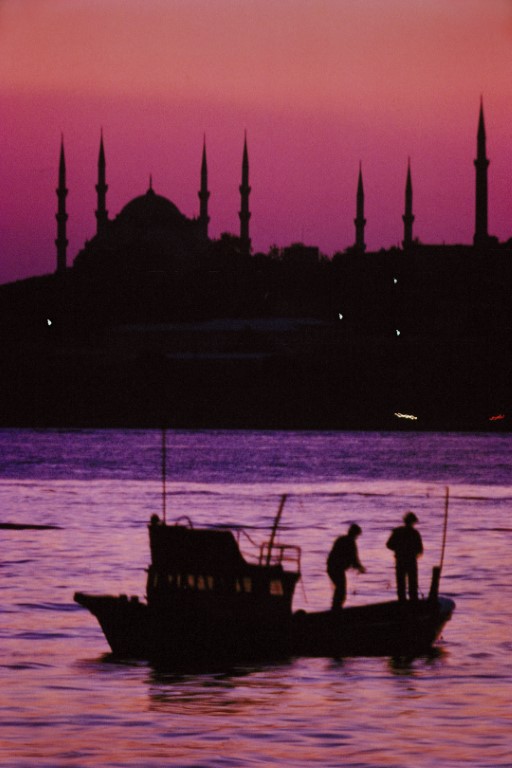
Nuri Bilge Ceylan
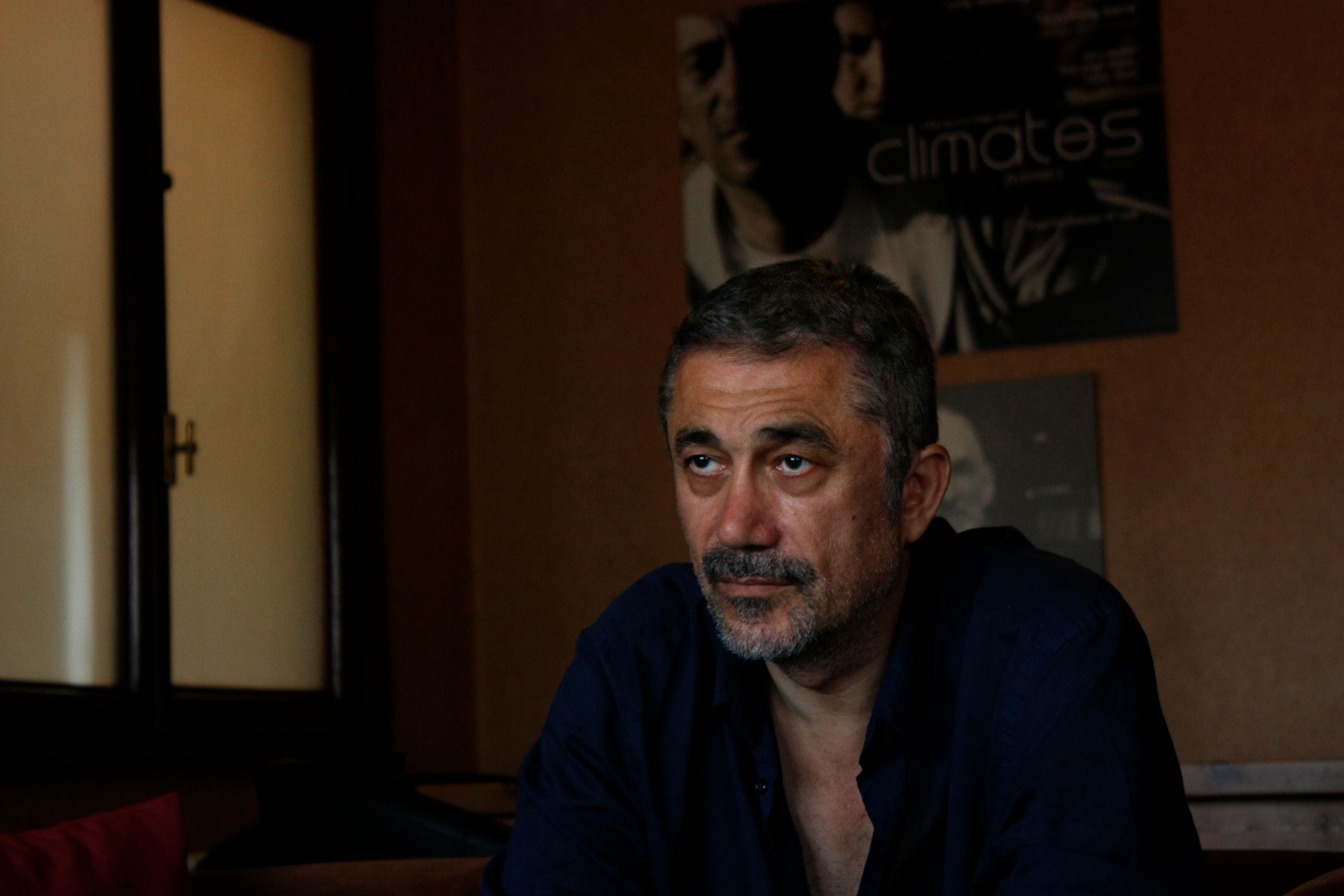
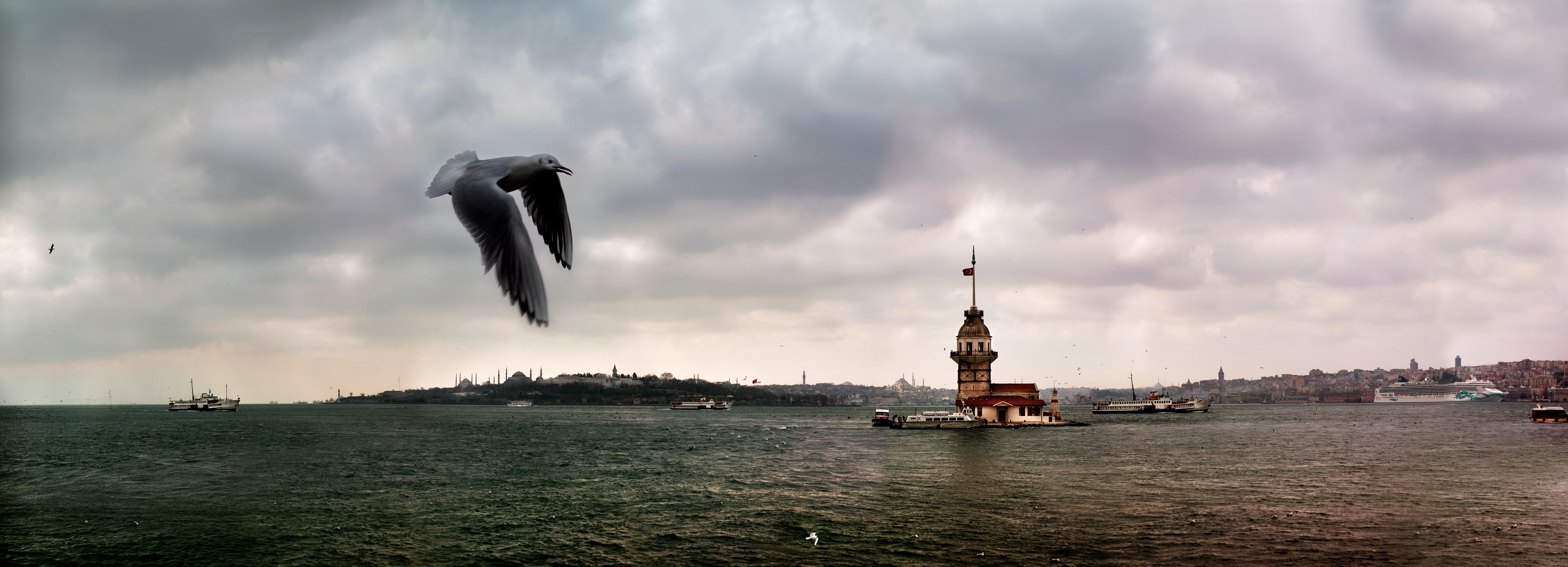
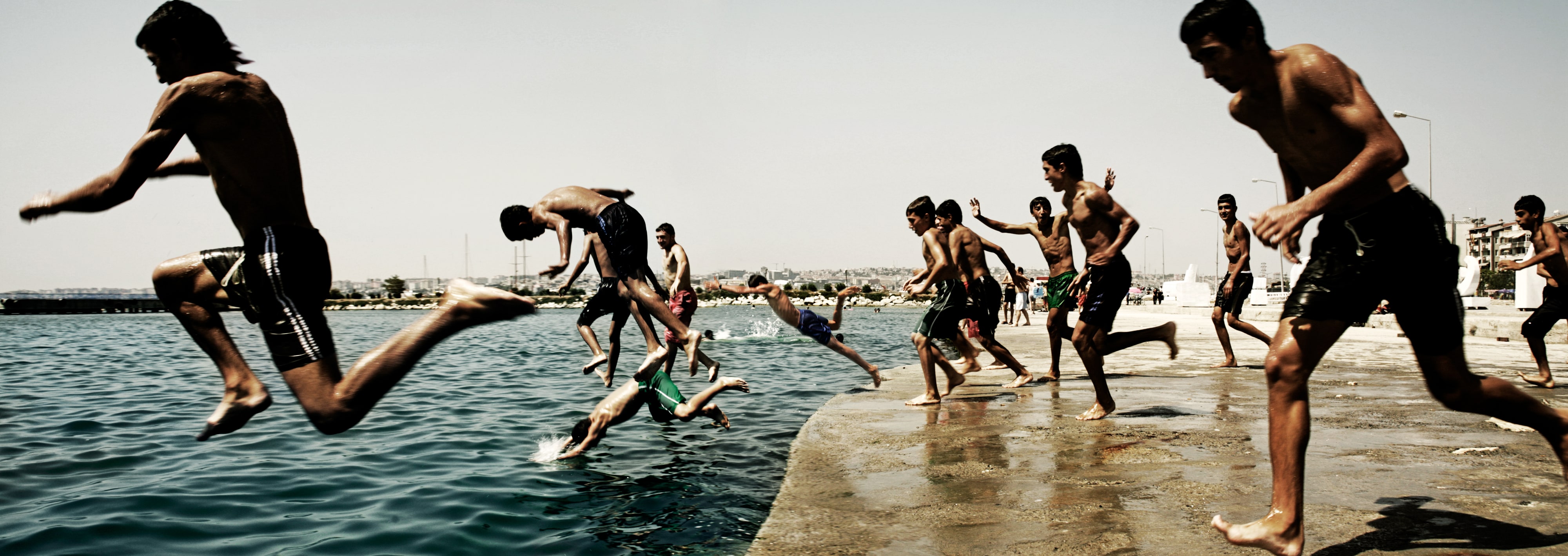
Nuri Bilge Ceylan, who started his art practice with photography, is a well-known producer and photographer with his works that are highly acclaimed in the field of cinema; he is the director of award-winning films that deal with the themes of deep human emotions and existentialism. Ceylan's films are known for their visually stunning cinematography and introspective narration. Among his prominent films are Once Upon a Time in Anatolia, Winter Sleep and Three Monkeys. In parallel with his films, in which photographic compositions attract attention, the artist's photography also captures the essence of the human experience with a deep sensitivity and introspection. In his photographs, Ceylan reflects man as a part of urban landscapes, sometimes as the city itself. While the cultural codes contained in every detail of these human and space landscapes desire to be seen by looking into our eyes, the artist concentrates on psychological portraits by capturing the geographical and traditional riches. With her lens, Ceylan invites the audience to reflect on the complexity of existence by revealing the subtle emotions, complex landscapes and impressive moments that shape our collective journey.
Nuri Bilge Ceylan (b. 1959, Istanbul) After graduating from the Department of Electrical Engineering at Boğaziçi University, he studied cinema at Mimar Sinan Fine Arts University for two years. Her solo exhibitions include Elsewhere, Istanbul Modern, Istanbul (2023); Everything Else is Far Away, Dirimart Dolapdere, Istanbul (2021); My Father's World, Dirimart Nişantaşı, Istanbul (2017); Panoramic View, CerModern, Ankara (2015); On Looking, Dirimart Nişantaşı, Istanbul (2014) and My Father's World, Tina Kim Gallery, New York (2014). Among the group exhibitions are Dirimart Sunar VIII, Dirimart İstinyePark, Izmir (2021) and Dirimart Sunar VII: Still Life, Dirimart Dolapdere, Istanbul (2020). Following the short film Koza in 1995, the artist's films Small Town(1997) and Trouble in May (1999) were shown at the Berlin Film Festival, and he won the Grand Jury Prize twice at the Cannes Film Festival with his films Far (2002), May Troubles Remote, Small Town, Climates (2006), Three Monkeys (2008) and Once Upon a Time in Anatolia (2011). He won the Best Director, Best Actor and FIPRESCI Prize. Ceylan was awarded the Palme d'Or, the highest award at the festival, for his film Winter Sleep (2014). Nuri Bilge Ceylan lives and works in Istanbul.
Nuri Bilge Ceylan
Sanat pratiğine fotoğrafla başlayan Nuri Bilge Ceylan, sinema alanında büyük beğeni toplayan eserleriyle tanınmış bir yapımcı ve fotoğrafçı; derin insani duygular ve varoluşçuluk temalarını işleyen ödüllü filmlerin yönetmenidir. Ceylan’ın filmleri görsel olarak çarpıcı sinematografileri ve içgözlemsel anlatımlarıyla bilinir. Öne çıkan filmleri arasında Bir Zamanlar Anadolu’da, Kış Uykusu ve Üç Maymun yer alır. Fotografik kompozisyonların dikkat çektiği filmlerine paralel olarak sanatçının fotoğrafçılığı da insan deneyiminin özünü derin bir duyarlılık ve içgözlemle yakalar. Ceylan, fotoğraflarında, insanı kent manzaralarının bir parçası, bazen kentin ta kendisi olarak yansıtır. Bu insan ve mekân manzaralarının her bir detayında yer alan kültürel kodlar gözlerimizin içine bakarak görülmeyi arzularken, sanatçı, coğrafi ve geleneksel zenginlikleri yakalayarak psikolojik portreler üzerine yoğunlaşır. Ceylan, objektifiyle, kolektif yolculuğumuzu şekillendiren incelikli duyguları, karmaşık manzaraları ve etkileyici anları ortaya çıkararak izleyicileri varoluşun karmaşıklığı üzerine düşünmeye davet eder.
Nuri Bilge Ceylan (d. 1959, İstanbul) Boğaziçi Üniversitesi Elektrik Mühendisliği Bölümü’nden mezun olduktan sonra Mimar Sinan Güzel Sanatlar Üniversitesi’nde iki yıl sinema eğitimi aldı. Kişisel sergileri arasında Başka Bir Yerde, İstanbul Modern, İstanbul (2023); Başka Her Şey Uzak, Dirimart Dolapdere, İstanbul (2021); Babamın Dünyası, Dirimart Nişantaşı, İstanbul (2017); Panoramik Bakış, CerModern, Ankara (2015); Bakmak Üzerine, Dirimart Nişantaşı, İstanbul (2014) ve Babamın Dünyası, Tina Kim Gallery, New York (2014) yer alıyor. Grup sergileri arasında Dirimart Sunar VIII, Dirimart İstinyePark, İzmir (2021) ve Dirimart Sunar VII: Natürmort, Dirimart Dolapdere, İstanbul (2020) bulunuyor. 1995’te Koza kısa filminin ardından çektiği Küçük Kasaba (1997) ve Mayıs Sıkıntısı (1999) filmleri Berlin Film Festivali’nde gösterilen sanatçı Uzak (2002), İklimler (2006), Üç Maymun (2008) ve Bir Zamanlar Anadolu’da (2011) filmleriyle Cannes Film Festivali’nde iki kez Jüri Büyük Ödülü, En İyi Yönetmen, En İyi Erkek Oyuncu ve FIPRESCI Ödülü’nü kazandı. Ceylan, Kış Uykusu (2014) filmiyle ise festivaldeki en büyük ödül olan Altın Palmiye’ye layık görüldü. Nuri Bilge Ceylan İstanbul’da yaşıyor ve çalışıyor.
Nuri Bilge Ceylan
Nuri Bilge Ceylan, qui a commencé sa pratique artistique par la photographie, est un producteur et photographe bien connu avec ses œuvres très acclamées dans le domaine du cinéma; il est le réalisateur de films primés qui traitent des thèmes des émotions humaines profondes et de l'existentialisme. Les films de Ceylan sont connus pour leur cinématographie visuellement époustouflante et leur narration introspective. Parmi ses films de premier plan figurent Il était une fois en Anatolie, Sommeil d'hiver et Trois Singes. Parallèlement à ses films, dans lesquels les compositions photographiques attirent l'attention, la photographie de l'artiste capture également l'essence de l'expérience humaine avec une sensibilité et une introspection profondes. Dans ses photographies, Ceylan reflète l'homme comme une partie des paysages urbains, parfois comme la ville elle-même. Alors que les codes culturels contenus dans chaque détail de ces paysages humains et spatiaux désirent être vus en nous regardant dans les yeux, l'artiste se concentre sur des portraits psychologiques en capturant les richesses géographiques et traditionnelles. Avec son objectif, Ceylan invite le public à réfléchir à la complexité de l'existence en révélant les émotions subtiles, les paysages complexes et les moments impressionnants qui façonnent notre voyage collectif.
Nuri Bilge Ceylan (né en 1959, Istanbul) Après avoir obtenu son diplôme du Département de génie électrique de l'Université de Boğaziçi, il a étudié le cinéma à l'Université des Beaux-Arts Mimar Sinan pendant deux ans. Ses expositions personnelles incluent Ailleurs, Istanbul Modern, Istanbul (2 décembre 23); Tout le reste est loin, Dirimart Dolapdere, Istanbul (2021); Le monde de mon Père, Dirimart Nişantaşı, Istanbul (2017); Vue panoramique, CerModern, Ankara (2015); Sur Bakak, Dirimart Nişantaşı, Istanbul (2014) et Le Monde de mon Père, Galerie Tina Kim, New York (2014). Les expositions collectives incluent Dirimart Presents VIII, Dirimart İstinyePark, İzmir (2021) et Dirimart Presents VII: Still Life, Dirimart Dolapdere, Istanbul (2020). Après le court métrage Koza en 1995, il réalise les films Petite ville (1997) et Trouble de mai (1999). L'artiste a remporté deux fois le Grand Prix du Jury au Festival de Cannes avec ses films Loin (2002), Climats (2006), Trois Singes (2008) et il était une fois en Anatolie (2011), projetés au Festival de Berlin. Il a remporté le prix du meilleur réalisateur, du meilleur acteur et le prix FIPRESCI. Ceylan a reçu la Palme d'Or, la plus haute distinction du festival, pour son film Hibernation (2014). Nuri Bilge Ceylan vit et travaille à Istanbul.
Nuri Bilge Ceylan
Nuri Bilge Ceylan
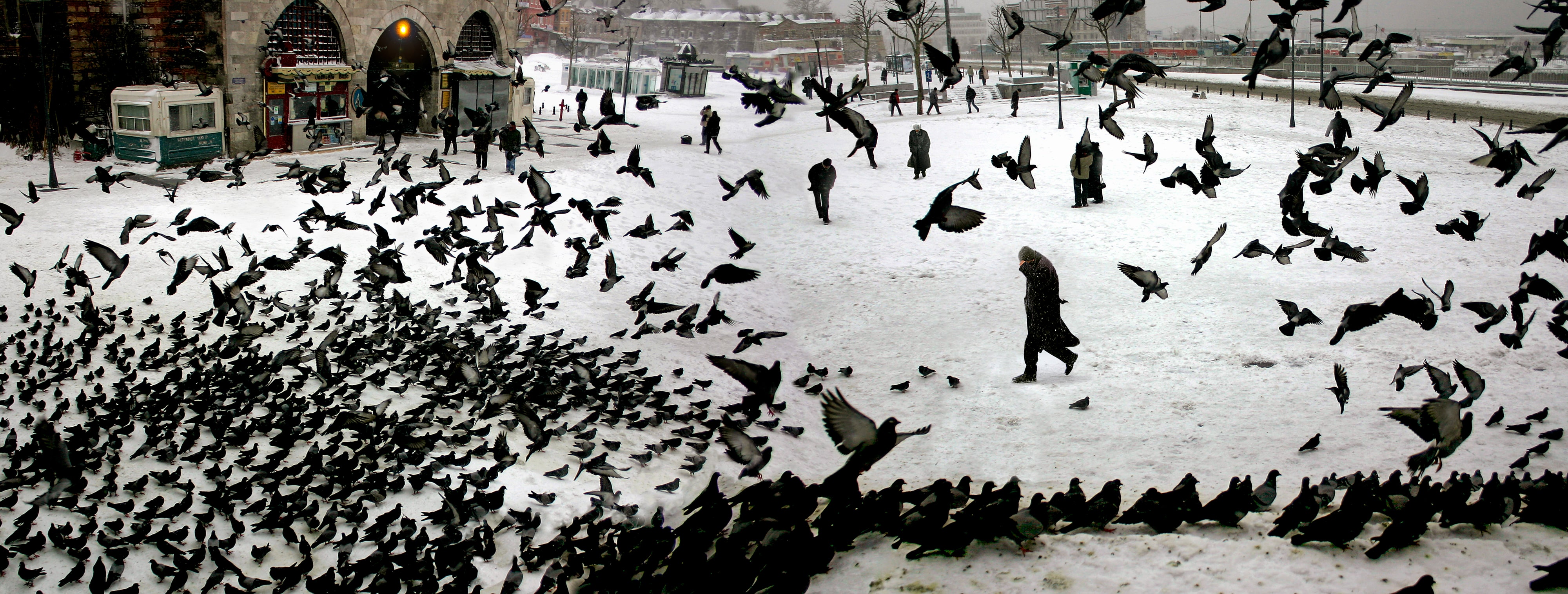
Nuri Bilge Ceylan
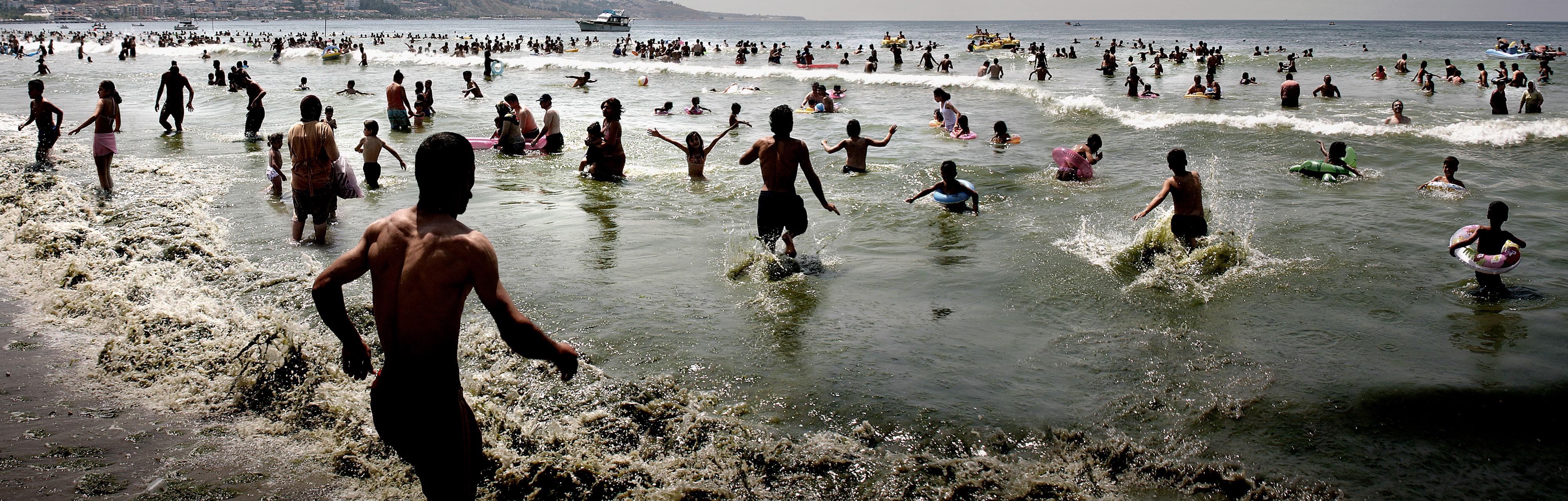
Nuri Bilge Ceylan
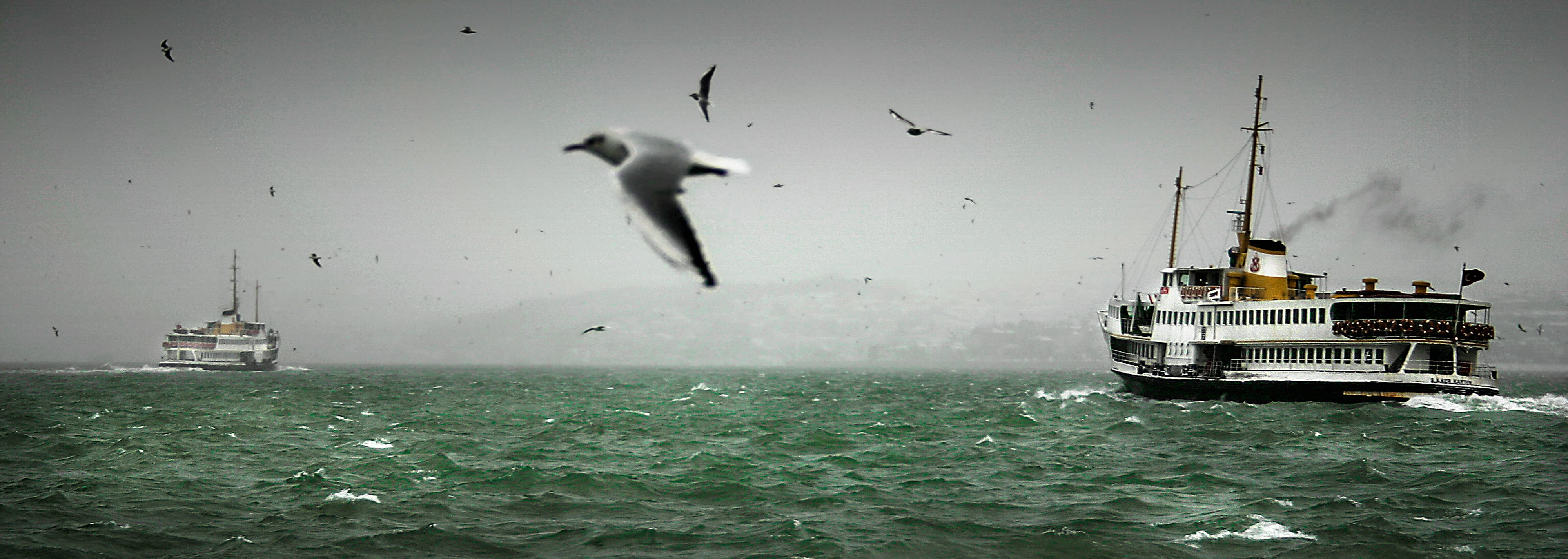
Nuri Bilge Ceylan
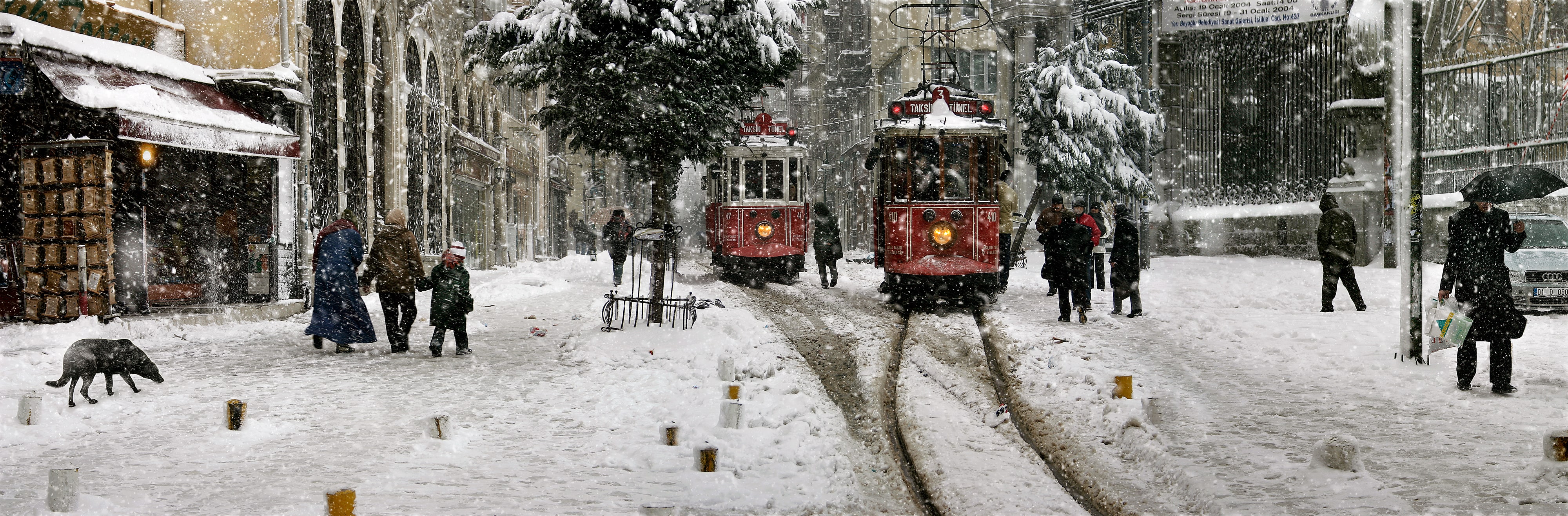
Nuri Bilge Ceylan
Nuri Bilge Ceylan
Ara Güler
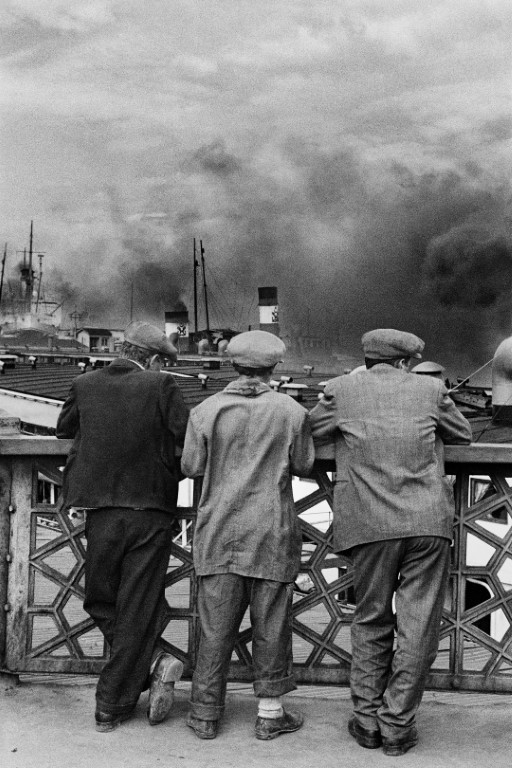
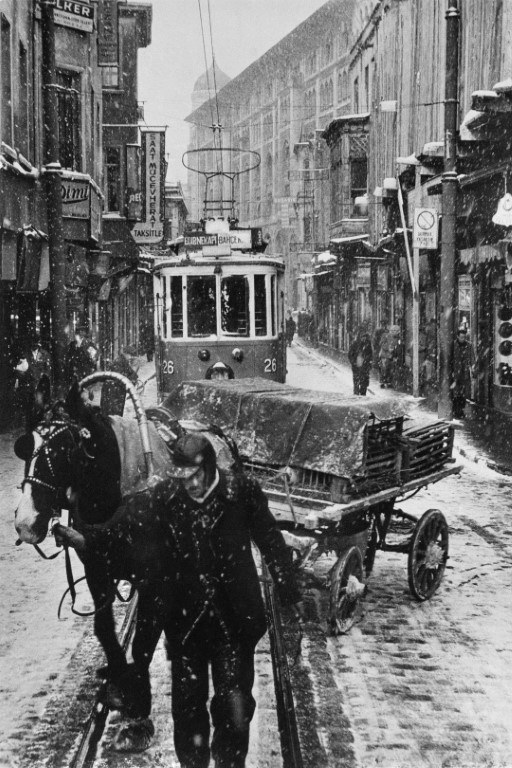
Ara Güler, born in Istanbul in 1928, is widely celebrated both nationally and internationally as a master of the arts of photo-journalism and photography. During his childhood he was strongly influenced by the cinema; later, when a lycée student, he worked in film studios. His ambition being to become a theatrical director and playwright, he took lessons in acting and drama from the celebrated theatre manager and producer Muhsin Ertuğrul. While still at school, he began to publish short stories – in both Turkish and Armenian – in various newspapers and literary magazines. In 1951, he completed his studies at Getronagan Lycée (a private Armenian school), and entered the Istanbul University Faculty of Economics; having resolved to pursue a career in photo-journalism, however, he left university without completing the course and did his military service. He began to work as a photo-journalist – for the Yeni İstanbul (‘New Istanbul’) newspaper – in 1950, and this was followed by work for leading magazines of the day such as Devir (‘The Age’), Resimli Hayat (‘Illustrated Life’) and Hayat (‘Life’).
In 1956, Ara Güler began to produce pieces of photo-journalism for Time and Life magazine; two years later, his work began to appear in Paris Match and Stern. Not long afterwards, Magnum Photos began to distribute his photographs worldwide. A photographic report he produced on the subject of Noah’s Ark was distributed by Magnum Photos to over 100 publications. During this period, he also produced a report on the statues on Mount Nemrut, and it was thanks to his photographs that the world got to know of the site. Yet another report of major significance focussed on the long-forgotten ancient city of Aphrodisias; it aroused worldwide interest, causing the ruins to be rediscovered and archaeological excavations to begin in the area.
Up to 1961, Ara Güler worked as Head of Photography for Hayat magazine. That year, the British Journal of Photography Yearbook proclaimed him one of the seven best living photographers; he was also admitted to the American Society of Magazine Photographers (ASMP), becoming the only member of the organisation who hailed from Turkey. In 1962, Leica Magazine described him as ‘Master of Leica’, and many of his photographs were featured in an issue of Camera magazine (which was then one of the leading publications in the world of photography). He contributed some of the photographs for Lord Kinross’s book on the Hagia Sophia, published in 1971, and it was his photograph of Picasso that appeared on the cover of Picasso: Métamorphoses et Unité, a book prepared by the Skira publishing firm to commemorate the artist’s 90th birthday.
In 1974, Ara Güler was invited to visit the United States. There, he conducted interviews with, and photographed, a number of celebrated Americans; these photographs were subsequently put on display in several countries under the title ‘Creative Americans’. At around this time, he also began to make Kahramanın Sonu (‘Hero’s End), an experimental documentary film about the dismantling of the WWI battleship Yavuz. By now, his photographs on themes related to the arts, the history of art, archaeology and architecture were appearing in Time, Life, Horizon and Newsweek magazines, as well as in Skira publications. From 1989 onwards, he took part in the ‘Day in the Life of ...’ project together with other world-famous photographers, visiting Indonesia, Malaysia and Brunei in the process. Books he had been working on for many years – for instance, Sinan, Living in Turkey and Turkish Style – were published by leading publishing houses in the USA, Britain, France and Singapore.
Among the many awards Ara Güler received were the following: the Légion d’honneur, Officier des Arts et des Lettres (given by the French government in 2002); the Médaille de la Ville de Paris (given by the Paris Municipal Authority in 2009); the Presidency of the Turkish Republic Culture and the Arts Grand Award, given in 2005; the Award for Services to Culture and the Arts of the Ministry of Culture and Tourism of the Turkish Republic, given in 2008; the Turkish National Assembly’s Award for Outstanding Services, given in 2009; the USA-based Lucie Foundation’s Lifetime Achievement Award, given in 2009; and the Culture and the Arts Grand Award of the Ministry of Culture and Tourism of the Turkish Republic, given in 2011. In addition, he received Honorary Doctorates from Yıldız Technical University (2004), Mimar Sinan Fine Arts University (2013) and Boğaziçi University (2014).
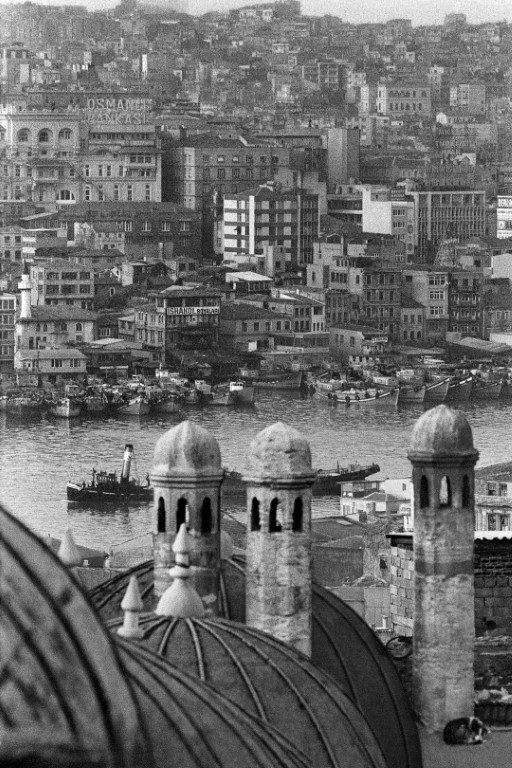
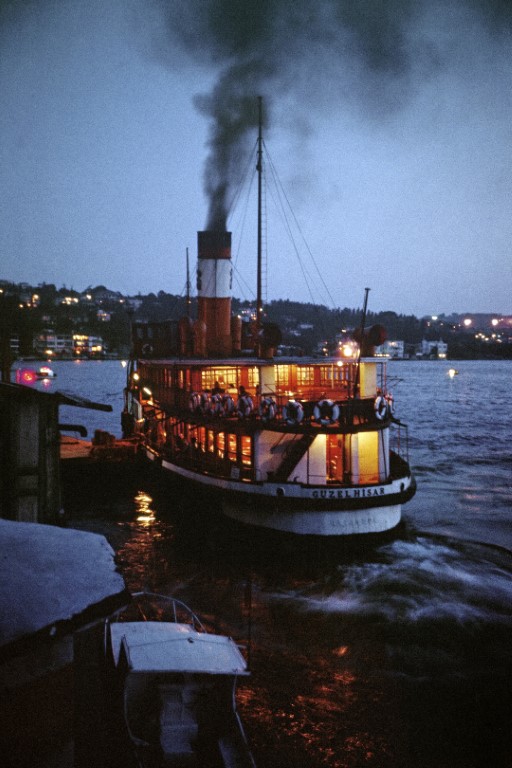
During his lifetime, Ara Güler conducted interviews with, and photographed, many famous people – including Bertrand Russell, Pablo Picasso and Salvador Dali as well as famous Turks such as writer Yaşar Kemal, ceramicist Füreya Koral and artist Fikret Mualla. Thanks to his photographs of Istanbul, he came to be closely identified with his native city; however, he also visited and photographed many other locations, both in Turkey and elsewhere. In 2016, two bodies – the Ara Güler Archives and Research Center, and the Ara Güler Museum – were set up as a result of a partnership between Ara Güler and the Doğuş Group. On 16 August 2018 (his 90th birthday), Ara Güler attended the opening of the Ara Güler Museum in person. Shortly afterwards, on 17 October, he passed away in Istanbul.
Ara Güler
Foto muhabirliği ve fotoğraf sanatının ulusal ve uluslararası alanda ün kazanmış en önemli temsilcilerinden biri olan Ara Güler, 1928 yılında İstanbul’da doğdu. Çocukluk yıllarında sinemadan çok etkilenen Ara Güler, lisedeyken film stüdyolarında çalıştı. 1951 yılında Getronagan Lisesi’nden mezun oldu. Muhsin Ertuğrul’dan tiyatro ve oyunculuk eğitimi aldı. Rejisör veya oyun yazarı olmak isteyen Ara Güler’in, bu yıllarda bazı edebiyat dergilerinde ve gazetelerde Türkçe ve Ermenice öyküleri yayımlandı. Lise eğitiminin ardından İstanbul Üniversitesi İktisat Fakültesi’ne devam etti. Ancak foto muhabiri olmaya karar vermesi nedeniyle üniversiteyi yarıda bırakıp askerlik hizmetini yerine getirdi. Gazetecilik yaşamına 1950’de Yeni İstanbul gazetesinde başlayarak, Devir, Resimli Hayat ve Hayat gibi dönemin önemli fotoğraf dergilerinde çalıştı. 1956’da Time ve Life, 1958’de Paris Match ve Stern dergilerinin foto muhabirliğini üstlendi. Aynı dönemlerde Magnum Photos Ara Güler’in fotoğraflarının uluslararası dağıtımına başladı. Nuh’un Gemisi röportajını yaptı ve bu fotoğraflar Magnum Photos tarafından 100’ün üzerinde yayına dağıtıldı.
Yine bu yıllarda Nemrut Dağı röportajını yaptı ve tüm dünya Nemrut Dağı’nı onun fotoğrafları ile tanıdı. Bir diğer önemli röportajı Aphrodisias ile de unutulmuş bu antik kentin yeniden keşfedilmesini ve dünyaca tanınmasını sağladı. 1961 yılına kadar Hayat dergisinde fotoğraf bölümü şefi olarak çalıştı. 1961’de, İngiltere’de yayımlanan British Journal of Photography Yearbook, onu dünyanın en iyi yedi fotoğrafçısından biri olarak tanımladı. Aynı yıl Amerikan Dergi Fotoğrafçıları Derneği’ne (ASMP) kabul edildi ve bu kuruluşun Türkiye’den tek üyesi oldu. 1962 yılında Leica dergisi onu “Master of Leica” başlığıyla duyurdu ve fotoğraf dünyasının o dönemin en önemli yayınlarından biri olan Camera dergisinde geniş bir portfolyosu yayınlandı. Lord Kinross’un 1971’de basılan Hagia Sophia kitabının bazı fotoğraflarını çekti. Skira Yayınevi tarafından Picasso’nun 90’ıncı yaş günü için hazırlanan Picasso Métamorphose et Unité adlı kitabının kapak fotoğrafı onundu. 1974’de Amerika Birleşik Devletleri’ne davet edildi ve birçok ünlü Amerikalı’nın fotoğrafını çektikten sonra Yaratıcı Amerikalılar adlı sergisini dünyanın birçok kentinde sergiledi.
Yine aynı yıllarda Yavuz Zırhlısı’nın sökülmesini konu alan deneysel bir belgesel filmi olan Kahramanın Sonu’nu çekmeye başladı. Sanat, sanat tarihi, arkeoloji ve mimari konularındaki fotoğrafları Time, Life, Horizon, Newsweek ve Skira Yayınevi tarafından yayınlarında kullanıldı. 1989’dan başlayarak Endonezya, Malezya ve Brunei’deki “Day and the Life of...” programına dünyanın en ünlü fotoğrafçılarıyla birlikte katıldı. Uzun yıllar üzerinde çalıştığı Sinan, Living in Turkey, Turkish Style gibi kitapları Amerika, İngiltere, Fransa ve Singapur’da önemli yayınevleri tarafından basıldı. 2002 yılında Fransız hükümeti tarafından “Légion d'honneur, Officier des Arts et des Lettres”, 2009 yılında Paris Belediyesi tarafından “La Médaille de la Ville de Paris” unvanları verildi. 2005 yılında Türkiye Cumhuriyeti Cumhurbaşkanlığı Kültür Sanat Büyük Ödülü, 2008 yılında Türkiye Cumhuriyeti Kültür ve Turizm Bakanlığı Kültür Sanat Hizmet Ödülü, 2009 yılında Türkiye Büyük Millet Meclisi Üstün Hizmet Ödülü, 2009 yılında ABD’de Lucie Awards Yaşam Boyu Onur Ödülü ve 2011 yılında Türkiye Cumhuriyeti Kültür ve Turizm Bakanlığı Kültür Sanat Büyük Ödülü’ne layık görüldü. 2004 yılında Yıldız Teknik Üniversitesi’nden, 2013 yılında Mimar Sinan Güzel Sanatlar Üniversitesi’nden, 2014 yılında da Boğaziçi Üniversitesi’nden “Fahri Doktor” unvanı aldı. Bertrand Russell, Yaşar Kemal, Pablo Picasso, Füreya Koral, Salvador Dali ve Fikret Mualla gibi birçok ünlü kişinin fotoğrafını çekti ve onlarla röportajlar yaptı. İstanbul ile özdeşleşen fotoğraflarının yanında Türkiye ve dünyanın farklı coğrafyalarını fotoğrafladı. 2016 yılında Doğuş Grubu ile yapmış olduğu işbirliği çerçevesinde Ara Güler Arşiv ve Araştırma Merkezi hayata geçti. 90’ıncı yaş günü olan 16 Ağustos 2018’de Ara Güler Müzesi kapılarını ziyaretçilere açtı. Ara Güler, 17 Ekim 2018’de 90 yaşında İstanbul’da hayata gözlerini yumdu.
Ara Güler
Ara Güler, l'un des représentants les plus importants du photojournalisme et de l'art de la photographie qui a acquis une renommée nationale et internationale, est né à Istanbul en 1928. Ara Güler, qui a été très impressionné par le cinéma pendant son enfance, a travaillé dans des studios de cinéma pendant ses études secondaires. Il est diplômé de l'école secondaire Getronagan en 1951. Il a reçu une formation de théâtre et d'acteur de Muhsin Ertuğrul. Ara Güler, qui souhaitait devenir metteur en scène ou dramaturge, a publié ses histoires en turc et en arménien dans certaines revues et journaux littéraires au cours de ces années. Après ses études secondaires, il a fréquenté la Faculté d'économie de l'Université d'Istanbul. Cependant, en raison de sa décision de devenir photojournaliste, il a quitté l'université à mi-chemin et a accompli son service militaire. Il a commencé sa carrière de journaliste au journal Yeni Istanbul en 1950 et a travaillé dans d'importants magazines de photographie de l'époque tels que Devir, Hayat illustré et Hayat. Il travaille comme photojournaliste pour les magazines Time et Life en 1956, et pour les magazines Paris Match et Stern en 1958. En même temps, Magnum Photos a commencé la distribution internationale des photographies de Ara Güler. Il a fait l'interview de l'Arche de Noé et ces photos ont été distribuées à plus de 100 publications par Magnum Photos.
Encore une fois au cours de ces années, le Mont Nemrut a fait son interview et le monde entier a appris à connaître le Mont Nemrut à travers ses photos. Avec une autre interview importante, Aphrodisias, il a aidé cette ville antique oubliée à être redécouverte et connue dans le monde entier. Il a travaillé comme chef du département de photographie du magazine Hayat jusqu'en 1961. En 1961, le British Journal of Photography Yearbook, publié en Angleterre, le décrit comme l'un des sept meilleurs photographes du monde. La même année, il a été admis à l'American Magazine Photographers Association (ASMP) et est devenu le seul membre de cette organisation originaire de Turkiye. en 1962, le magazine Leica l'a annoncé avec le titre "Master of Leica" et un vaste portfolio de lui a été publié dans Camera magazine, l'une des publications les plus importantes du monde de la photographie à cette époque. Il a pris quelques photographies du livre de Lord Kinross Hagia Sophia, qui a été publié en 1971. La photo de couverture du livre de Picasso Métamorphose et Unité, préparée par la Maison d'édition Skira pour le 90e anniversaire de Picasso, était la sienne. en 1974, il est invité aux États-Unis et, après avoir photographié de nombreux Américains célèbres, expose son exposition Creative Americans dans de nombreuses villes du monde entier.
Toujours dans les mêmes années, il a commencé à tourner Kahramanin Sonu, un film documentaire expérimental sur le démantèlement du véhicule blindé Yavuz. Ses photographies sur l'art, l'histoire de l'art, l'archéologie et l'architecture ont été utilisées dans des publications de Time, Life, Horizon, Newsweek et Skira Publishing House. à partir de 1989, " Le jour et la vie de l'Indonésie, de la Malaisie et du Brunei..."il a participé au programme avec les photographes les plus célèbres du monde. Ses livres, tels que Sinan, Living in Turkey et Turkish Style, sur lesquels il a travaillé pendant de nombreuses années, ont été publiés par d'importantes maisons d'édition en Amérique, en Angleterre, en France et à Singapour. Il a reçu le titre de « Légion d'honneur, Officier des Arts et des Lettres » par le gouvernement français en 2002, et « La Médaille de la Ville de Paris » par la municipalité de Paris en 2009. Il a reçu le Grand Prix présidentiel de la culture et des arts de la République de Turkiye en 2005, le Prix du service culturel et artistique du ministère de la Culture et du Tourisme de la République de Turkiye en 2008, le Prix du service distingué de la Grande Assemblée nationale turque en 2009, les Prix Lucie. Prix d'honneur à vie aux États-Unis en 2009 et Prix du service culturel et artistique de la République de Turkiye en 2011. Il a été jugé digne du Grand Prix de la culture et des arts du ministère du Tourisme. Il a reçu le titre de « Docteur honoraire » de l'Université technique de Yıldız en 2004, de l'Université des beaux-arts Mimar Sinan en 2013 et de l'Université de Boğaziçi en 2014. Il a photographié et interviewé de nombreuses personnalités telles que Bertrand Russell, Yaşar Kemal, Pablo Picasso, Füreya Koral, Salvador Dali et Fikret Mualla. En plus de ses photographies identifiées à Istanbul, il a photographié différentes géographies de la Turkiye et du monde. en 2016, le Centre d'archives et de recherche Güler a été lancé dans le cadre de la coopération avec le groupe Doğuş. Le 16 août 2018, jour du 90e anniversaire du musée Güler, le musée Ara Güler a ouvert ses portes aux visiteurs. Ara Güler est décédé le 17 octobre 2018 à l'âge de 90 ans à Istanbul.
Ara Güler
Ara Güler
Ara Güler
Ara Güler
Ara Güler
Devrim Erbil
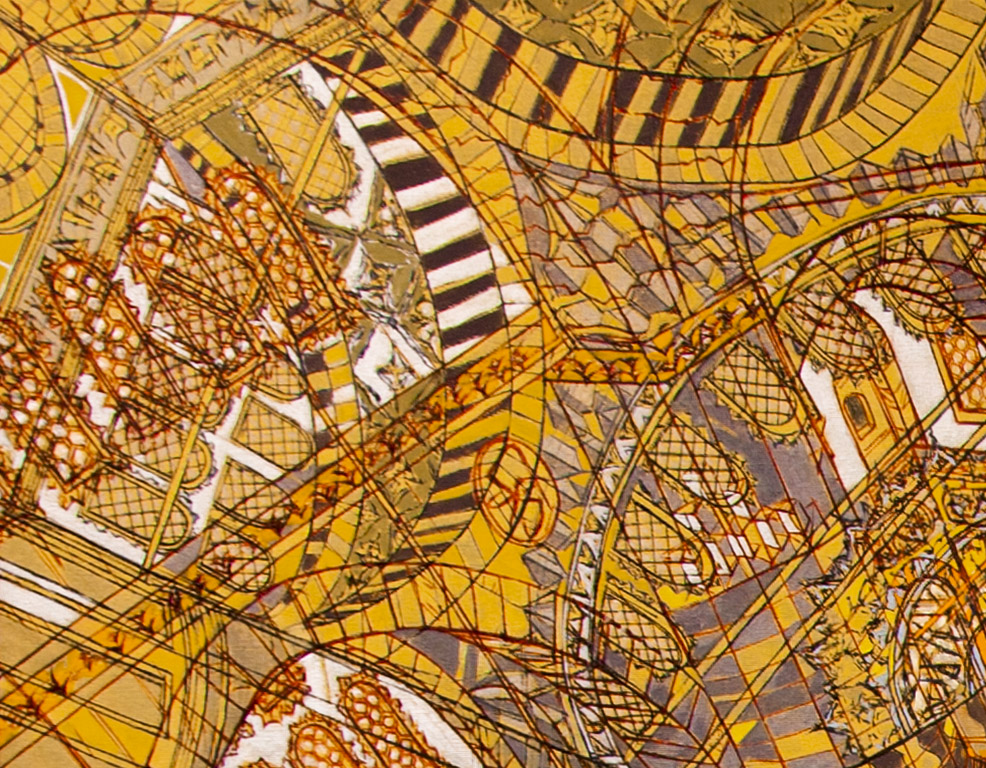
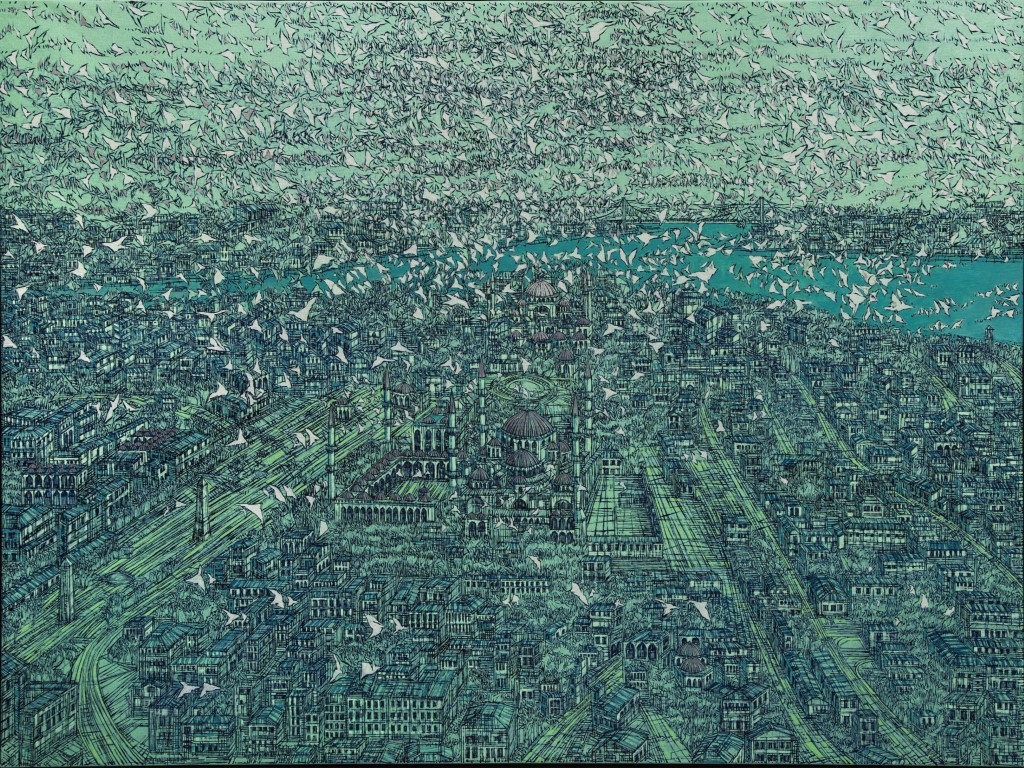
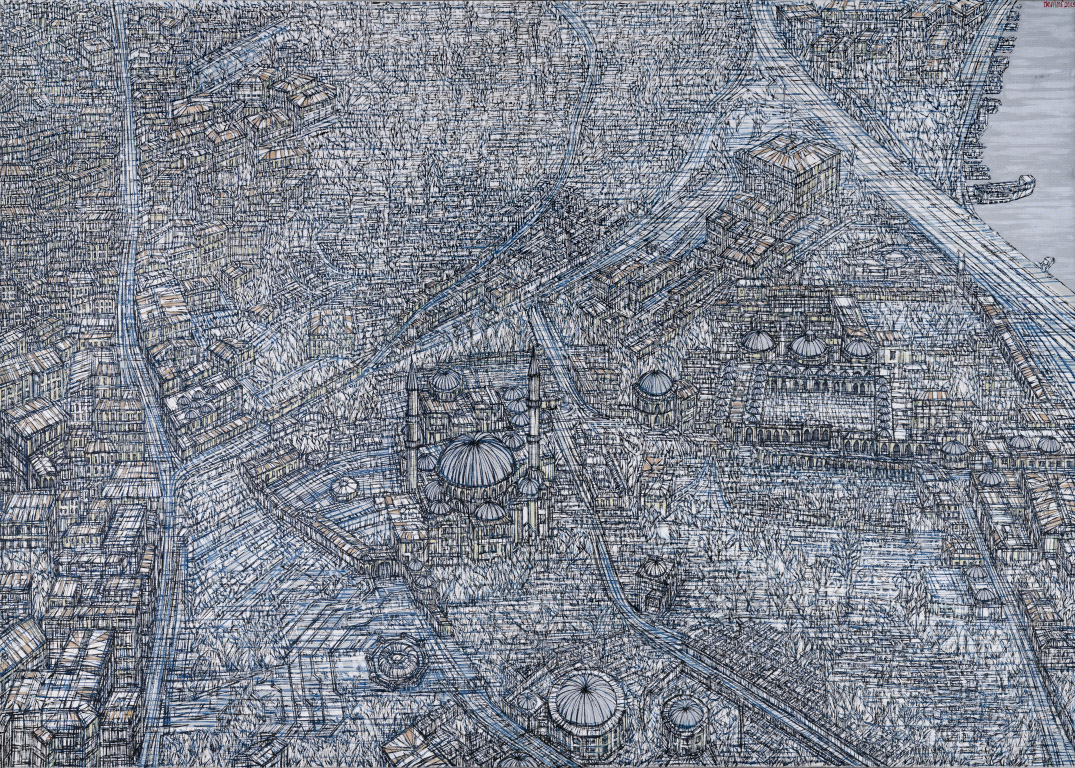
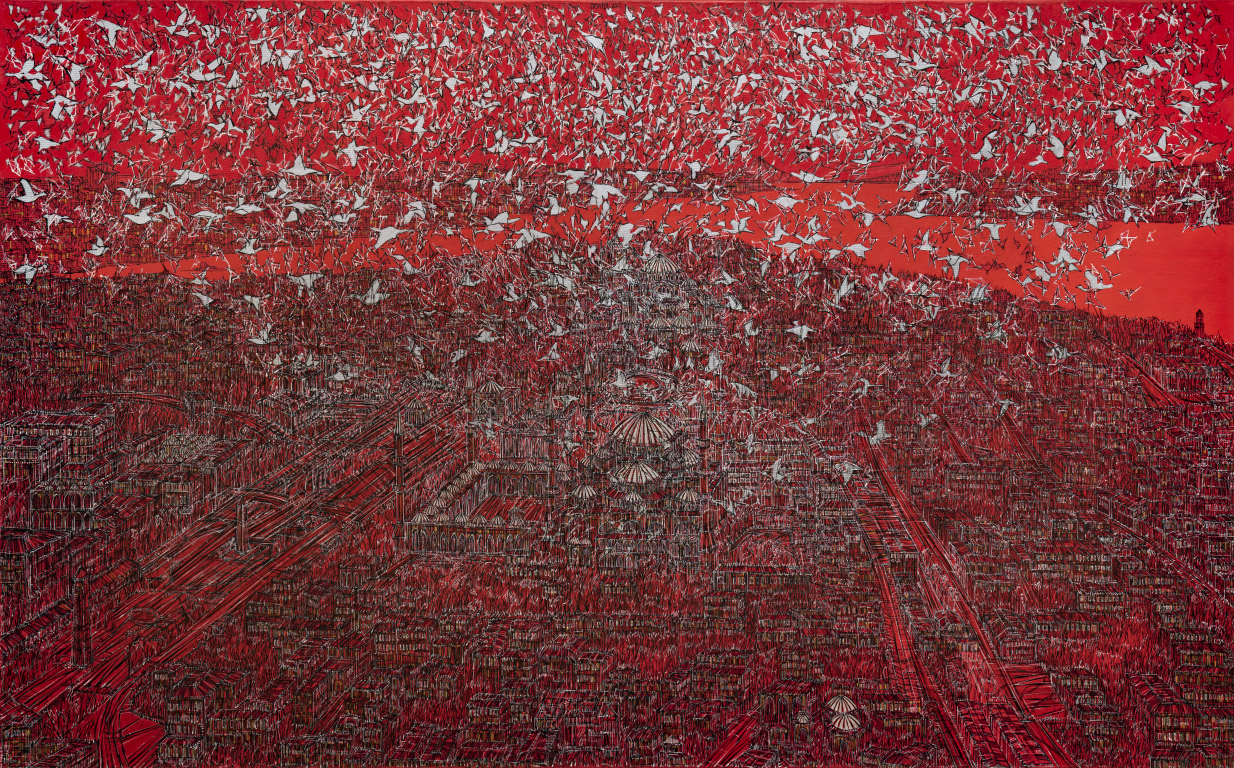
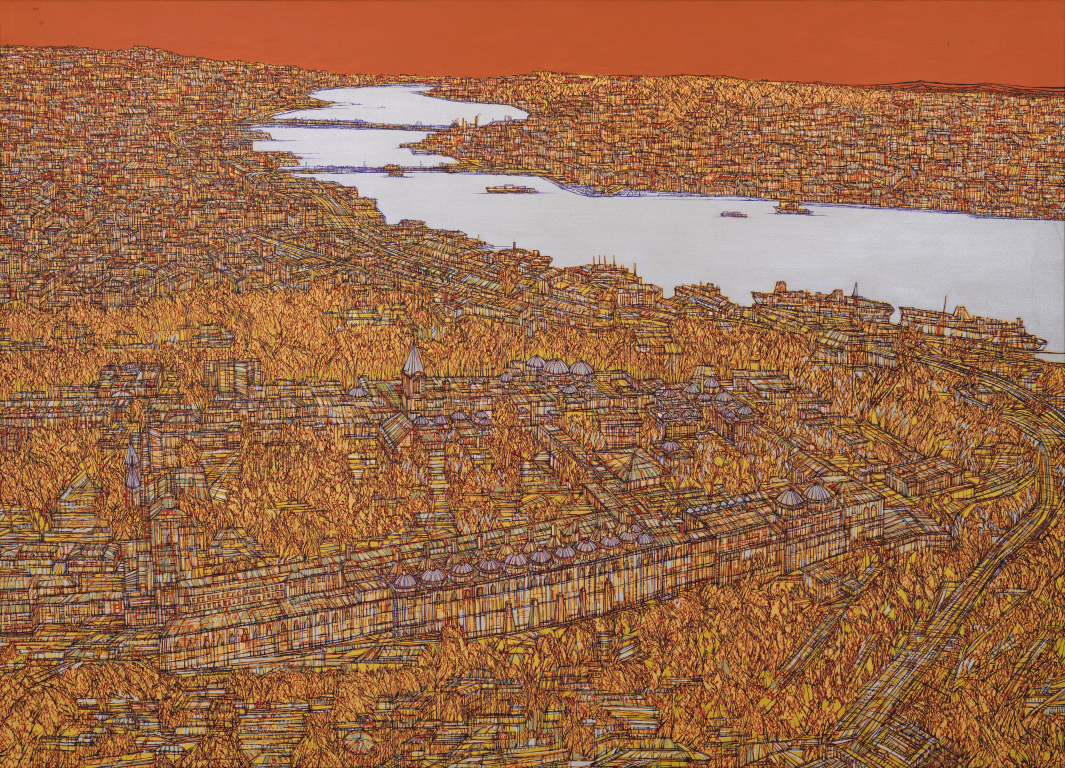
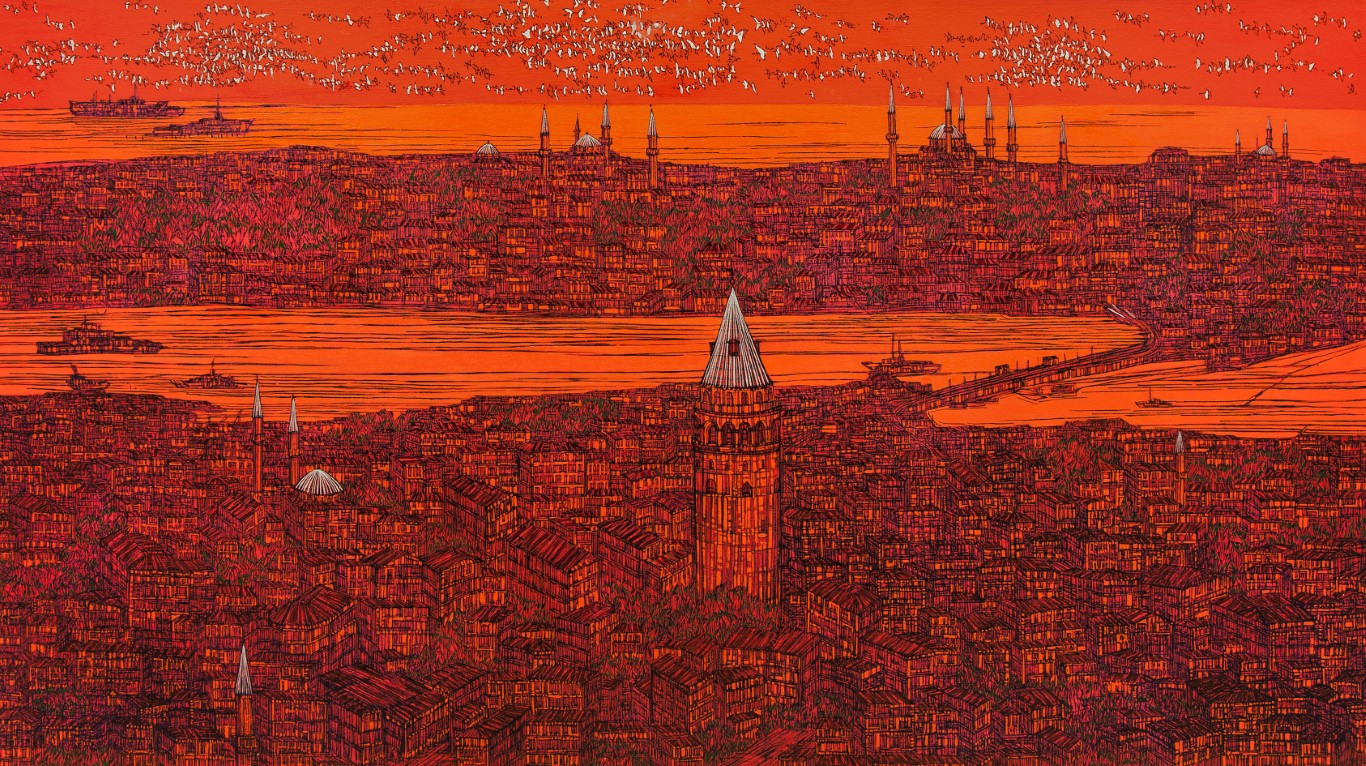
Devrim Erbil, inspired by our traditional depiction art and miniature, has tried to develop a linear hoarding taste, a surface sensitivity that escapes from depth. In his paintings, the line usually assumed the basic function, and color replaced an element that complemented it in the second plan. In addition, the fact that nature observation entered into his painting with a measure of passion directed the artist to regional impressions. Devrim Erbil's art, which develops intertwined with graphic events, can be evaluated within the group of locally sourced trends that want to put our contemporary painting on a basis linked to tradition and are looking for a way out on this basis. In one place, he explained his view of art as follows: “I am against the behavior that expects the currents developing in the West to plant and sprout on our land. I believe that it is necessary to approach the West with a conscious choice, to search for art formation beyond formal schemes, to settle accounts with the West by looking at our contemporary problems from our own artistic point of view.” He has always adhered to this understanding in his landscape paintings about Istanbul, especially in his surface-based and graphic compositions, which he focused on in the 1960s, in a series of works under the common title Variations on Life in an Anatolian Town.
Devrim Erbil, inspired by our traditional depiction art and miniature, has tried to develop a linear hoarding taste, a surface sensitivity that escapes from depth. In his paintings, the line usually assumed the basic function, and color replaced an element that complemented it in the second plan. In addition, the fact that nature observation entered into his painting with a measure of passion directed the artist to regional impressions. Undoubtedly, the efforts of the workshop teacher Bedri Rahmi Eyüboğlu, who guided a generation, had a great share in this. While studying nature and its surroundings with receptive eyes, he rearranged the notes he received from it with a kind of modern embroidery style, collected them in a city and nature plan reminiscent of the Ottoman miniature painter Matrakçı Nasuh, thus aiming at the unity of observation and original interpretation. In Devrim Erbil's later period works, linear expression gradually gave way to a painting of embroidery origin, with paint largely involved in the work, but the accumulation of sensitivity created by his old paintings also added a limiting meaning to his paintings of this period. In 1954, he worked at the state Academy of Fine Arts as a student of Halil Dikmen and Bedri Rahmi Eyüboğlu. the artist, who founded the "Abstractionist Sevens" group in 1959, became an assistant at the Academy after teaching painting and art history between 1961 and 1965. In 1963, he founded the “Blue Group” together with Altan Gürman, Adnan Çoker, Sarkis and Tülay Tura. in 1965, he made studies in Spain, Italy and France with a scholarship granted by the Spanish government.
Erbil became an associate professor in 1970 and a professor in 1981, and served as the Director of the Istanbul Museum of Painting and Sculpture between 1979 and 1982. In 1985, he was appointed head of the Department of Painting at Mimar Sinan University. Devrim Erbil, who was honored with the title of “State Artist” by the Ministry of Culture in 1991, retired from his post at Mimar Sinan University in 2004. Bearing traces of local sensitivity in the texture of his paintings, Erbil retained the same texture after the 1980s, but he focused on the images of flocks of birds and coastal impressions vibrating under the effects of light. In recent years, when the artist has reached a contemporary sensibility in his intense linear designs, he has turned to landscapes based on Istanbul. The artist's works are in Istanbul, Ankara, Izmir Painting and Sculpture Museums, Bucharest Museum of Modern Arts, Banja Luka Umnetnicka Galerija, Ben and Minnesota, Abby Grey Foundation Collection, Ankara National Library Collection, official institutions and private collections at home and abroad.
Devrim Erbil
Devrim Erbil, geleneksel tasvir sanatımızdan ve minyatürden esinlenerek çizgisel bir istif beğenisini derinlikten kaçan bir yüzey duyarlılığını geliştirmeye çalışmıştır. Resimlerinde çizgi, genellikle temel işlevi üstlenmiş, renkse onu ikinci planda tamamlayan bir öğe yerine geçmiştir. Ayrıca doğa gözleminin, bir tutku ölçüsünde resmine girmiş olması, sanatçıyı bölgesel izlenimlere yöneltmiştir. Devrim Erbil’in grafik etkinliklerle iç içe gelişen sanatı, çağdaş resmimizi gelenekle bağlantılı bir temele oturtmak isteyen, bu temel üstünde bir çıkış yolu arayan yöresel kaynaklı eğilimler grubu içinde değerlendirilebilir. Bir yerde, sanat görüşünü şöyle açıklamıştır: “Batı’da gelişen akımları, bizim topraklarımıza ekip, filiz vermesini bekleyen davranışa karşıyım. Batı’ya bilinçli bir seçmeyle yaklaşmak, sanat oluşumunu biçimsel şemaların ötesinde aramak, çağdaş sorunlarımıza kendi sanat açımızdan bakarak, Batı’yla hesaplaşmak gerektiğine inanıyorum.” Özellikle 1960 yıllarında ağırlık verdiği yüzeye dayalı ve grafik kökenli kompozisyonlarında, bir Anadolu Kasabasında Yaşantı Üzerine Çeşitlemeler ortak başlığı altındaki bir dizi çalışmasında, İstanbul’u konu alan manzara resimlerinde hep bu anlayışa bağlı kaldı.
Devrim Erbil, geleneksel tasvir sanatımızdan ve minyatürden esinlenerek çizgisel bir istif beğenisini derinlikten kaçan bir yüzey duyarlılığını geliştirmeye çalışmıştır. Resimlerinde çizgi, genellikle temel işlevi üstlenmiş, renkse onu ikinci planda tamamlayan bir öğe yerine geçmiştir. Ayrıca doğa gözleminin, bir tutku ölçüsünde resmine girmiş olması, sanatçıyı bölgesel izlenimlere yöneltmiştir. Bunda, atölye hocası Bedri Rahmi Eyüboğlu’nun, bir kuşağa yön veren çabalarının da kuşkusuz büyük payı olmuştur. Doğayı ve çevresini alıcı gözlerle incelerken, ondan aldığı notları bir tür modern nakış beğenisiyle yeniden düzenlemiş, daha çok Osmanlı minyatür ressamı Matrakçı Nasuh’u anımsatan bir kent ve doğa planı içinde toplamış, böylece gözlem ve özgün yorum birliğini amaçlamıştır. Devrim Erbil’in sonraki dönem çalışmalarında, çizgisel anlatım, boyanın büyük ölçüde işe karışmasıyla yerini yavaş yavaş nakış kökenli bir resme bırakmış, ama eski resimlerinin oluşturduğu duyarlık birikimi, bu dönem resimlerine de sınırlayıcı bir anlam katmıştır.
1954’de devlet Güzel Sanatlar Akademisi’de Halil Dikmen ve Bedri Rahmi Eyüboğlu’nun öğrencisi olarak çalıştı. 1959’da “Soyutçu Yediler” grubunu kuran sanatçı 1961-1965 yılları arasında resim ve sanat tarihi öğretmenliği yaptıktan sonra Akademi’de asistan oldu. 1963’de Altan Gürman, Adnan Çoker, Sarkis ve Tülay Tura ile birlikte “Mavi Grup”u kurdu. 1965’de İspanya hükümetinin verdiği burs ile İspanya, İtalya ve Fransa’da incelemelerde bulundu. 1970 yılında doçent, 1981 yılında profesör olan Erbil, 1979-1982 yılları arasında İstanbul Resim ve Heykel Müzesi Müdürlüğü görevinde bulundu.1985’te ise Mimar Sinan Üniversitesi Resim Bölümü başkanlığına getirildi. 1991’de Kültür Bakanlığı tarafından “Devlet Sanatçısı” unvanı ile onurlandırılan Devrim Erbil, 2004 yılında Mimar Sinan Üniversitesi’ndeki görevinden emekli oldu. Resimlerinin dokusunda yerel duyarlıktan izler taşıyan Erbil 1980’li yıllardan sonra aynı dokuyu muhafaza etmekle beraber, kuş sürüleri ve kıyı izlenimlerinin ışık etkileri altında titreşen görüntülerine ağırlık verdi. Sanatçı yoğun çizgisel tasarımlarında çağdaş bir duyarlılığa ulaştığı son yıllarda İstanbul konulu peyzajlara yönelmiştir. Sanatçının eserleri İstanbul, Ankara, İzmir Resim ve Heykel Müzelerinde, Bükreş Modern Sanatlar Müzesi’nde, Banja Luka Umnetnicka Galerija’da Ben ve Minnesota, Abby Grey Foundation Koleksiyonu’nda, Ankara Milli Kütüphane Koleksiyonu’nda, yurtiçi ve yurtdışında resmi kurumlarda ve özel koleksiyonlarda bulunmaktadır.
Devrim Erbil
Devrim Erbil, inspiré par notre art traditionnel de la représentation et de la miniature, a essayé de développer un goût linéaire de thésaurisation, une sensibilité de surface qui échappe à la profondeur. Dans ses peintures, la ligne assumait généralement la fonction de base et la couleur remplaçait un élément qui la complétait au deuxième plan. De plus, le fait que l'observation de la nature soit entrée dans sa peinture avec une certaine passion a orienté l'artiste vers des impressions régionales. L'art de Devrim Erbil, qui se développe en lien avec des événements graphiques, peut être évalué au sein du groupe des tendances d'origine locale qui veulent placer notre peinture contemporaine sur une base liée à la tradition et cherchent une issue sur cette base. À un endroit, il a expliqué sa vision de l'art comme suit: “Je suis contre le comportement qui s'attend à ce que les courants qui se développent en Occident plantent et poussent sur nos terres. Je crois qu'il est nécessaire d'aborder l'Occident avec un choix conscient, de rechercher une formation artistique au-delà des schémas formels, de régler ses comptes avec l'Occident en regardant nos problèmes contemporains de notre propre point de vue artistique.” Il a toujours adhéré à cette compréhension dans ses peintures de paysages sur Istanbul, en particulier dans ses compositions surfaciques et graphiques, sur lesquelles il s'est concentré dans les années 1960, dans une série d'œuvres sous le titre commun Variations sur la vie dans une ville anatolienne.
Devrim Erbil, inspiré par notre art traditionnel de la représentation et de la miniature, a essayé de développer un goût linéaire de thésaurisation, une sensibilité de surface qui échappe à la profondeur. Dans ses peintures, la ligne assumait généralement la fonction de base et la couleur remplaçait un élément qui la complétait au deuxième plan. De plus, le fait que l'observation de la nature soit entrée dans sa peinture avec une certaine passion a orienté l'artiste vers des impressions régionales. Sans aucun doute, les efforts de l'enseignant de l'atelier Bedri Rahmi Eyüboğlu, qui a guidé une génération, y ont grandement contribué. Tout en étudiant la nature et son environnement avec des yeux réceptifs, il a réorganisé les notes qu'il en recevait avec une sorte de style de broderie moderne, les a rassemblées dans un plan de ville et de nature rappelant le peintre miniature ottoman Matrakçı Nasuh, visant ainsi l'unité d'observation et d'interprétation originale. Dans les œuvres ultérieures de Devrim Erbil, l'expression linéaire a progressivement cédé la place à une peinture d'origine broderie, la peinture étant largement impliquée dans l'œuvre, mais l'accumulation de sensibilité créée par ses peintures anciennes a également ajouté un sens limitant à ses peintures de cette période.
En 1954, il étudie à l'Académie nationale des beaux-arts auprès de Halil Dikmen et Bedri Rahmi Eyüboğlu. L'artiste, fondateur du groupe « Abstractist Seven » en 1959, travaille comme professeur de peinture et d'histoire de l'art entre 1961 et 1965, puis devient assistant à l'Académie. En 1963, il fonde le « Groupe Bleu » avec Altan Gürman, Adnan Çoker, Sarkis et Tülay Tura. En 1965, il fait des études en Espagne, en Italie et en France grâce à la bourse accordée par le gouvernement espagnol. Erbil, devenu professeur agrégé en 1970 et professeur en 1981, a été directeur du Musée de peinture et de sculpture d'Istanbul entre 1979 et 1982. En 1985, il est nommé chef du département de peinture de l'Université Mimar Sinan. Devrim Erbil, qui a reçu le titre d'« Artiste d'État » décerné par le ministère de la Culture en 1991, a pris sa retraite de son poste à l'Université Mimar Sinan en 2004. Portant des traces de sensibilité locale dans la texture de ses peintures, Erbil a conservé la même texture après les années 1980, mais il s'est concentré sur les images de volées d'oiseaux et d'impressions côtières vibrant sous les effets de la lumière. Ces dernières années, lorsque l'artiste a atteint une sensibilité contemporaine dans ses dessins linéaires intenses, il s'est tourné vers des paysages basés sur Istanbul. Les œuvres de l'artiste se trouvent dans les Musées de peinture et de Sculpture d'Istanbul, Ankara, Izmir, le Musée des Arts Modernes de Bucarest, la Galerie Banja Luka Umnetnicka, Ben et Minnesota, la Collection de la Fondation Abby Grey, la collection de la Bibliothèque nationale d'Ankara, des institutions officielles et des collections privées au pays et à l'étranger.
Devrim Erbil
Devrim Erbil
Devrim Erbil
Devrim Erbil
Devrim Erbil
Devrim Erbil
Tarık Tolunay
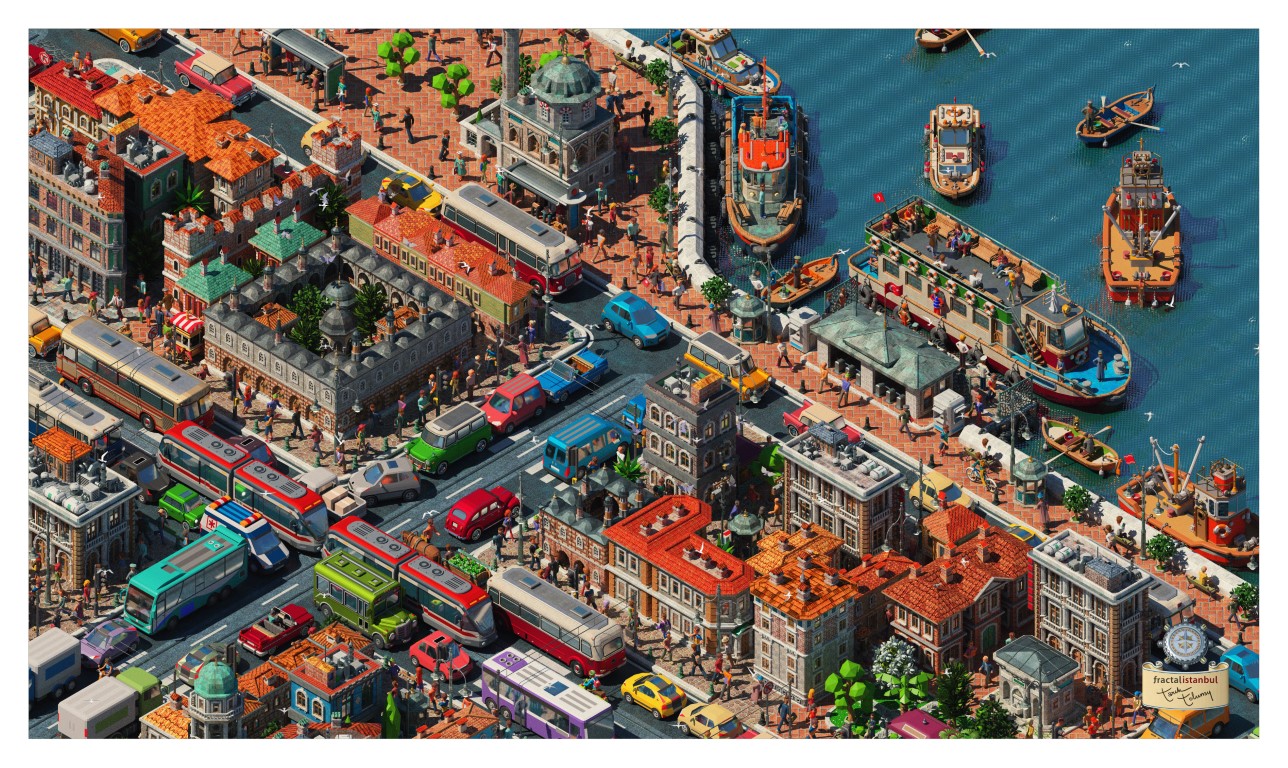
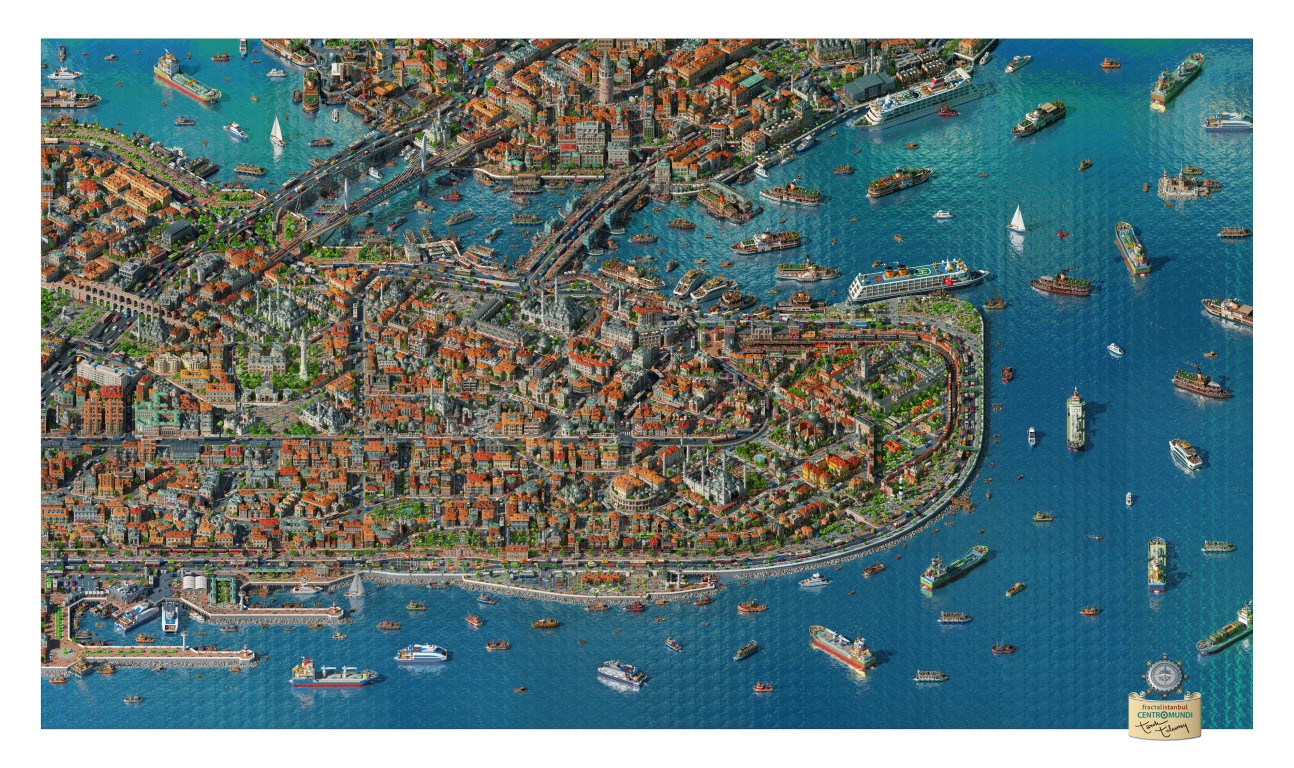
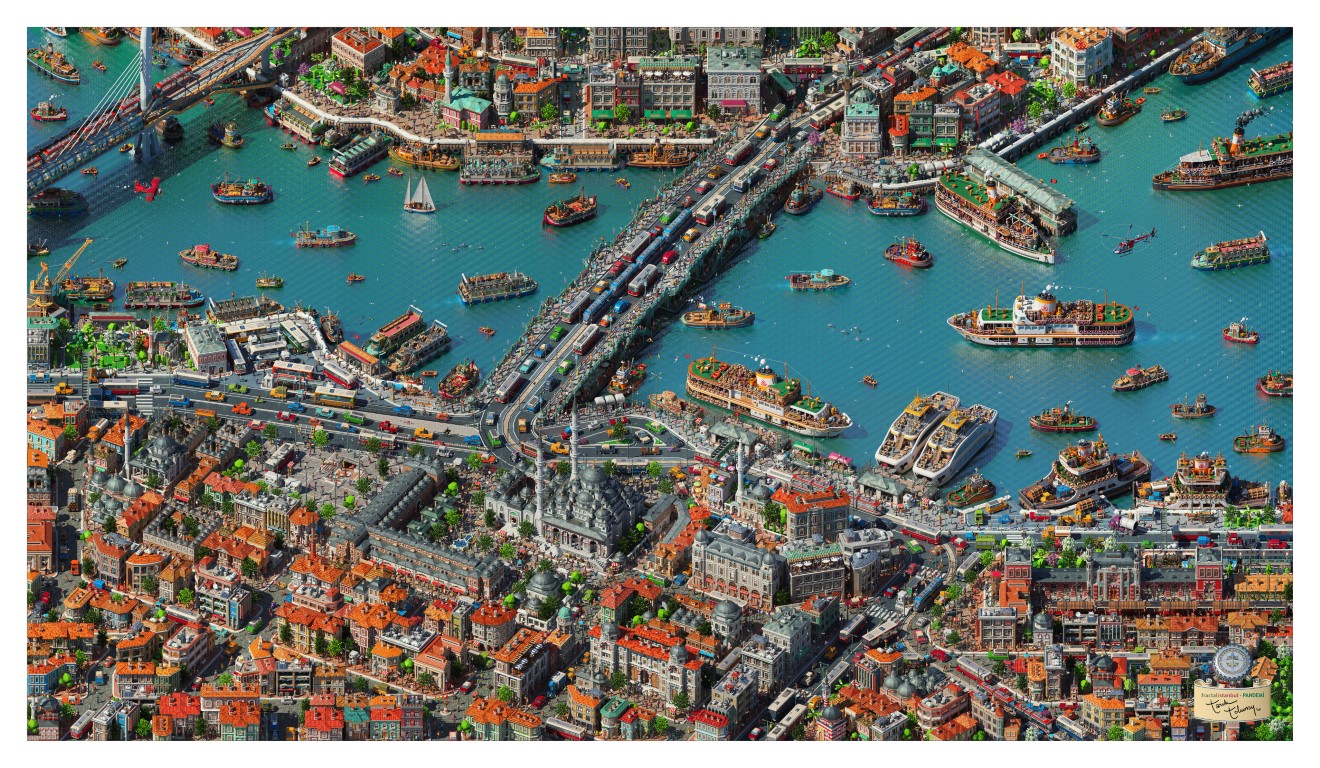
Istanbul has been the center of attention of European painters for centuries. Many traveling painters and engravers have recorded the city with their lines and carried it to this day. But those who live in their own geography did not keep much visual record of Istanbul. Kentçizer Tarık Tolunay has been working on Istanbul City Maps since 2010. He combines details about the daily life of Istanbul with stories and transfers them to images with his own interpretation. He Deconstructs and records overlapping layers of time in complex compositions.
The aim is to be able to offer a small contribution to the urban culture. To question the traces of the last 60-70 years through the phenomenon of the city, to be able to leave visual records from today to the future and perhaps to make new propositions. To be able to prevent the alienation of those who live on them to their cities. Culture is moving with consumers who understand it as much as those who produce it. In this sense, the increase in the number of ”urban literates" will continue by adding new colors to the long life of our ancient city. Fractal Istanbul Project aims to turn from being a personal project into a visual production workshop focused on Istanbul over time. The whole that reproduces itself in the part, the part that expresses itself in the whole: Fractal Istanbul. It's growing, it's expanding.
Tarık Tolunay
İstanbul yüzyıllar boyu Avrupalı ressamların ilgi odağı oldu. Birçok seyyah ressam ve gravürcü şehri çizgileriyle kaydettiler, bugünlere taşıdılar. Fakat kendi coğrafyasında yaşayanlar İstanbul’un görsel kaydını pek tutmadı. Kentçizer Tarık Tolunay 2010 yılından beri İstanbul Kent Haritaları üzerine çalışıyor. İstanbul’un günlük yaşamına dair ayrıntıları hikâyelerle birleştirerek kendi yorumuyla imgelere aktarıyor. Üst üste binmiş zaman katmanlarını karmaşık kompozisyonlarda bir araya getiriyor ve kayıt altına alıyor.
Amaç; kent kültürüne ufak da olsa bir katkı sunabilmek. Kent olgusu üzerinden son 60-70 yılın izlerini sorgulamak, geleceğe bugünden görsel kayıt bırakabilmek ve belki de yeni önermelerde bulunabilmek. Üzerinde yaşayanların kentlerine yabancılaşmasının önüne geçebilmek. Kültür onu üretenler kadar anlayan ve tüketicilerle devinim gösteriyor. Bu anlamda “kent okuryazarı” sayısının artması kadim şehrimizin uzun ömrüne yeni renkler ekleyerek devamını sağlayacak. Fractal İstanbul Projesi zamanla kişisel bir proje olmaktan çıkarak İstanbul’a odaklanmış bir görsel üretim atölyesine dönüşmeyi hedefliyor. Kendini parçada yeniden üreten bütün, kendini bütünde dışavuran parça: Fractal İstanbul. Büyüyor, genişliyor
Tarık Tolunay
Istanbul est au centre de l'attention des peintres européens depuis des siècles. De nombreux peintres et graveurs itinérants ont enregistré la ville avec leurs lignes et l'ont portée jusqu'à ce jour. Mais ceux qui vivent dans leur propre géographie n'ont pas gardé beaucoup de traces visuelles d'Istanbul. Kentçizer Tarık Tolunay travaille sur les plans de la ville d'Istanbul depuis 2010. Il combine des détails sur la vie quotidienne d'Istanbul avec des histoires et les transfère en images avec sa propre interprétation. Il déconstruit et enregistre des couches superposées de temps dans des compositions complexes.
L'objectif est de pouvoir offrir une petite contribution à la culture urbaine. Pour pouvoir interroger les traces des 60-70 dernières années à travers le phénomène de la ville, pouvoir laisser des traces visuelles d'aujourd'hui vers le futur et peut-être faire de nouvelles propositions. Pour pouvoir empêcher l'aliénation de ceux qui y vivent dans leurs villes. La culture évolue avec les consommateurs qui la comprennent autant que ceux qui la produisent. En ce sens, l'augmentation du nombre de "lettrés urbains" se poursuivra en ajoutant de nouvelles couleurs à la longue vie de notre ancienne ville. Fractal Istanbul Project vise à passer d'un projet personnel à un atelier de production visuelle axé sur Istanbul au fil du temps. Le tout qui se reproduit dans la partie, la partie qui s'exprime dans le tout: Fractal Istanbul. Ça grandit, ça s'étend.
Tarık Tolunay
Tarık Tolunay
Tarık Tolunay
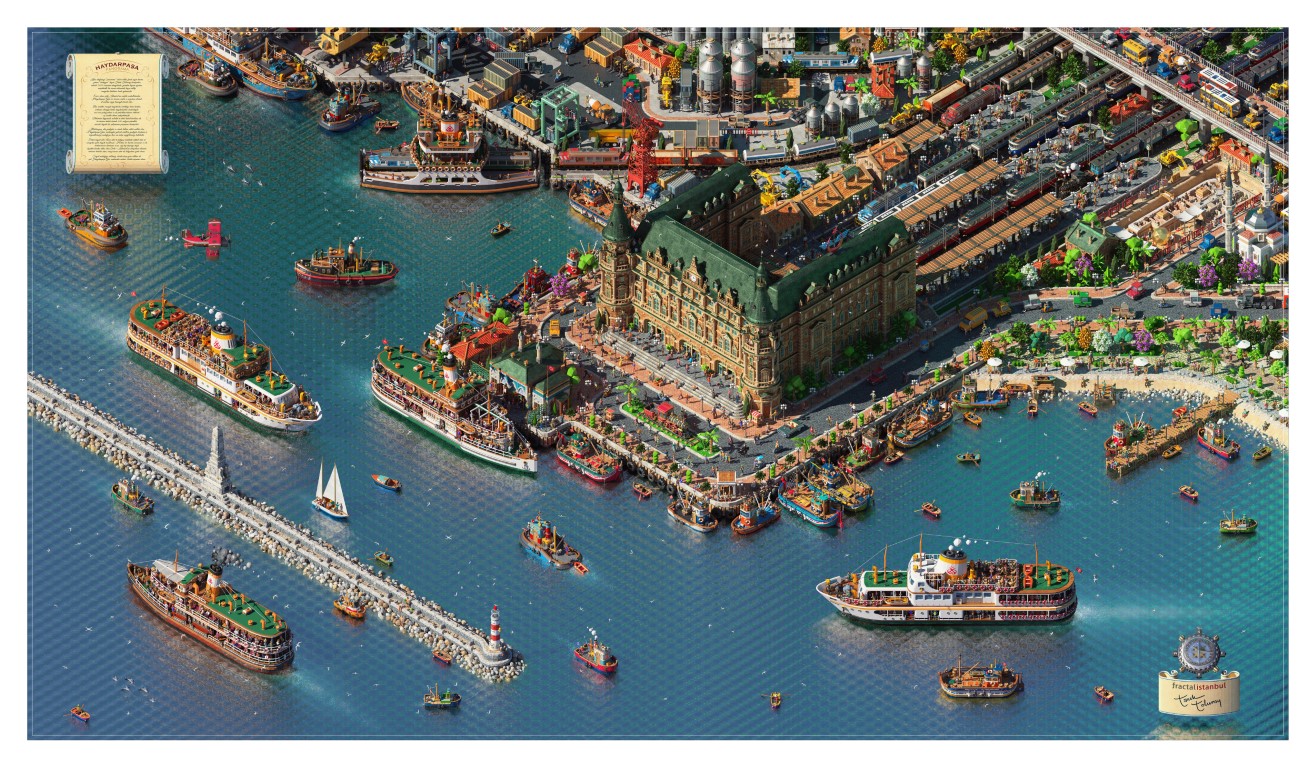
Tarık Tolunay
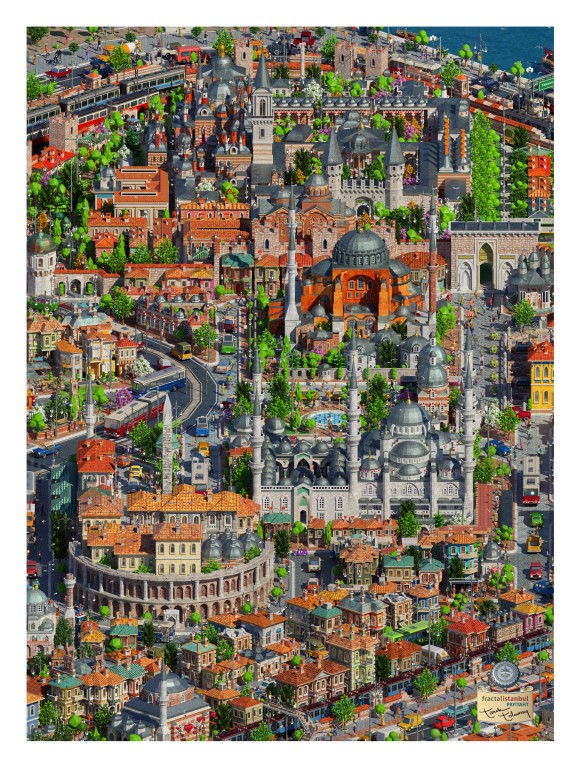
Tarık Tolunay
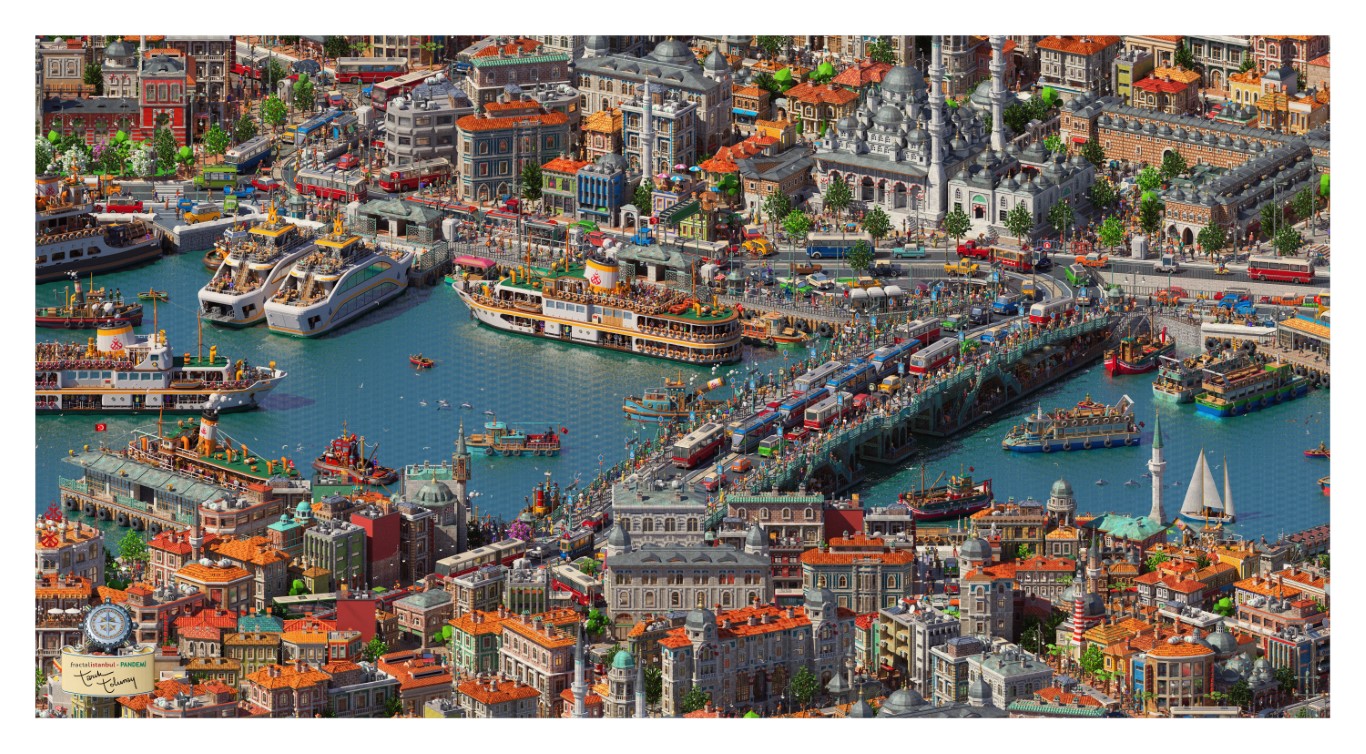
Tarık Tolunay
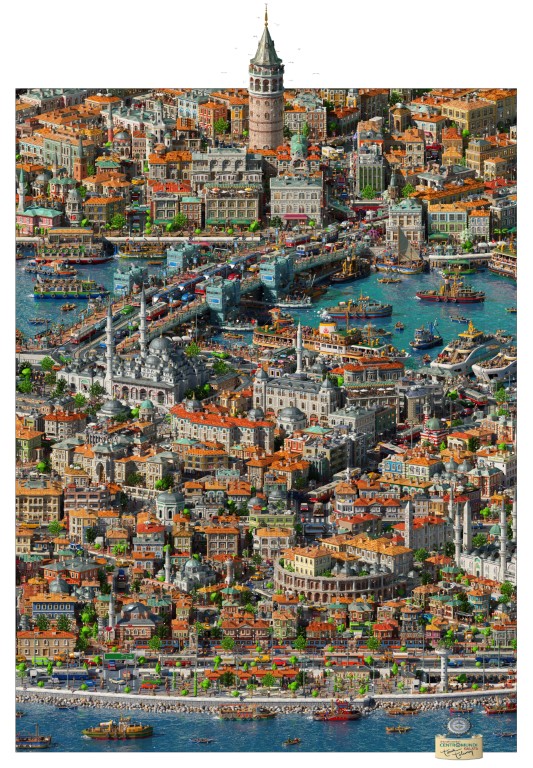
Tarık Tolunay